ASEAN and middle powers key to regional peace and cooperation, says former deputy foreign minister
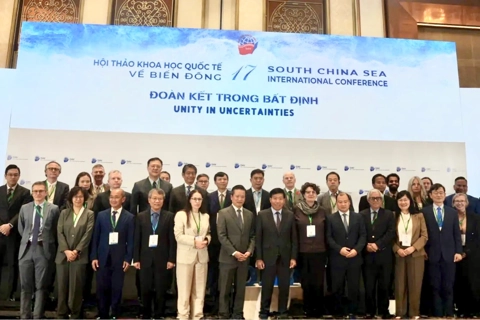
The 17th South China Sea International Conference in the central city of Danang marked Vietnam’s debut of the “Ambassador Lounge: Peace through Shared Responsibilities”, a new open dialogue platform for regional peace and cooperation.
THE HANOI TIMES — ASEAN and medium-sized countries are the keys in linking security, trade and cooperation efforts to address both traditional and non-traditional challenges, said former Deputy Minister of Foreign Affairs Pham Quang Vinh.
Speaking at the special ambassadorial discussion titled “Peace through Shared Responsibilities” today (November 4), held as part of the 17th South China Sea International Conference, Vinh reviewed several key topics discussed during the event.
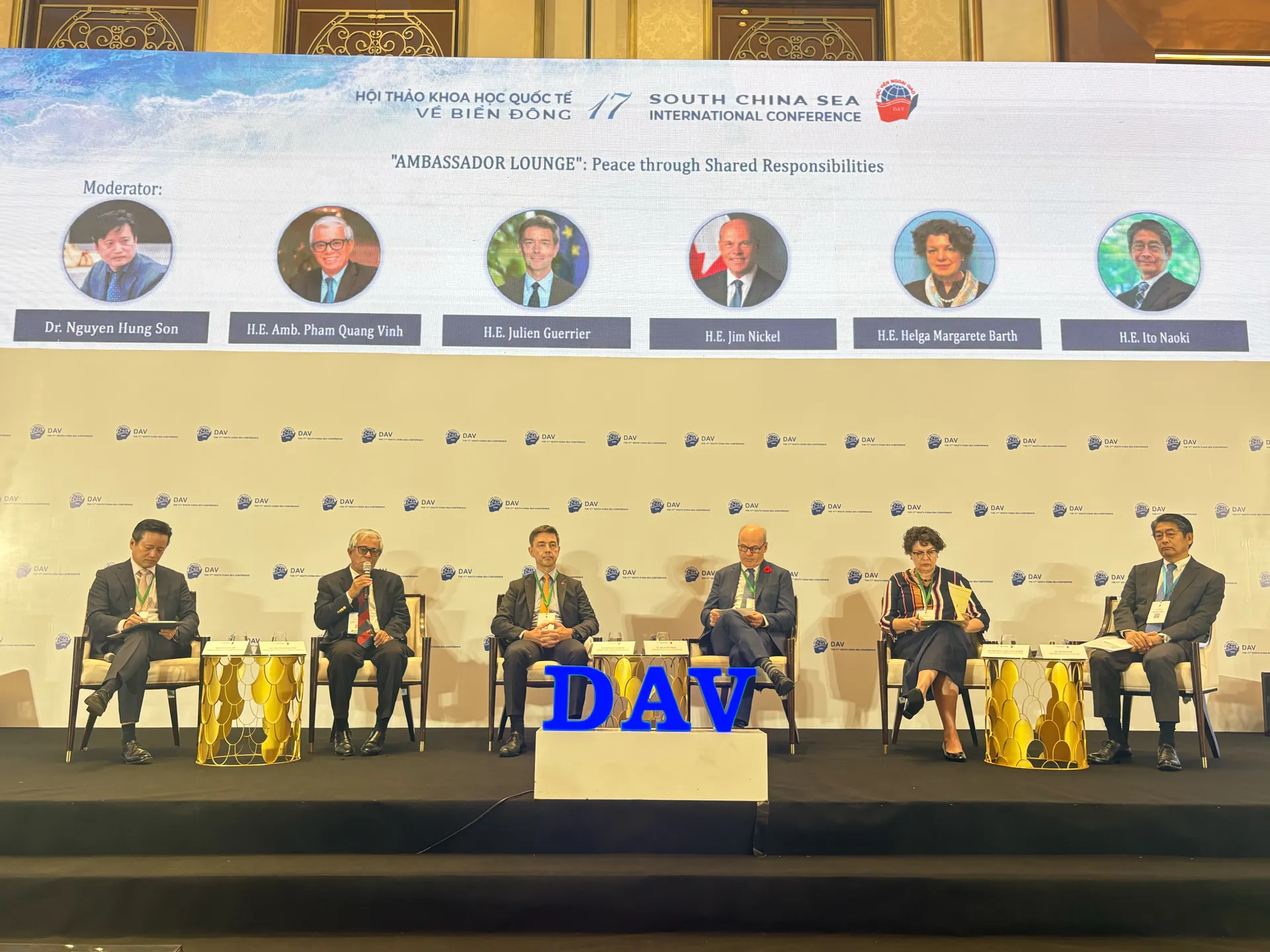
Ambassadors exchange views on maritime peace and cooperation at the 17th South China Sea International Conference in the central coastal city of Danang. Photo: Hoang Nam/The Hanoi Times
According to him, the South China Sea (East Sea) environment remains unpredictable, requiring stronger unity among ASEAN members and their partners. Geopolitical shifts and technological change are creating deep transformations across the region.
Major powers’ strategies highlight the urgent need to reinforce trust-building mechanisms such as the Declaration on the Conduct of Parties in the South China Sea (DOC) and to accelerate the conclusion of a meaningful Code of Conduct (COC), while maintaining ASEAN’s central role.
Vinh said that ASEAN connects regional and global dialogue partners and that this position must be protected. He warned that “current efforts remain insufficient to produce positive change on the ground.”
He called on countries to strengthen their commitment to COC negotiations, saying the agreement must go beyond words to become a tool for practical implementation and accountability.
ASEAN should avoid falling into a “choose-a-side trap” and instead maintain a flexible balance of interests to handle both regional and global issues, the former deputy minister said.
“The region must hold the center, ensuring that no vacuum of power becomes a vacuum of trust,” he said. “Vietnam remains committed to dialogue based on mutual respect and cooperation, recognizing that shared security and prosperity depend on collective effort rather than competition.”
EU Ambassador to Vietnam Julien Guerrier said that around 2,000 European merchant vessels pass through the South China Sea each year, showing Europe’s close link to regional trade and maritime safety.
He warned that any escalation could disrupt global supply chains and affect economies worldwide. The 1982 United Nations Convention on the Law of the Sea (UNCLOS), he said, must remain the foundation for maritime governance and conflict resolution.
“Truth does not belong to the strong. Peace and stability come from dialogue and cooperation grounded in law,” Guerrier said.
He praised the maritime boundary agreement between Vietnam and Indonesia as an example of diplomacy in action and cited the EU–Vietnam Comprehensive Connectivity Partnership (CCPTV) as a framework that strengthens trust, trade and sustainable infrastructure between the two sides.
Canadian Ambassador to Vietnam Jim Nickel expressed concern about overfishing and its direct impact on livelihoods and food security for millions of coastal residents.
He urged stronger regional coordination to enforce maritime laws and manage marine resources responsibly, protecting communities that depend on the sea.
German Ambassador to Vietnam Helga Margarete Barth said that maritime challenges are becoming more complex, including resource depletion and environmental degradation. No single government, she noted, can tackle these problems alone.
She called for closer cooperation among governments, researchers and civil society to ensure a stable and transparent maritime environment.
Japanese Ambassador to Vietnam Ito Naoki voiced concern over increasing militarization in the South China Sea and said public understanding of international law is essential for stability.
Education, he noted, helps societies see that dialogue and respect are more effective for security than confrontation.
Participating ambassadors agreed that the South China Sea should be addressed comprehensively, combining security, economic and development perspectives. They reaffirmed ASEAN’s centrality and called for stronger mechanisms to turn consensus into concrete action and build resilience against new challenges.
The ambassadors agreed that peace in the South China Sea depends on trust, cooperation and respect for international law. By hosting this inclusive dialogue, Vietnam once again showed its commitment to regional stability and constructive diplomacy based on openness and partnership.
Dr. Nguyen Hung Son, Director-General of the Diplomatic Academy of Vietnam, said new technologies such as artificial intelligence, open data and satellite monitoring are transforming maritime governance.
He said transparency can help reduce misperceptions and build trust among nations sharing the same waters.
Held for the first time, the special discussion panel “Ambassador Lounge” aimed to move beyond formal statements and create space for direct exchanges on ways to maintain peace, prevent misunderstandings and enhance cooperation in the South China Sea.
The participating ambassadors commended Vietnam for successfully organizing the 17th South China Sea International Conference on November 3-4, which has become a genuine platform for dialogue. The initiative reflects Vietnam’s growing role as a connector for diplomacy, maritime stability and shared responsibility in a rules-based international order.