Domestic work thrives in Hanoi as living standards rise
In Vietnam, domestic work was officially recognized as a profession in 1994.
Hanoi has about 13,700 domestic workers, according to the Hanoi Department of Labor, Invalids and Social Affairs.
The department said that in recent years, more people are working in the increasingly demanding field of domestic work than there were a few years ago. As city dwellers become wealthier and busier, domestic workers have become more important.
| In Vietnam, domestic work was officially recognized as a profession in 1994. Photo: Ha Linh |
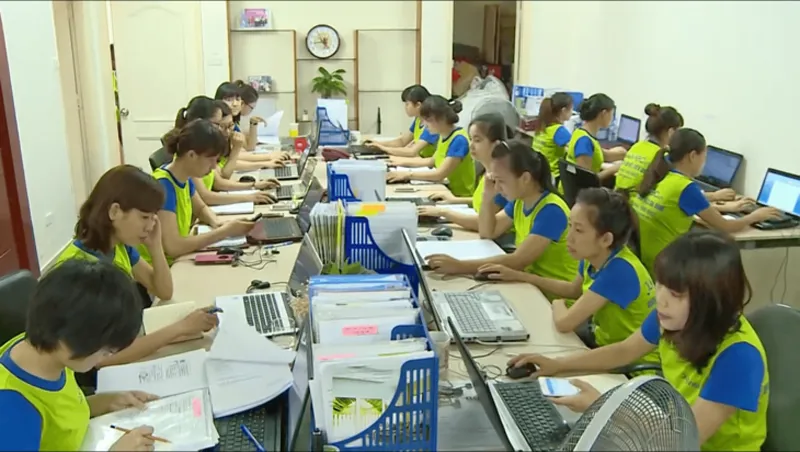
The number of domestic workers has increased in recent years, especially in services such as housekeeping, care of the elderly, children and patients, driving and gardening.
Domestic workers are mainly female (about 94%), and those over 18 years old make up more than 95% of the total domestic workers. They earn from VND5 to 7 million (US$196-US$274) per month.
The Hanoi Department of Labor, Invalids and Social Affairs said that according to regulations, employers must pay social and health insurance premiums for domestic workers as required by law.
However, the majority of domestic workers are not covered by social security and health insurance coverage remains low.
Most employers have not reported the hiring or termination of domestic workers' contracts to local authorities.
Overall in the labor market in Hanoi, in May, the city will continue to create employment opportunities for workers through vocational training, guidance, job transition support for unemployed workers. Job placement and counseling services will remain provided through the main job exchange system and 13 satellite job exchanges across the city, said Deputy Director of Hanoi Department of Labor, Invalids and Social Affairs Nguyen Tay Nam.
In January-April, Hanoi found jobs for 73,298 people, achieving 44.4% of the annual plan, an increase of 13.4% over the same period last year. This includes 13,892 workers who found jobs with support from the city's budget, disbursed through the Vietnam Bank for Social Policies, with total funding of VND1.7 trillion ($66.7 million).
Another 53,923 workers either became self-employed or were hired through the city's counseling and placement services.
In the first four months of 2024, the Hanoi Employment Service Center organized 79 job sessions with the participation of 2,396 units and enterprises, with 47,120 recruitment requests. Of the total 17,000 workers interviewed, about five thousand were hired.
According to the Department of Labor Relations and Wages (Ministry of Labor, Invalids and Social Affairs), in 2011, the International Labor Organization (ILO) adopted Convention No.189 on Decent Work for Domestic Workers, and Recommendation No.201 on Domestic Workers. These are the first international standards specifically applied to domestic workers. In Vietnam, domestic work has been officially recognized as a profession since its inclusion in the labor code in 1994. A comprehensive legal framework to protect the rights of domestic workers and ensure their equality in terms of employment, wages and living conditions was established by the 2012 amendment to the Labor Code, which also strengthened and expanded the legislation governing domestic work. In the 2019 Labor Code, there were no substantive changes regarding domestic workers, but mainly technical adjustments to the regulations. |