Hanoi greenlights sub-zone B of 16,000-hectare southern sports and housing project
The sub-zone B is designed to be a complex containing sports facilities, housing, public services, schools and agricultural land, with an estimated accommodation of 250,000–285,000 residents.
THE HANOI TIMES — Hanoi has given the green light to sub-zone B of the 16,000-hectare Olympic Sports urban zone in southern Hanoi, marking a major step in the development of a mixed-use complex designed for international sports events, residential housing and commercial activities.

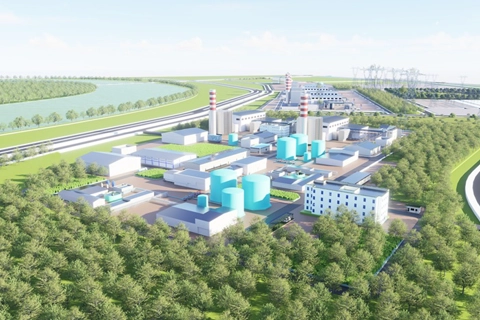
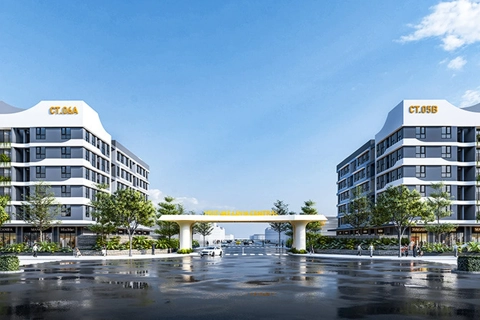
Rendered image of the 16,000-hectare Olympic Sports urban zone
The sub-zone B is a part of the project's four sub-zones, including A with 3,280 ha, B 4,560 ha, C 4,500 ha and D 3,740 ha.
The sub-zone B, the main component of the project, is bordered by Ring Road No. 4 to the north, the North–South high-speed railway to the east, National Highway 21C to the west and the administrative boundary between Dan Hoa and Thuong Phuc to the south.
Planned through 2045 with a vision to 2065, the sub-zone B is designed to be a complex containing sports facilities, housing, public services, schools and agricultural land, with an estimated accommodation of 250,000–285,000 residents.
The project aims to form a southern growth corridor linked to nearby cultural and spiritual sites such as the ancient capital of Hoa Lu and the Huong Son–Tam Chuc spiritual region in the northern province of Ninh Binh.
Once completed, it would become one of the largest urban developments in Hanoi and Vietnam, featuring a national sports complex centered around a 135,000-seat stadium.
The project is scheduled to be completed within nine months.
Earlier, Hanoi approved the plan for sub-zone A and is currently seeking public feedback on sub-zones C and D, with residents calling for stronger infrastructure connections, limited land clearance and balanced growth that protects cultural heritage.
Vice Chairman of the Hanoi People’s Committee Duong Duc Tuan has requested Vingroup to ensure the project aligns with national and city planning frameworks, including the Capital Master Plan 2045–2065, the Capital Planning 2021–2030 and the national network of cultural and sports facilities.
He wanted the investor to guarantee strong transport connections with key infrastructure such as Ring Roads, the Phap Van–Cau Gie Expressway, Ngoc Hoi Station, the North–South high-speed railway, Hanoi’s planned second airport and metro lines No. 1, 6 and 7.
Tuan emphasized the need for close coordination between the investor, government agencies and local authorities throughout the planning and development process to minimize impacts on green spaces, industrial zones and the urban landscape.