Hanoi
Hanoi: Over 66% of all communes meet new style rural criteria
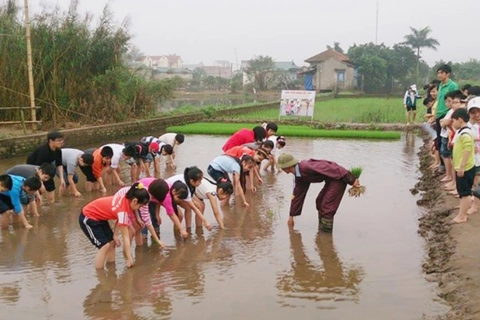
According to the Coordination Office of new style rural building program in Hanoi at the press conference held by the Party Committee’s Commission for Education and Popularization on August 8, 2017, the Capital city records over 66% of all communes meeting new style rural standards.
Deputy Chief of the Coordination Office of new style rural construction Hoang Thi Huyen said that, over the six past months, Hanoi has strengthened agricultural restructuring towards increasing the proportion of animal husbandry, commerce and services; supported the development of concentrated production areas with a large scale and high economic value. At present, the capital city has 46 hi-tech agricultural production models in districts of Soc Son, Thanh Oai, Thanh Tri, Quoc Oai, etc, contributing to improving the people’s living standards.
By the end of 2016, the average income in rural areas reached VND 36 million; the rate of poor households reduced to 3.65%. In addition, the city has also paid special attention to public health checkups. Particularly, 100% of health stations have doctors; the rate of health insurance increased remarkably in some districts, such as: Dan Phuong (80%), Phuc Tho (80.2%), Chuong My (76%).

In terms of implementing new style rural criteria, all communes have mobilized available resources to gains several achievements. Now, Hanoi has 255 out of 386 communes recognized as new style rural status (accounting for 66.06%); and the rest meet from 10 to 18 criteria.
Besides, all localities have also focused on granting certificates of land use right after land consolidation. By the end of June, 2017, Ha Noi issued 611,370 out of 625,257 certificates, accounting for 97.8%. Some districts finished the certification, including: Thuong Tin, Phuc Tho, Thanh Tri, Thach That.
Similarly, since 2016, the capital city has spent nearly VND 7,400 billion on building new style rural areas, increasing over VND 200 billion in comparison with the first quarter of the year. Furthermore, localities have mobilized nearly VND 1.4 billion for the program on building new style rural areas.
However, according to the Coordination Office, due to higher new style rural criteria, many communes have not yet met sustainably some criteria, such as: poor household, environment, food safety.
Director of the Department of Agriculture and Rural Development Chu Phu My noted that 40% of rural population have clean water. Therefore, the capital city strives to put some key clean water plants into operation so that 50% of rural population in the end of 2017 and 100% by 2020 get clean water in the area.
The Steering Committee for new style rural building also asked two districts, including: Gia Lam and Phuc Tho to carry out criteria of new style rural districts in accordance with the Decision No. 558/QD-TTg of the Prime Minister to complete dossiers and then submit them to the Central Steering Committee for its consideration and recognition of new style rural localities; continue completing the issuance of land use right certificates after land consolidation for nearly 14,000 plots. Besides, districts are tasked to pay special attention to helping sub-districts in building new style rural areas.
By the end of 2016, the average income in rural areas reached VND 36 million; the rate of poor households reduced to 3.65%. In addition, the city has also paid special attention to public health checkups. Particularly, 100% of health stations have doctors; the rate of health insurance increased remarkably in some districts, such as: Dan Phuong (80%), Phuc Tho (80.2%), Chuong My (76%).
In terms of implementing new style rural criteria, all communes have mobilized available resources to gains several achievements. Now, Hanoi has 255 out of 386 communes recognized as new style rural status (accounting for 66.06%); and the rest meet from 10 to 18 criteria.
Besides, all localities have also focused on granting certificates of land use right after land consolidation. By the end of June, 2017, Ha Noi issued 611,370 out of 625,257 certificates, accounting for 97.8%. Some districts finished the certification, including: Thuong Tin, Phuc Tho, Thanh Tri, Thach That.
Similarly, since 2016, the capital city has spent nearly VND 7,400 billion on building new style rural areas, increasing over VND 200 billion in comparison with the first quarter of the year. Furthermore, localities have mobilized nearly VND 1.4 billion for the program on building new style rural areas.
However, according to the Coordination Office, due to higher new style rural criteria, many communes have not yet met sustainably some criteria, such as: poor household, environment, food safety.
Director of the Department of Agriculture and Rural Development Chu Phu My noted that 40% of rural population have clean water. Therefore, the capital city strives to put some key clean water plants into operation so that 50% of rural population in the end of 2017 and 100% by 2020 get clean water in the area.
The Steering Committee for new style rural building also asked two districts, including: Gia Lam and Phuc Tho to carry out criteria of new style rural districts in accordance with the Decision No. 558/QD-TTg of the Prime Minister to complete dossiers and then submit them to the Central Steering Committee for its consideration and recognition of new style rural localities; continue completing the issuance of land use right certificates after land consolidation for nearly 14,000 plots. Besides, districts are tasked to pay special attention to helping sub-districts in building new style rural areas.