Hanoi
Hanoi to benefit from more financial-budgetary autonomy
Greater autonomy would allow Hanoi to eliminate institutional bottlenecks on its way toward sustainable development.
Hanoi is expected to benefit from preferential financial-budgetary mechanisms, which are being drafted up in a government decree by the Ministry of Finance.
The draft version stipulates Hanoi is authorized to make advanced payment from the financial reserve fund for priority infrastructure development projects, which have not been allocated funds from the government’s mid-term investment plan.
The move is aimed to speed up the implementation progress of projects while the advanced payment period would not exceed 36 months.
Additionally, the Hanoi’s People Council could decide how to use part of the fund from the wage reform program to invest in infrastructure development and increase salaries for public servants. The latter would depend on the efficiency of work performance and not exceed 0.8 times of the current wage.
Unlike other cities, centrally-administered cities such as Hanoi or Ho Chi Minh City play an important economic role and have special characteristics, thus requiring greater autonomy and more decentralized decision-making in their financial mechanisms, i.e. local budget revenues and expenditures, the mobilization of resources, and the implementation of different models for development investment with due regard for corruption risks.
Vice Minister of Home Affairs Nguyen Duy Thang previously said greater autonomy would allow Hanoi to eliminate institutional bottlenecks on its way toward sustainable development, which is an irreversible global trend at the moment.
Moreover, the move would help Hanoi attract resources for development. The right to decide on approaches to investment and urban financing (generating revenue for infrastructure and urban development) and urban land use management would greatly fasten the city’s development, he said.
As of April, Hanoi has a population of 6.45 million living in an area of 3,34 square kilometers, making it the second most populous city in Vietnam, behind Ho Chi Minh City with 7.1 million, according to Hanoi’s Statistics Bureau.
In 2018, Hanoi’s gross regional domestic product (GRDP) grew by 7.37%, up from the 7.3% record last year to reach VND904.5 trillion (US$39.13 billion), said Nguyen Van Suu, vice chairman of Hanoi People’s Committee.
Among 53 cities and provinces having received direct foreign investment (FDI) in the first four months this year, Hanoi has attracted the largest portion of capital commitments with over US$4.47 billion, accounting for 30.6% of total investment in the period, as the city has been making efforts to smooth the investment environment.
Hanoi targets GRDP growth rate of 7.5% in 2019 and 2020, leading to an expansion of 7.33% - 7.41% in the 2016 – 2020 period, which is in line with the city’s five-year socio-economic development plan.

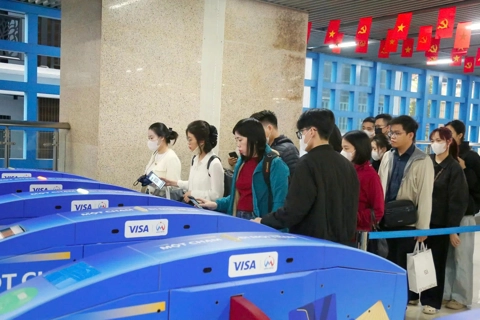
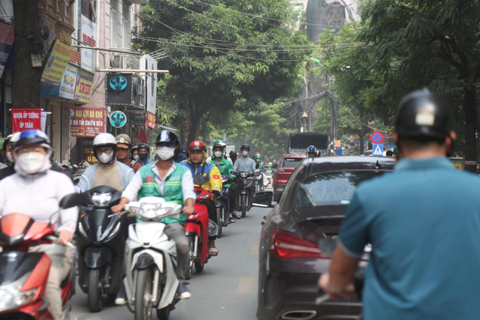
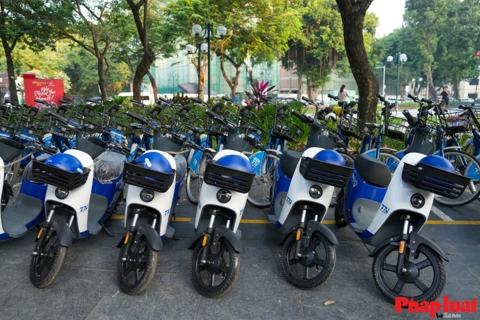
Illustrative photo.
|
The move is aimed to speed up the implementation progress of projects while the advanced payment period would not exceed 36 months.
Additionally, the Hanoi’s People Council could decide how to use part of the fund from the wage reform program to invest in infrastructure development and increase salaries for public servants. The latter would depend on the efficiency of work performance and not exceed 0.8 times of the current wage.
Unlike other cities, centrally-administered cities such as Hanoi or Ho Chi Minh City play an important economic role and have special characteristics, thus requiring greater autonomy and more decentralized decision-making in their financial mechanisms, i.e. local budget revenues and expenditures, the mobilization of resources, and the implementation of different models for development investment with due regard for corruption risks.
Vice Minister of Home Affairs Nguyen Duy Thang previously said greater autonomy would allow Hanoi to eliminate institutional bottlenecks on its way toward sustainable development, which is an irreversible global trend at the moment.
Moreover, the move would help Hanoi attract resources for development. The right to decide on approaches to investment and urban financing (generating revenue for infrastructure and urban development) and urban land use management would greatly fasten the city’s development, he said.
As of April, Hanoi has a population of 6.45 million living in an area of 3,34 square kilometers, making it the second most populous city in Vietnam, behind Ho Chi Minh City with 7.1 million, according to Hanoi’s Statistics Bureau.
In 2018, Hanoi’s gross regional domestic product (GRDP) grew by 7.37%, up from the 7.3% record last year to reach VND904.5 trillion (US$39.13 billion), said Nguyen Van Suu, vice chairman of Hanoi People’s Committee.
Among 53 cities and provinces having received direct foreign investment (FDI) in the first four months this year, Hanoi has attracted the largest portion of capital commitments with over US$4.47 billion, accounting for 30.6% of total investment in the period, as the city has been making efforts to smooth the investment environment.
Hanoi targets GRDP growth rate of 7.5% in 2019 and 2020, leading to an expansion of 7.33% - 7.41% in the 2016 – 2020 period, which is in line with the city’s five-year socio-economic development plan.