Hanoi
Hanoi to make effort to attract resources for investment and development
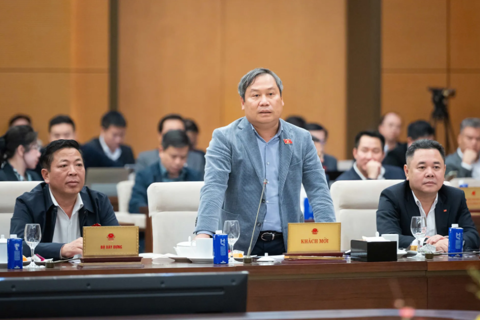
Hanoi Party Committee has recently organized a meeting to collect feedback of leaders of ministries and central agencies, focusing on five years of implementing the 11th Politburo’s Resolution 11 entitled “Orientation and mission for development of Hanoi in the 2011-2020 period” and three years of implementing the Capital Law.
Hanoi Party Committee Secretary Hoang Trung Hai, Permanent Vice Secretary Ngo Thi Thanh Hang and Vice Secretary Dao Duc Toan were present at the meeting.
According to report on implementation of Resolution 11 and Capital Law over the past years delivered by Hanoi People’s Committee Vice Chairman Nguyen Van Suu, the two documents play an important role in creating motivation and orientation for the construction, development and protection of Hanoi, and asserts the role of Hanoi in the development of Red River Region as well as the country.

Over the past five years, Hanoi has seen good growth of the economy. GRDP increases 7.57% per year on average, which is around 2.56% higher than average growth of the country. Per capita income is VND 79.4 million, 1.7 times higher than 2011. The economy shifts in the right direction; service sector has the highest proportion (57.2%), followed by industry and construction sector (29.69%) and agriculture sector (3.22%). The socialist-oriented market economy is consolidated and developed.
Further attention is paid to agriculture and rural development; the city has the most communes that meet standards of new-style rural areas. Urban management and development is enhanced; investment in urban infrastructure sees remarkable progress. Social security is guaranteed; political security, social order and safety are ensured.
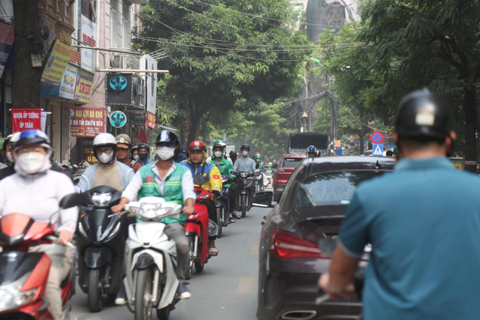
Along with the success, city leaders pointed out shortcomings and problems in the implementation process of Resolution 11 and Capital Law. Economic growth is incommensurate with city's potential; quality and competitiveness of the economy are low; facilities are inadequate and overloaded; urban management, planning, construction and development do not meet requirements. Some important points in the Capital Law are not issued yet, in particular the Prime Minister’s decision on planning and architecture standards on urban renovation and reconstruction in four urban districts, and decision on measures, roadmap to move production establishments, hospitals, schools and use the land fund after moving. They also mentioned the lack of specific mechanism for suburban districts and towns indicated in the planning on five satellite towns, slow progress of renovation and reconstruction of old apartment buildings, and low percentage of land for transportation.
For their part, officials of the ministries and central agencies gave feedback on the draft report of Hanoi, and asked for more details of outcome of new-style rural area construction, Hanoi’s urban planning in conformity with Capital Region planning, administration reform, reduction in workforce and structuring of the contingent of cadres and civil servants. They also suggested the city should point out reasons of the shortcomings, and increase measures to mobilize and use land fund as well as social investment.
According to Secretary of Hanoi Party Committee Hoang Trung Hai, Hanoi might not reach five targets for 2020, including targets of public transport, land for transport, urbanization rate, e-government and supply of 70% online public services at level 3 and level 4. The rate of urbanization does not keep pace with economic growth as well as population growth, which leads to overload. City’s budget is able to satisfy only 20% of total demand for investment; the rest must be mobilized from private sector, yet policies on private sector’s investment are not transparent. He acknowledged opinion of the officials, and confirmed to specify structure and measures to attract more social resources, hence meeting demand for development.
He also mentioned Hanoi’s proposal on making project on urban government, since this is the inevitable trend which was realized successfully in many developed countries. It aims to distinguish government organization methods in urban and rural areas, simplify organization of urban government while guaranteeing rights and obligations of the people.
According to report on implementation of Resolution 11 and Capital Law over the past years delivered by Hanoi People’s Committee Vice Chairman Nguyen Van Suu, the two documents play an important role in creating motivation and orientation for the construction, development and protection of Hanoi, and asserts the role of Hanoi in the development of Red River Region as well as the country.
Over the past five years, Hanoi has seen good growth of the economy. GRDP increases 7.57% per year on average, which is around 2.56% higher than average growth of the country. Per capita income is VND 79.4 million, 1.7 times higher than 2011. The economy shifts in the right direction; service sector has the highest proportion (57.2%), followed by industry and construction sector (29.69%) and agriculture sector (3.22%). The socialist-oriented market economy is consolidated and developed.
Further attention is paid to agriculture and rural development; the city has the most communes that meet standards of new-style rural areas. Urban management and development is enhanced; investment in urban infrastructure sees remarkable progress. Social security is guaranteed; political security, social order and safety are ensured.
Along with the success, city leaders pointed out shortcomings and problems in the implementation process of Resolution 11 and Capital Law. Economic growth is incommensurate with city's potential; quality and competitiveness of the economy are low; facilities are inadequate and overloaded; urban management, planning, construction and development do not meet requirements. Some important points in the Capital Law are not issued yet, in particular the Prime Minister’s decision on planning and architecture standards on urban renovation and reconstruction in four urban districts, and decision on measures, roadmap to move production establishments, hospitals, schools and use the land fund after moving. They also mentioned the lack of specific mechanism for suburban districts and towns indicated in the planning on five satellite towns, slow progress of renovation and reconstruction of old apartment buildings, and low percentage of land for transportation.
For their part, officials of the ministries and central agencies gave feedback on the draft report of Hanoi, and asked for more details of outcome of new-style rural area construction, Hanoi’s urban planning in conformity with Capital Region planning, administration reform, reduction in workforce and structuring of the contingent of cadres and civil servants. They also suggested the city should point out reasons of the shortcomings, and increase measures to mobilize and use land fund as well as social investment.
According to Secretary of Hanoi Party Committee Hoang Trung Hai, Hanoi might not reach five targets for 2020, including targets of public transport, land for transport, urbanization rate, e-government and supply of 70% online public services at level 3 and level 4. The rate of urbanization does not keep pace with economic growth as well as population growth, which leads to overload. City’s budget is able to satisfy only 20% of total demand for investment; the rest must be mobilized from private sector, yet policies on private sector’s investment are not transparent. He acknowledged opinion of the officials, and confirmed to specify structure and measures to attract more social resources, hence meeting demand for development.
He also mentioned Hanoi’s proposal on making project on urban government, since this is the inevitable trend which was realized successfully in many developed countries. It aims to distinguish government organization methods in urban and rural areas, simplify organization of urban government while guaranteeing rights and obligations of the people.