Econ
Increasing minimum wage will add more burden to businessmen
From January 1, 2018, the amount of social insurance payable will be deducted from wage and allowances instead of from wage only at present. Therefore, enterprises are subject to cost overrun risk, and for some, it may even exceed their financial capacities.
As a result, the Vice Chairman of the Vietnam Chamber of Commerce and Industry (VCCI) Hoang Quang Phong said that most businesses have asked not to increase minimum wage in 2018.
Enterprises’ unwillingness to increase salary is explained by the continuous rise of 12% of minimum wage per year over the last ten years. The foundations determining wage increase are productivity, consumer price index (CPI), job performance and gross domestic product (GDP). With the increase in average GDP, CPI and productivity over the recent times, increasing salary every single year is unreasonable. “We have talked to 30 business associations, including 16 foreign ones. All of them requested to not increase salary in 2018. We will collect all feedbacks and report to the Board of Salary for analysis. Our view is that a suitable salary will be derived from the recommendations of the Board of Salary, enterprises and their capacities to pay. We agree that the current minimum wage could only meet over 90% of the minimum living standard, but it is better than nothing.” – Phong said.
As the representative of the employers put it, the minimum wage could be set as a result of collective negotiation as well. Employees negotiate to raise their minimum wage based on merit of productivity or technological improvement. Over the recent times, the minimum wage is raised continuously without considering merits.
In the time of fierce competition as now, enterprises are under heavy burden of market, technology and other spending. Every year minimum wage increase would add more pressure on them.
Over the first six months of the year, 61 thousand enterprises have been set up but at the same time 41 thousand ones have ceased to operate. The rate is 2 businesses closed for every three new businesses founded. If minimum wage is raised, enterprises will have to re-organize production and lay off people. So while some benefit from salary raise, others lose their jobs.
Also the resolution of the Government stipulated that minimum wage is to be raised based on productivity, competitiveness, the enterprises capacities and depending on industries and occupations.
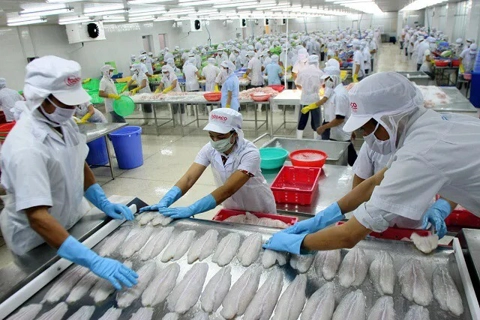
According to Phong, employees are entitled to minimum wage but their salaries over the minimum wage are negotiable. At present, workers in some industries including high-tech are earning income much higher than the minimum wage. While, Footwear, garment and textile and seafood are among the labor intensive industries are suffering the most from minimum wage increase.
As the Vietnam General Confederation of Labor proposed an increase in regional minimum wage of 13,3% in 2018, Hoang Quang Phong said VCCI will thoroughly analyze this issue and discuss with employers, business associations and labor intensive enterprises to make adjustment to the increase rate as the above-mention rate is deemed too high.
I am convinced that never before have employers had more affection toward employees than in present. Enterprises take care of the employees so that they can settle down and meet the demand on production capacity and orders. – Hoang Quang Phong – Vice Chairman of VCCI.
Enterprises’ unwillingness to increase salary is explained by the continuous rise of 12% of minimum wage per year over the last ten years. The foundations determining wage increase are productivity, consumer price index (CPI), job performance and gross domestic product (GDP). With the increase in average GDP, CPI and productivity over the recent times, increasing salary every single year is unreasonable. “We have talked to 30 business associations, including 16 foreign ones. All of them requested to not increase salary in 2018. We will collect all feedbacks and report to the Board of Salary for analysis. Our view is that a suitable salary will be derived from the recommendations of the Board of Salary, enterprises and their capacities to pay. We agree that the current minimum wage could only meet over 90% of the minimum living standard, but it is better than nothing.” – Phong said.
As the representative of the employers put it, the minimum wage could be set as a result of collective negotiation as well. Employees negotiate to raise their minimum wage based on merit of productivity or technological improvement. Over the recent times, the minimum wage is raised continuously without considering merits.
In the time of fierce competition as now, enterprises are under heavy burden of market, technology and other spending. Every year minimum wage increase would add more pressure on them.
Over the first six months of the year, 61 thousand enterprises have been set up but at the same time 41 thousand ones have ceased to operate. The rate is 2 businesses closed for every three new businesses founded. If minimum wage is raised, enterprises will have to re-organize production and lay off people. So while some benefit from salary raise, others lose their jobs.
Also the resolution of the Government stipulated that minimum wage is to be raised based on productivity, competitiveness, the enterprises capacities and depending on industries and occupations.
According to Phong, employees are entitled to minimum wage but their salaries over the minimum wage are negotiable. At present, workers in some industries including high-tech are earning income much higher than the minimum wage. While, Footwear, garment and textile and seafood are among the labor intensive industries are suffering the most from minimum wage increase.

Workers at Canon Vietnam Ltd.
|
I am convinced that never before have employers had more affection toward employees than in present. Enterprises take care of the employees so that they can settle down and meet the demand on production capacity and orders. – Hoang Quang Phong – Vice Chairman of VCCI.