Making Hanoi a livable metropolis
To make urban areas livable, user-friendly and smart residential areas requires the joint efforts of all stakeholders.
The Hanoi Capital Planning 2021-2030 with a vision to 2050 has been submitted for review and approval. Architect Dao Ngoc Nghiem, Vice Chairman of the Vietnam Association for Urban Planning and Development, spoke to Dai Doan Ket (Great Unity) newspaper about the mobilization of resources for the implementation of the plan.
How do you assess the draft Hanoi Capital Planning 2021-2030 with a vision for 2050? What will we do to make Hanoi a rewarding and attractive destination?
There are some updates to the draft plan. For example, it forecasts that Hanoi's population will reach 14 million in 2030, up from the last projection of 9.2 million in 2011. The draft also includes the concept of the city-within-a-city model, which envisages the development of two sub-cities in Hanoi North and West, while the last version only envisages the transformation of 5-7 suburban areas into urban districts and satellite cities.
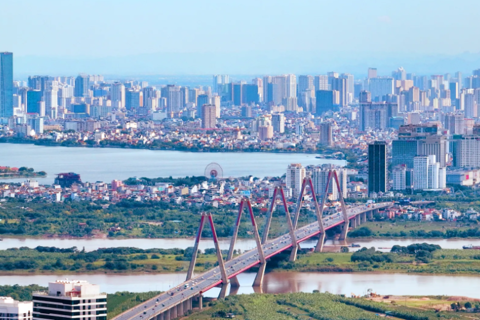
| Nhat Tan Bridge over the Red River connecting Tay Ho District and Dong Anh District. Photo: Pham Hung/The Hanoi Times |
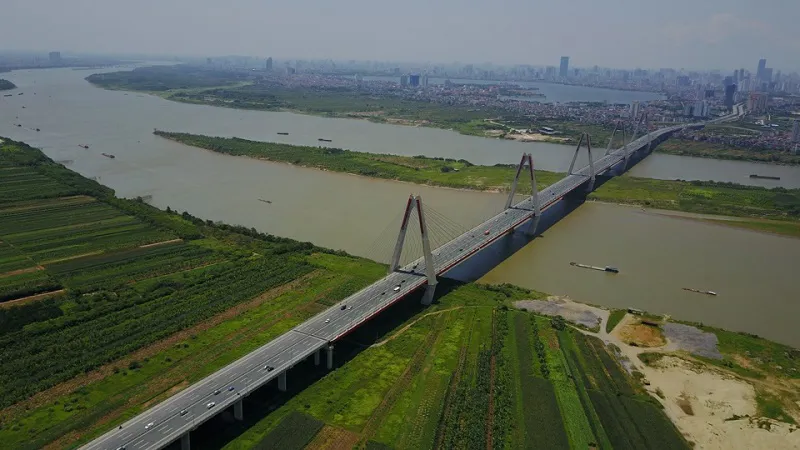
Hanoi's Long Bien District was established in 2003 on a portion of Gia Lam suburban district. It was the first urban district on the north side of the Red River. At that time, Hanoi also planned to transform the rural districts of Dong Anh, Me Linh, and Thanh Tri into urban districts, but the idea was not approved. Now, the draft city plan defines the Red River as the axis for the concept of a city on both banks of the river. In particular, the plan aims to facilitate the establishment of new sub-municipal cities in Hanoi's north and to turn several rural districts into metropolitan ones.
To implement the plan, the local authorities will carry out two master plans: One on
the capital’s urban planning for 2021-2030 with a vision to 2050, and the other on the adjustment of the capital's general design until 2045 with a vision until 2065.
Based on the two master plans, the Hanoi government needs to map out specific tasks for each sector in descending order for long-term implementation. Otherwise, the city will be stuck in the same problems as before: Specific actions have been diverted from the overall plan.
The capital also needs to acquire the necessary resources for urban planning, giving priority to non-state investors. To make urban areas livable, user-friendly and smart residential areas requires the joint efforts of all stakeholders. Therefore, city authorities need a special rule that allows them to empower non-state investors.
Development must put people at the center of everything we do because we've tended to secure rights and benefits for corporations. This time, we must do a good job of designing the urban landscape and closely monitor its implementation. Local governments will take responsibility for overseeing development activities to ensure that they are in line with the overall plan.
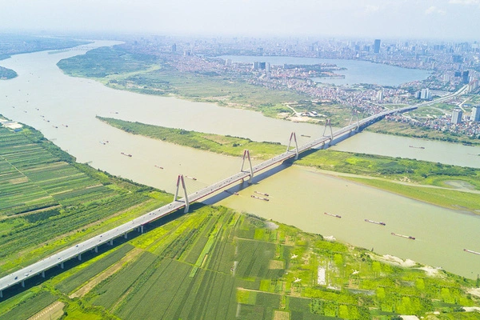
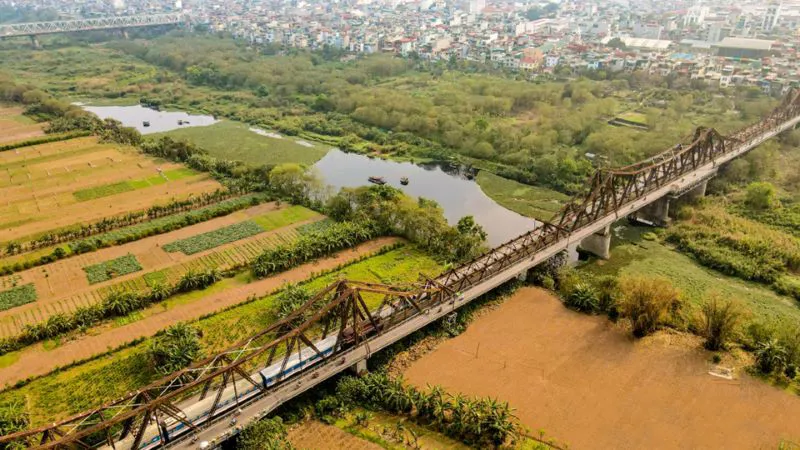
| The Red River alluvial islet. Photo: Pham Hung/The Hanoi Times |
How do we execute the urban design plan on the banks of the Red River?
This has been a question for a long time. The Red River is important to Hanoi in terms of history, culture, and environment because it is the source of life and economy for the northern region and connects Vietnam to China. We have made many insights into the development planning for the river region, and especially since 1994, we have been studying to build more cities along the banks. However, it has become quite challenging because the river's flow and water level vary over time. These elements depend not only on our hands but also on the upstream. To date, the water level of the Red River has ranged from a low of 2 meters to a high of 13 meters above sea level.
The Red River runs through the north. A section of 120 kilometers runs through Hanoi and is heavily influenced by other rivers such as the Day, Nhue and Da Rivers. Therefore, to explore the full potential of the Red River, we need to get an overall view of the whole river system in the North. Given the changes in water flows, we need to apply science and technology to ensure that urban development is sustainable and safe for people.
How do you view the five spatial axes defined by the Hanoi General Planning?
The five spatial axes are not new, as Hanoi authorities have considered similar issues in the 1998 and 2011 versions of the city plan. The most questionable issue is how to realize the plan, how to mobilize resources, and how to carry out land requisition and compensation. It's important to secure sufficient land for each axis, so land clearance is the most important task.
According to the amended Land Law, which will come into effect on January 1, 2025, land requisition and land clearance must be carried out carefully and must benefit all stakeholders, including the state, investors, and the people. We need a policy that benefits everyone, otherwise it will remain on paper.
Given Hanoi's strategic position in the capital region and the north, the city needs to build another airport. The issue has been raised since 2011, and it's becoming more urgent now that Hanoi can't expand Noi Bai International Airport. Building a new airport is a must, but we need to balance the interests of all sectors and require strong combination and cooperation among districts.
Thank you for your time!