Hanoi
Preventing oil and fat leaking to lake waters
Lake pollution due to waste water leakage from restaurants and hotels are the adverse impacts of urbanization.
Walking around Den Lu Lake after the recent rain, it is easy to see large masses of foam clustering around the sluice gates. Nguyen Van Toan, a cleaning staff, explained that the fat from waste water of restaurants or street eateries flow into sewers together with rain water. After every rain, the amount of fat collected from waste water can easily fill 4 to 6 garbage trucks.
Not only Den Lu Lake, but according to the Hanoi Sewerage and Drainage Company, approximately over 100 lakes in Hanoi are being polluted and vegetal oil and animal fat are the major sources of pollution.
Experts suggested high-tech application in to tackle fat pollution in lakes. Fat and oil are lighter than water and cannot be dissolved and clustering in large masses of foam on the water surface. These foam masses prevent oxygen to be absorbed into the water, harming the lake ecology. In the long run, fat will accumulate and clog the drainage conduits.
According to the Director of the Hanoi Water Drainage Company Vo Tien Hung, water pollution in the rivers of To Lich, Kim Nguu, Lu, Set and 13 other lakes in Hanoi was caused by vegetable oil or animal fat. The proportion of fat in lakes and rivers ranges from 0.5 to 2.5mg/liter, higher than international standard of 0.5mg/liter. That eateries, restaurants, production areas and residential areas directly discharge untreated waste water to lakes and rivers in Hanoi is blame for the high proportion of fat and oil in water.
Vice Chairman of the Vietnam Water Supply and Sewerage Association Ung Quoc Dung said, the application of Redoxy-3C, a substance used to clean lakes has shown positive results, but the root of the pollution remains. For lake water to be clean in a sustainable manner, it is essential to separate oil, fat and other substances from the water discharged into lakes and rivers.
According to the Hanoi Construction Department, it is necessary to separate oil and fat from wastewater before discharging. However, the city should have a thorough review and take into consideration the weather condition and the environment to choose the most appropriate technology. Recently, Hanoi Sewerage and drainage company has chosen PARCO-P, a plastic device to separate oil and fat and EVVIA TNB a steel device using Hungarian technology.
Experts recommended installing the device at the sluice gate of restaurants, kitchens, food processeing factories and gas stations to avoid conduit clogging. However, the installation of EVVIA CRC device in manholes to separate oil and fat from rainwater must be considered carefully before implementation. In Hanoi, it is estimated that there is a manhole for an average of 2,000-3,000 m2 surface area (compared with the international standard of 300-500m2), causing slow draining in case of heavy rain. Therefore, the application of EVVIA CRC should take into consideration the draining function to avoid flood.
In order to gradually improve the lake water quality, as well as the living environment of citizens, Hanoi Sewerage and drainage limited company has proposed to pilot the oil and fat separating devices at 03 locations: the company’s kitchen (65 Van Ho), Luc Thuy restaurant (16 Le Thai To) and Long Van restaurant (3B Le Thai To). After having the preliminary result, the company will come up with plan to spread the use this device in Hanoi.
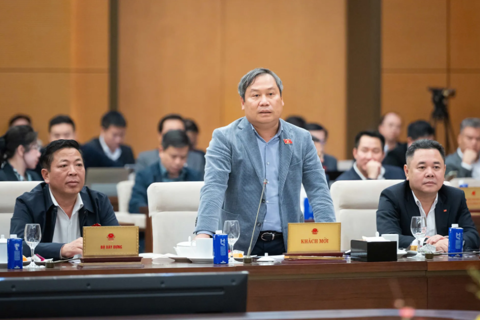
General Director of Hanoi Sewerage and drainage limited company Vo Tien Hung
Not only Den Lu Lake, but according to the Hanoi Sewerage and Drainage Company, approximately over 100 lakes in Hanoi are being polluted and vegetal oil and animal fat are the major sources of pollution.

Workers of Hanoi Sewerage and drainage limited company recover large amount of fat in in Den Lu Lake.
|
According to the Director of the Hanoi Water Drainage Company Vo Tien Hung, water pollution in the rivers of To Lich, Kim Nguu, Lu, Set and 13 other lakes in Hanoi was caused by vegetable oil or animal fat. The proportion of fat in lakes and rivers ranges from 0.5 to 2.5mg/liter, higher than international standard of 0.5mg/liter. That eateries, restaurants, production areas and residential areas directly discharge untreated waste water to lakes and rivers in Hanoi is blame for the high proportion of fat and oil in water.
Vice Chairman of the Vietnam Water Supply and Sewerage Association Ung Quoc Dung said, the application of Redoxy-3C, a substance used to clean lakes has shown positive results, but the root of the pollution remains. For lake water to be clean in a sustainable manner, it is essential to separate oil, fat and other substances from the water discharged into lakes and rivers.
According to the Hanoi Construction Department, it is necessary to separate oil and fat from wastewater before discharging. However, the city should have a thorough review and take into consideration the weather condition and the environment to choose the most appropriate technology. Recently, Hanoi Sewerage and drainage company has chosen PARCO-P, a plastic device to separate oil and fat and EVVIA TNB a steel device using Hungarian technology.
Experts recommended installing the device at the sluice gate of restaurants, kitchens, food processeing factories and gas stations to avoid conduit clogging. However, the installation of EVVIA CRC device in manholes to separate oil and fat from rainwater must be considered carefully before implementation. In Hanoi, it is estimated that there is a manhole for an average of 2,000-3,000 m2 surface area (compared with the international standard of 300-500m2), causing slow draining in case of heavy rain. Therefore, the application of EVVIA CRC should take into consideration the draining function to avoid flood.
In order to gradually improve the lake water quality, as well as the living environment of citizens, Hanoi Sewerage and drainage limited company has proposed to pilot the oil and fat separating devices at 03 locations: the company’s kitchen (65 Van Ho), Luc Thuy restaurant (16 Le Thai To) and Long Van restaurant (3B Le Thai To). After having the preliminary result, the company will come up with plan to spread the use this device in Hanoi.
General Director of Hanoi Sewerage and drainage limited company Vo Tien Hung