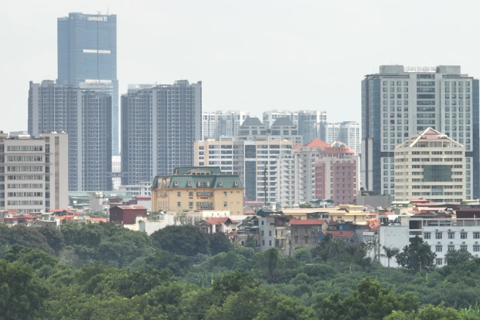
Residential real estate market on the road to recovery
The Vietnam government approved a law late last year allowing for expansive foreign ownership of residential property, as it seeks to boost an ailing property market and accelerate economic growth.
Those foreigners who possess a valid visa in addition to foreign enterprises and international organizations conducting operations in Vietnam are now eligible to acquire an ownership interest in residential real estate.
The new rules allow for a maximum foreign ownership of 30% in any multi-family housing complex or 250 houses in any single ward.
Prior to the new law’s enactment only foreigners who were married to a Vietnamese national and had been determined to have made significant contributions to the nation’s development were permitted to acquire an interest is such property.
 |
Passage of the law was the latest move by the government to help underpin the stagnate property market and part and parcel of its overall plan to not only stimulate economic growth but clear up bad debts.
Most leading economists believe opening up the market has been a good move as a considerable portion of the banks’ bad debts are tied to residential real estate and there is a synergism between the two. In other words, what is good for residential real estate directly benefits the nation’s bad debt problem.
Moreover, the new law has loosened many regulations and created conditions more conducive for foreign investors to get involved in Vietnam’s residential real estate market.
Hanoi Real Estate Club President Nguyen Huu Cuong, said these laws have allowed investors, entrepreneurs and foreign institutions to possess residential property in Vietnam. This is a great opportunity for foreign investors.
The residential real estate sector has not only attracted huge monetary inflows from foreign investors but has also been the repository for significant overseas remittances. Some US$2-2.6 billion of overseas remittance are pumped into the real estate market annually.
Nguyen Hong Son, Savills Hanoi’s Head of Valuation and Financial Advisory said the new law demonstrates the Government’s commitment to simplifying administrative formalities and accelerating in-depth and strong integration.
Son said it also projects a positive global image of an opening of the economy and makes the market more attractive to Vietnam-based expats that want to buy in Vietnam adding that both domestic and foreign investment will increase in the time ahead as a result of the move.
In fact, it may create a boom in attracting foreign investment to Vietnam in 2015. However, if not the market will still see bright prospects for 2015 and following years thanks to the newly issued polices and good things emanating from it.
Last year, foreign investment in both commercial and residential real estate accounted for 40% of the country’s total foreign investment. The residential real estate sector ranks second in attracting foreign investment, just after foreign direct investment (FDI) in the processing and manufacturing industries.