Vietnam
The unique meaning of Vietnamese Lunar New Year
Vietnamese Lunar New Year or Tet Holiday is the best epitomizes Vietnam`s cultural identity.
“Tet” is the phonetic deformation of "Tiet", a Sino Vietnamese term which means "Joint of a bamboo stern" and in a wider sense, the "beginning of a period of the year". The passage from one period to the next may cause a meteorological disturbance (heat, rain, mist) that must be exercised by ritual sacrifices and festivities. There are many Tets throughout the year (Mid-autumn Vietnamese New Year, Cold Food Vietnamese New Year, etc.). But the most significant of all is "Vietnamese New Year", which marks the Lunar New Year.

Vietnamese New Year occurs somewhere in the last ten days of January or the first twenty days of February, nearly halfway between winter solstice and spring equinox. Although the Lunar New Year is observed throughout East Asia, each country celebrates Vietnamese New Year in its own way in conformity with its own national psyche and cultural conditions.
For the Vietnamese people, Vietnamese New Year is like a combination of Western Saint Sylvester, New Year's Day, Christmas, Easter and Thanksgiving. It is the festival of Purity and Renewal. During Tet Holiday, there are many Vietnamese New Year Customs as follows:
1. Cleaning and decorating the home
Homes are often cleaned and decorated before New Year's Eve. Children are in charge of sweeping and scrubbing the floor. The kitchen needs to be cleaned before the 23rd night of the last month. Usually, the head of the household cleans the dust and ashes (from incense) from the ancestral altars. It is a common belief that cleaning the house will get rid of the bad fortunes associated with the old year. Some people would paint their house and decorate with festive items.
2. Getting new clothes
This is often the most exciting part of the Vietnamese New Year among children. Parents usually purchase new clothes and shoes for their children a month prior to the New Year. However, children cannot wear their new clothes until the first day of the New Year and onward. The best outfit is always worn on the first day of the year.
3. Farewell ceremony for the Kitchen Gods (Ong Tao)
Seven days (the 23rd night of the last lunar month) prior to Tet, each Vietnamese family offers a farewell ceremony for Ong Tao to go up to Heaven Palace. His task is to make an annual report to the Jade Emperor of the family's affairs throughout the year.
4. Lunar New Year's Eve
However, in a literal translation, it means "Passage from the Old to the New Year". It is a common belief among Vietnamese people that there are 12 Sacred Animals from the Zodiac taking turn monitoring and controlling the affairs of the earth. Thus, Giao Thua (New Year's Eve)is the moment of seeing the old chief (Dragon for 2000) end his ruling term and pass his power to the new chief (Snake for 2001). Giao Thua is also the time for Ong Tao (Kitchen God) to return to earth after making the report to the Jade Emperor. Every single family should offer an open-air ceremony to welcome him back to their kitchen.
5. The Aura of the Earth
Giao Thua is the most sacred time of the year. Therefore, the first houseguest to offer the first greeting is very important. If that particular guest has a good aura (well respected, well educated, successful, famous, etc.), then the family believes that they will receive luck and good fortune throughout the year. The belief of xong dat still remains nowadays, especially among families with businesses.
6. Apricot flowers and peach flowers
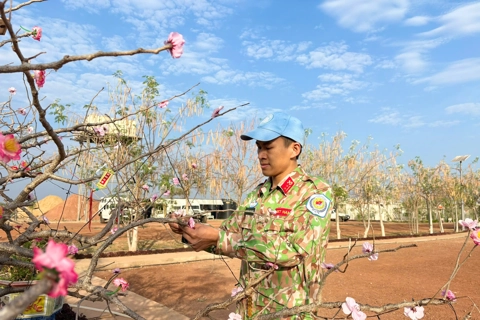
Flower buds and blossoms are the symbols for new beginning. These two distinctive flowers are widely sold and purchased during Tet. Hoa Mai are the yellow apricot flowers often seen in Southern Viet Nam. Hoa Mai are more adaptable to the hot weather of southern regions, thus, it is known as the primary flower in every home. Hoa Dao are the warm pink of the peach blossoms that match well with the dry, cold weather from the North. Tet is not Tet if there is no sight of Hoa Mai (south) or Hoa Dao (north) in every home.
7. Giving away red envelopes (filled with lucky money)
This is a cultural practice that has been maintained for generations. The red envelopes symbolize luck and wealth. It is very common to see older people giving away sealed red envelopes to younger people. Reciprocally, the older ones would return good advice and words of wisdom, encouraging the younger ones to keep up with the schoolwork, live harmoniously with others, and obey their parents. This greeting ritual and Li Xi is also known as Mung Tuoi, honoring the achievement of another year to one's life.
8. Making offers for the Ancestors
This ceremony is held on the first day of the New Year before noontime. The head of the household should perform the proper ritual (offering food, wine, cakes, fruits, and burn incense) to invite the souls of the ancestors to join the celebration with the family. This is the time families honor the souls of their ancestors and present the welfare of the family.
Vietnamese New Year occurs somewhere in the last ten days of January or the first twenty days of February, nearly halfway between winter solstice and spring equinox. Although the Lunar New Year is observed throughout East Asia, each country celebrates Vietnamese New Year in its own way in conformity with its own national psyche and cultural conditions.
For the Vietnamese people, Vietnamese New Year is like a combination of Western Saint Sylvester, New Year's Day, Christmas, Easter and Thanksgiving. It is the festival of Purity and Renewal. During Tet Holiday, there are many Vietnamese New Year Customs as follows:
1. Cleaning and decorating the home
Homes are often cleaned and decorated before New Year's Eve. Children are in charge of sweeping and scrubbing the floor. The kitchen needs to be cleaned before the 23rd night of the last month. Usually, the head of the household cleans the dust and ashes (from incense) from the ancestral altars. It is a common belief that cleaning the house will get rid of the bad fortunes associated with the old year. Some people would paint their house and decorate with festive items.
2. Getting new clothes
This is often the most exciting part of the Vietnamese New Year among children. Parents usually purchase new clothes and shoes for their children a month prior to the New Year. However, children cannot wear their new clothes until the first day of the New Year and onward. The best outfit is always worn on the first day of the year.
3. Farewell ceremony for the Kitchen Gods (Ong Tao)
Seven days (the 23rd night of the last lunar month) prior to Tet, each Vietnamese family offers a farewell ceremony for Ong Tao to go up to Heaven Palace. His task is to make an annual report to the Jade Emperor of the family's affairs throughout the year.
4. Lunar New Year's Eve
However, in a literal translation, it means "Passage from the Old to the New Year". It is a common belief among Vietnamese people that there are 12 Sacred Animals from the Zodiac taking turn monitoring and controlling the affairs of the earth. Thus, Giao Thua (New Year's Eve)is the moment of seeing the old chief (Dragon for 2000) end his ruling term and pass his power to the new chief (Snake for 2001). Giao Thua is also the time for Ong Tao (Kitchen God) to return to earth after making the report to the Jade Emperor. Every single family should offer an open-air ceremony to welcome him back to their kitchen.
5. The Aura of the Earth
Giao Thua is the most sacred time of the year. Therefore, the first houseguest to offer the first greeting is very important. If that particular guest has a good aura (well respected, well educated, successful, famous, etc.), then the family believes that they will receive luck and good fortune throughout the year. The belief of xong dat still remains nowadays, especially among families with businesses.
6. Apricot flowers and peach flowers
Flower buds and blossoms are the symbols for new beginning. These two distinctive flowers are widely sold and purchased during Tet. Hoa Mai are the yellow apricot flowers often seen in Southern Viet Nam. Hoa Mai are more adaptable to the hot weather of southern regions, thus, it is known as the primary flower in every home. Hoa Dao are the warm pink of the peach blossoms that match well with the dry, cold weather from the North. Tet is not Tet if there is no sight of Hoa Mai (south) or Hoa Dao (north) in every home.
7. Giving away red envelopes (filled with lucky money)
This is a cultural practice that has been maintained for generations. The red envelopes symbolize luck and wealth. It is very common to see older people giving away sealed red envelopes to younger people. Reciprocally, the older ones would return good advice and words of wisdom, encouraging the younger ones to keep up with the schoolwork, live harmoniously with others, and obey their parents. This greeting ritual and Li Xi is also known as Mung Tuoi, honoring the achievement of another year to one's life.
8. Making offers for the Ancestors
This ceremony is held on the first day of the New Year before noontime. The head of the household should perform the proper ritual (offering food, wine, cakes, fruits, and burn incense) to invite the souls of the ancestors to join the celebration with the family. This is the time families honor the souls of their ancestors and present the welfare of the family.