Vietnam urged to open new flight routes to boost tourism
Local airlines are committed to initiating tourism development programs grounded in Vietnam's rich cultural and historical heritage, coupled with the innovative spirit of the contemporary era.
Vietnamese airlines are hoping for supportive policies from the Government to boost sustainable and rapid tourism development, especially in opening new flight routes to meet the needs of locals and tourists.
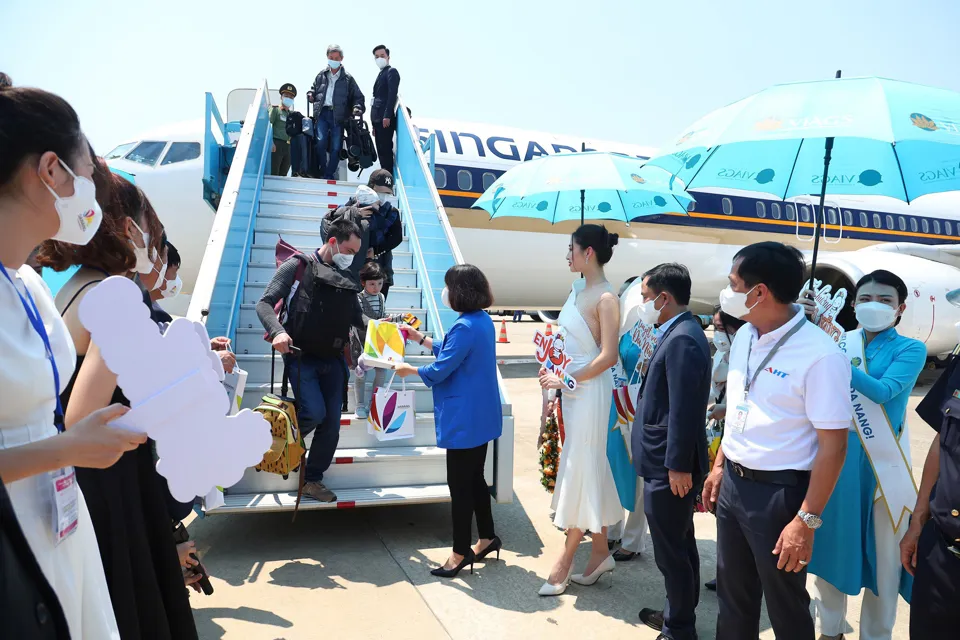
| Welcoming tourists to Danang. Photo: Quang Hai/The Hanoi Times |
Statistics from the Civil Aviation Authority of Vietnam (CAAV) revealed the total passenger volume at airports reached 89 million in the first nine months of 2023, marking a 20% increase. International visitors constituted 23.7 million, showing a remarkable surge of 266.8%, while domestic passengers totaled 65.2 million, reflecting a 3.6% increase compared to the same period in 2022.
However, freight transport witnessed a decline of 15.3%, reaching 887,500 tons.
Thanks to the industry's recovery, most aviation service businesses have returned to profitability, albeit not reaching pre-Covid-19 levels in 2019. Meanwhile, local airlines, including Vietnam Airlines, Bamboo Airways, and Vietravel Airlines, continue to face challenges and losses post-Covid-19 pandemic.
Airlines presently grapple with the predicament of insufficient air ticket sales to cover costs. Apart from fuel expenses, variable costs such as engineering, flight operations services, landing fees, aircraft parking, and rental fees for airport facilities constitute approximately 65-80%. Fixed costs make up 20-35%, varying for each company, limiting significant changes in cost reduction.
The paradox lies in the vulnerability of airlines, the central core of the aviation industry. While ancillary businesses like airports, stores, meal services, and ground handling services thrive due to established policies and mechanisms, airlines struggle.
Highlighting the industry's challenges, a representative from Vietravel disclosed that despite 85% of tourists opting for air travel, all airlines in Vietnam still face losses, leading to flight route and aircraft reductions. The reliance on foreign technology, due to the absence of locally developed core technology, contributes to increased expenses.
Nguyen Thi Phuong Thao, Chairman of the Board of Directors at Sovico Holdings and CEO of Vietjet, emphasized the airline's pioneering efforts in opening new international routes to and from Vietnam, significantly contributing to promoting global tourism. However, challenges arise from economic difficulties post-pandemic, decreased travel from China and Japan, and potential impacts on the aviation and tourism industry due to a reduction in the fleet size of Vietnamese airlines.
Thao from Sovico Holdings suggested that the government and relevant ministries should actively engage in bilateral and multilateral negotiations and agreements with other countries to establish more favorable visa policies. Additionally, she proposed supporting initiatives to open new flight routes that cater to the needs of both the public and tourists.
Thao also emphasized the airline’s readiness to initiate tourism development programs grounded in Vietnam's rich cultural and historical heritage, coupled with the innovative spirit of the contemporary era.
“This involves national-level campaigns to promote Vietnamese tourism, along with investments in technology for efficient immigration management, including the swift issuance of e-visas for international visitors,” she noted.
Recommendations are also made to formulate policies supporting the development of Vietnamese airlines' aircraft fleets, strategies for effective flight slots, and airport operations management to enhance overall capacity.
Le Hong Ha, the General Director of Vietnam Airlines, underscored the necessity of creating a sustainable aviation development plan. This commitment aligns with the government's stance at COP26 and responds to customer preferences for green and sustainable tourism.
“Failure to implement such a plan could result in the loss of Vietnam's competitive advantage in tourism,” Ha warned.
Moreover, he called for collective efforts, with the airline industry aiming to utilize 10% of environmentally friendly materials by 2023, requiring support from ministries and branches to produce and organize clean aviation fuel.