Econ
Vietnam’s economic outlook turns positive
“Vietnam’s economy is strong, as a result of strong momentum of Vietnam’s fundamental growth drivers — domestic demand and export-oriented manufacturing.” Sebastian Eckardt, the lead economist and Acting Country Director of the World Bank (WB) in Vietnam said at the press conference on July 13 to release the Report on the Economy Outlook of Vietnam.
Agriculture, services gradually recover
“These are good conditions to address critical structural bottlenecks to medium term growth while solidifying macroeconomic stability and rebuilding policy buffers,” said Sebastian Eckardt.
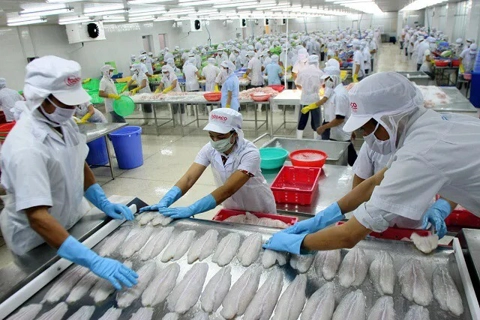
Under the report the report, the service sector—which accounts for about 42 percent of GDP—accelerated in the first half of this year, driven by buoyant retail trade growth, as a result of sustained growth of domestic consumption. Industrial production remains robust despite a significant reduction of output in the oil sector, and growth has gradually recovered in agriculture, though the recovery is still fragile.
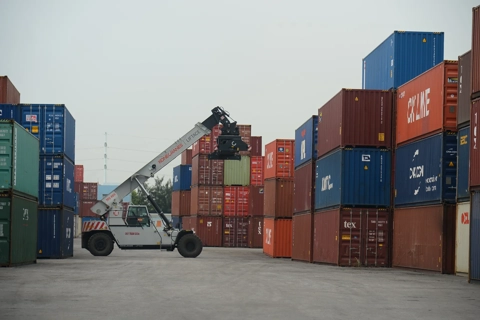
Looking forward, Vietnam’s medium-term outlook remains positive, as a result of buoyant domestic demand, rebounding agricultural production, and strong export-oriented manufacturing, aided by a recovery in external demand. Inflationary pressures will remain moderate, reflecting stable core inflation, lower food and energy prices and diminishing administrative price hikes. The current account is expected to remain in surplus, albeit at a lower level as stronger import growth resumes. Over the medium term, growth is projected to stabilize at around 6.4 percent in 2018–19, accompanied by broad macroeconomic stability.
Consolidate fiscal, monetary and restorative policy buffers
The report argues that elevated global uncertainty calls for macroeconomic prudence. In view of sustained growth momentum, solidifying macroeconomic stability and rebuilding policy buffers should remain the foremost priority. Lowering the fiscal deficit would help to contain rising risks to fiscal sustainability and provide fiscal space to accommodate potential future shocks.
Containing risks from rapid credit growth requires continued improvements in supervision and prudential regulation. The longer term challenge for the Vietnam is to sustain rapid growth and poverty reduction. Considerable gains are possible from structural reforms that alleviate constraints on productivity growth, including through SOE reforms, further improvements in the business environment and improved factor markets for land and capital.
The report features a special section on fiscal consolidation. The National Assembly and the Government have made a commitment to rein in the fiscal deficit over the medium term. In this context, the report recommends a gradual, high-quality fiscal consolidation which strikes an appropriate balance between revenue mobilization and expenditure containment. On the revenue side, enhancing revenue administration to improve collections and lower the compliance burden on taxpayers should be accompanied by tax policy changes to enhance domestic revenue mobilization.
Polices that should be considered are: reform value added tax (VAT), excise tax adjustment for certain products, review and rationalize preferential taxes and property tax application. On budget expenditure, priority should be ensured for efficient investment in infrastructure and human resources, at the same time improve efficiency in regular and investment spending.
In terms of monetary policy, the WB representative states, it is necessary to balance between the objective of macroeconomic stability and growth in the context of low real interest rate and raid credit growth of about 20% (year on year). The rising credit intensity of growth, and sustained acceleration of credit may raise concerns over asset quality, particularly given the past unsolved bad debts. “Despite implementing some measures to solve bad debts, there remains concern over asset quality” – Mr. Sebastian said. Vietnam State Audit and State Bank of Vietnam also inform that the total bad debts, including bad debts reported by commercial banks, bad debts sold to Vietnam Asset Management Company (VAMC) and potential bad debts are about 10.1% of the banks total debit balance in 2016. Until the end of 2016, debts of commercial banks considered as bad debts contributing to one quarter of total bad debts. The remaining are bad debts sold to VAMC and potential bad debts.
The report notes that after a large surplus in 2016, Vietnam’s external current account balance started to decline in early 2017, due to an expected recovery in import growth. The nominal exchange rate has been relatively stable, but the real exchange rate continues to appreciate. Real exchange rate appreciation is driven by a large external surplus of the FDI sector, but is a concern for Vietnam’s domestic private enterprises, which continue to face significant competitiveness challenges.
“These are good conditions to address critical structural bottlenecks to medium term growth while solidifying macroeconomic stability and rebuilding policy buffers,” said Sebastian Eckardt.
Under the report the report, the service sector—which accounts for about 42 percent of GDP—accelerated in the first half of this year, driven by buoyant retail trade growth, as a result of sustained growth of domestic consumption. Industrial production remains robust despite a significant reduction of output in the oil sector, and growth has gradually recovered in agriculture, though the recovery is still fragile.

Illustrative image.
|
Consolidate fiscal, monetary and restorative policy buffers
The report argues that elevated global uncertainty calls for macroeconomic prudence. In view of sustained growth momentum, solidifying macroeconomic stability and rebuilding policy buffers should remain the foremost priority. Lowering the fiscal deficit would help to contain rising risks to fiscal sustainability and provide fiscal space to accommodate potential future shocks.
Containing risks from rapid credit growth requires continued improvements in supervision and prudential regulation. The longer term challenge for the Vietnam is to sustain rapid growth and poverty reduction. Considerable gains are possible from structural reforms that alleviate constraints on productivity growth, including through SOE reforms, further improvements in the business environment and improved factor markets for land and capital.
The report features a special section on fiscal consolidation. The National Assembly and the Government have made a commitment to rein in the fiscal deficit over the medium term. In this context, the report recommends a gradual, high-quality fiscal consolidation which strikes an appropriate balance between revenue mobilization and expenditure containment. On the revenue side, enhancing revenue administration to improve collections and lower the compliance burden on taxpayers should be accompanied by tax policy changes to enhance domestic revenue mobilization.
Polices that should be considered are: reform value added tax (VAT), excise tax adjustment for certain products, review and rationalize preferential taxes and property tax application. On budget expenditure, priority should be ensured for efficient investment in infrastructure and human resources, at the same time improve efficiency in regular and investment spending.
In terms of monetary policy, the WB representative states, it is necessary to balance between the objective of macroeconomic stability and growth in the context of low real interest rate and raid credit growth of about 20% (year on year). The rising credit intensity of growth, and sustained acceleration of credit may raise concerns over asset quality, particularly given the past unsolved bad debts. “Despite implementing some measures to solve bad debts, there remains concern over asset quality” – Mr. Sebastian said. Vietnam State Audit and State Bank of Vietnam also inform that the total bad debts, including bad debts reported by commercial banks, bad debts sold to Vietnam Asset Management Company (VAMC) and potential bad debts are about 10.1% of the banks total debit balance in 2016. Until the end of 2016, debts of commercial banks considered as bad debts contributing to one quarter of total bad debts. The remaining are bad debts sold to VAMC and potential bad debts.
The report notes that after a large surplus in 2016, Vietnam’s external current account balance started to decline in early 2017, due to an expected recovery in import growth. The nominal exchange rate has been relatively stable, but the real exchange rate continues to appreciate. Real exchange rate appreciation is driven by a large external surplus of the FDI sector, but is a concern for Vietnam’s domestic private enterprises, which continue to face significant competitiveness challenges.