A Vietnamese specialty listed in the world’s best pastry
With its unique texture, beautiful appearance, and outstanding flavor, the Banh da lon (Pig Skin Cake) makes it hard for diners to resist wanting to taste it from their first sight.
Pig Skin Cake or Steamed Tapioca Layer Cake is the only representative of Vietnam honored in the list of ‘100 Most Popular Cakes in The World’, which has just been announced by TasteAtlas.
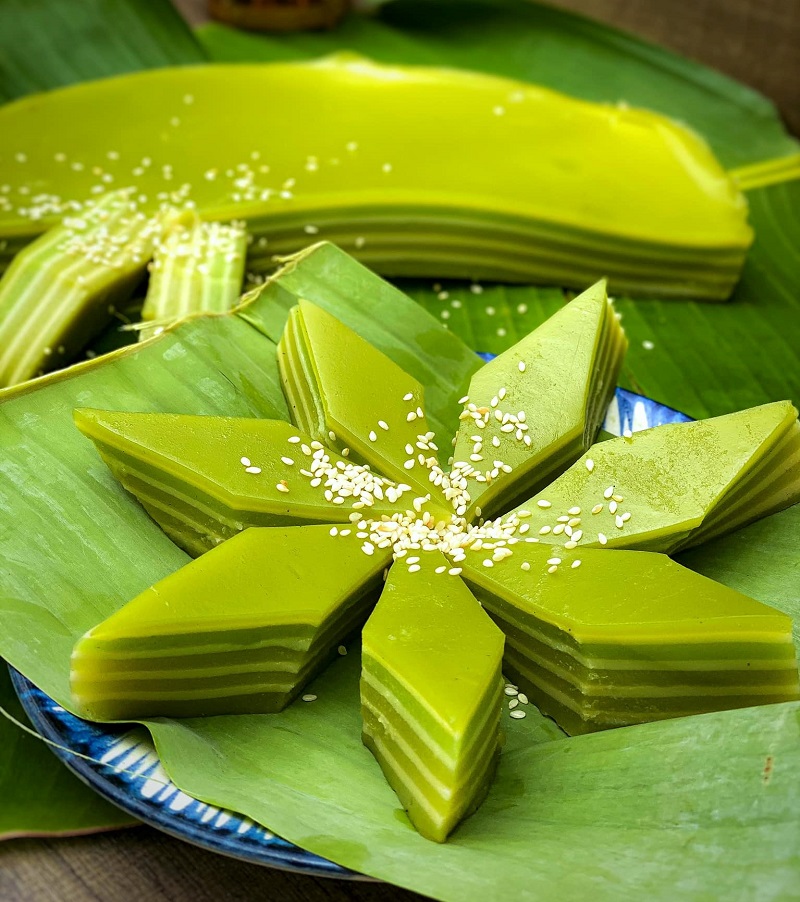
The eye-catching look of the Pig Skin Cake - a Vietnamese southern specialty. The dish is prepared by Ngan Pham |
TasteAtlas's voting criteria are based on the popularity of the dishes among food lovers around the world.
Referring to the specialty from Vietnam, TasteAtlas described: “This traditional Vietnamese dessert consists of chewy layers that are typically made with puréed mung beans, tapioca starch, rice flour, and coconut milk or water.
Traditionally, each cake has a pale-yellow layer made with mung beans and a green layer that is flavored and colored with pandan leaves, while optional ingredients include durian or taro.
Once steamed and chilled, the cake is usually cut into diamond shapes.”
The cake ranks 85th on the list and gets 3.5 stars from the culinary experts from TasteAtlas.
Pork Skin Cake is one of the famous specialties originating from the southern provinces of Vietnam. This cake can be made and enjoyed all year round thanks to its cheap and easy-to-find ingredients. The recipe of the cake is also simple, easy to follow for most local housewives.
| The cake has a smooth surface with a slightly chewy taste. The dish is prepared by Dien An Tran |
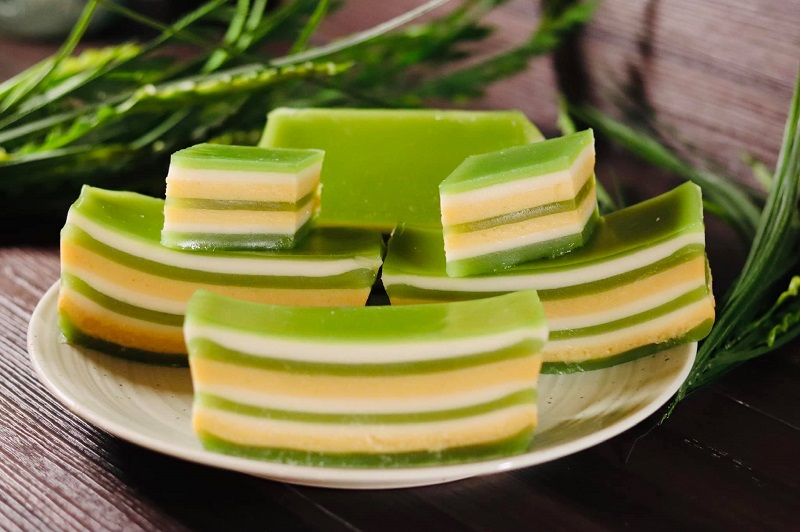
The specialty gets its name of Pork Skin Cake thanks to the way that its texture resembles. The cake feels soft when touched and has a smooth surface with a slightly chewy taste.
In texture, it’s almost like layered jello with a slight mochi-like feel. The green layers are flavored with pandan leaves that are grown largely in Vietnam. The leave has a very unique fragrance that reminiscences of vanilla in western ingredients.
“I have tried Steamed layer cake many times before. I love this unique cake a lot since it is so easy to make but tastes amazing. It is so chewy that it makes me feel like eating boba while drinking milk tea since both desserts contain the same ingredient, tapioca starch. People love to peel off each layer then eat it, that makes the dessert more enjoyable in my opinion,” said Leigh A. Redemer, an Australian expat in Hanoi.
In order to make the best Pork Skin Cake, Vietnamese housewives pay great attention to the selection of ingredients.
| The Pig Skin Cake with the flavor of coffee and mung bean. The dish is prepared by Dien An Tran |
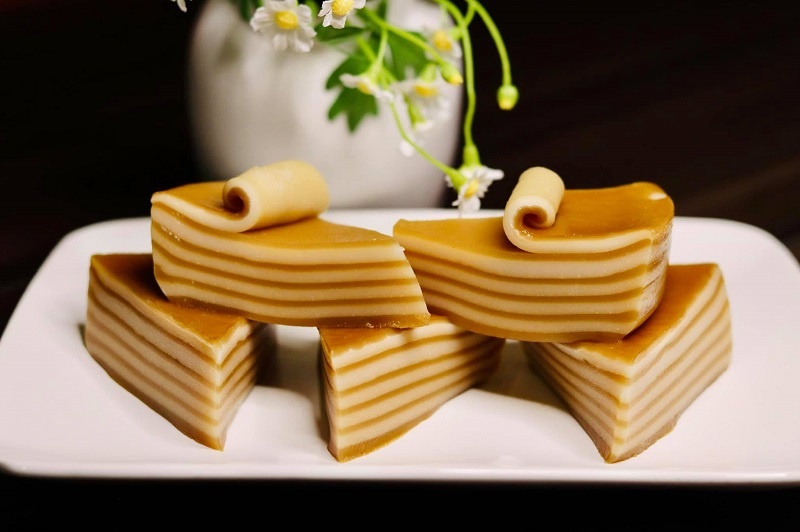
The cake’s specially flavored new glutinous rice flour is made from newly harvested grain to create a sleek and shiny surface. Green beans stuffed inside contain seeds and resemble a yellow color. The seeds are washed and thoroughly steamed and then pureed.
The cake’s shape and color are very important, so cake makers have to be skillful. When choosing the ingredients, cake makers also use coconut milk and Pandan leaf for the green color.
To prepare the dish: coconut milk, tapioca starch, glutinous flour, sugar divided in half, one half can be mixed with green bean, the other mixed with pandan leaf, which must then be filtered through a sieve.
Cakes are steamed in a small heart-shaped mold, leaf or flower mold, or in a bigger mold and are cut into small square pieces.
Before steaming, cover an oil layer inside the mold and place the mold into a steam pot. Pour a layer of pandan leaf mixture into the mold, then mung bean paste comes right after, then pandan leaf again. The cake makers will repeat this process in the right order until the dough becomes harder. When the last layer is finished, they wait for the cake to cool down, then remove it from the mold.
| The purple layer of the cake is taken from the butterfly pea flower, the green from pandan leaf, and the yellow from mung bean. Photo: Goc Bep Nho |
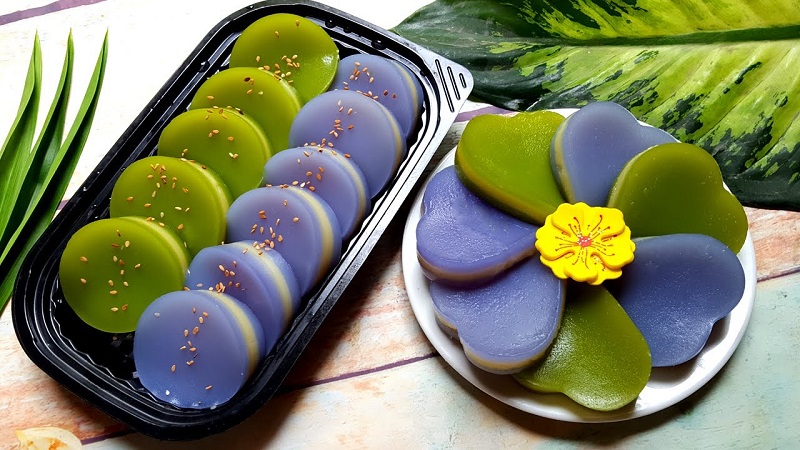
Not only does it have a cool and delicious taste, but the shape and color of Pig Skin Cake will also stimulate people to want to try it immediately upon seeing it.
In addition to the traditional pork skin cake with the green color of pandan leaves and the yellow color of mung bean, Vietnamese housewives also create other eye-catching cake colors from completely natural ingredients. The purple layer of the cake is taken from the butterfly pea flower, the red part is from beetroot, the brown one from coffee, and the yellow from passion fruit.
Other Asian cakes in the list include Bublanina and Kue Putu (Indonesia), Kuih Lapis (Malaysia), Bibingka or Filipino Rice Cake (the Philippines), and Japanese Cheese Cake (Japan).