Admiring beauty of Hanoi’s Indochinese French architectures through a book
The trilingual language book on the theme of Hanoi by editor and journalist Tran Huu Phuc Tien has just been released.
The book entitled "French-Indochinese Architecture, Pearls of Hanoi" was co-published by Omega Book JSC. and the National Archives Center I on the 50th anniversary of diplomatic relations between Vietnam and France.
| The cover of the trilingual Vietnamese-French-English book "French-Indochinese Architecture, Pearls of Hanoi" by Tran Huu Phuc Tien. Photo: Omega Plus |
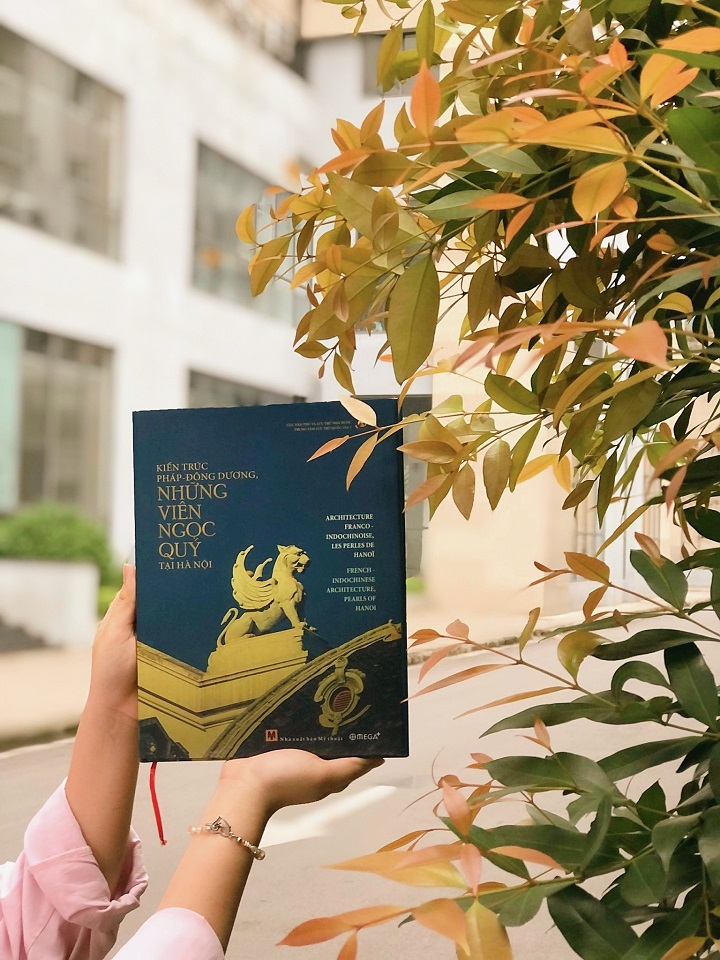
The book's author invites readers to "walk" on each page of the book to explore 37 typical French-Indochinese architectural works scattered all over Hanoi, starting from Ba Dinh Square, the political center, to Long Bien Bridge.
This shows a new angle from Hanoi following the 15th anniversary of administrative boundary expansion in 2008.
With a large paper size and accompanied by a dust jacket, the 300-page hardcover book is a premium "photo book".
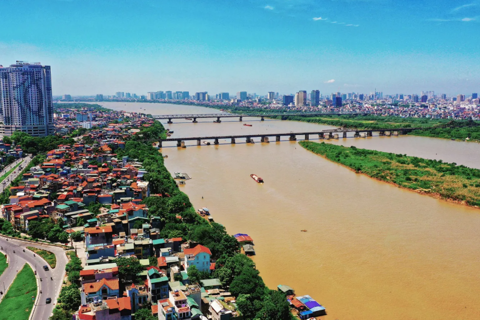
It is divided into five parts on architecture in Ba Dinh and Tay Ho districts, Hoan Kiem district, Hai Ba Trung and Dong Da districts, the Old Quarter and Red River banks, and non-intact buildings.
Unlike previous architectural publications on Hanoi, the book includes not only technical drawings but also archival photographs and a trilingual Vietnamese-French-English narrative text carefully compiled by journalist Tran Huu Phuc Tien, who is both a scholar and a writer.
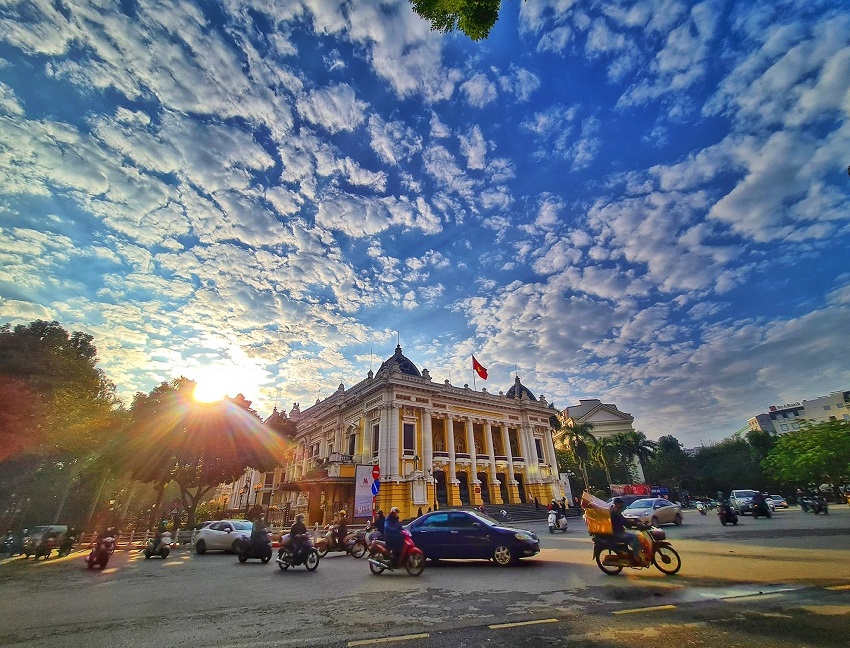
"French-Indochinese Architecture, Pearls of Hanoi" refers to architectural structures that are considered "pearls" in Hanoi, such as the Hanoi Opera House, the Presidential Palace, the National Institute of Hygiene and Epidemiology or Pasteur Institute, and the Vietnam National Museum of History, among others.
| Photo of the Tonkin Palace in the book.Photo: Omega Plus |
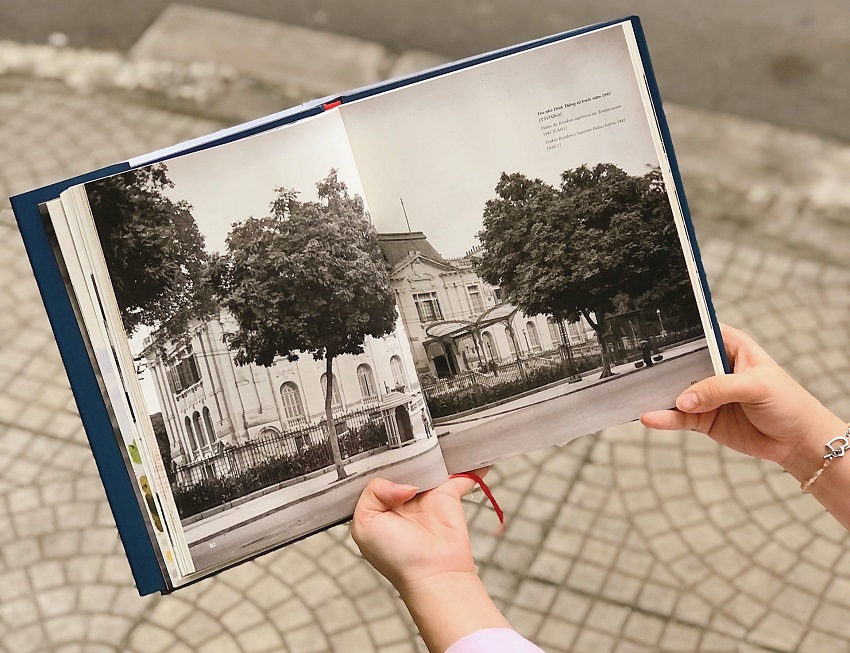
According to historian Duong Trung Quoc, although books on Hanoi's architecture abound, the author's method of descriptive analysis, photos and selection of documents in this book are much more sophisticated and meticulous.
In addition, the book also introduces some lesser-known typical French structures in Hanoi, such as the headquarters of Nhan Dan newspaper, the 100-year-old villas at 6 Hoang Dieu Street and 18 Ton Dan Street.
Author Tran Huu Phuc Tien said that as a Saigonese, he didn't know Hanoi until 1984. But like generations of Hanoi lovers, he has been seduced by the unique beauty of a thousand year old Vietnamese city with a French atmosphere.
"I am a layman in the field of architecture, I remain passionate about history," he said.
"The French influence is reflected in the tree-lined streets running at right angles to each other, as well as the large number of parks, squares and statues. It is also evident in the architecture of public and private buildings constructed in Hanoi before 1945. Built in the neoclassical Beaux-Arts style, these buildings are characterized by their imposing and elegant facades," he added.
| Typical French architecture in Hanoi - the Hanoi Opera House. Photo: Dung Dang |