Cashless society one step away from being a reality in Vietnam
In long term, non-cash payment as one of the key payment methods in the economy would promote sustainable growth and ensure a transparent business environment.
A surge in non-cash payment methods in Vietnam has been evidence of its practical use during the pandemic and also a result of the drive toward a nationwide digital transformation.
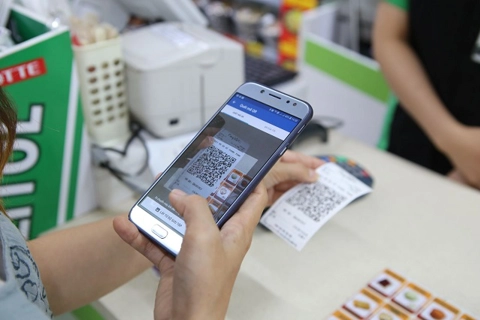
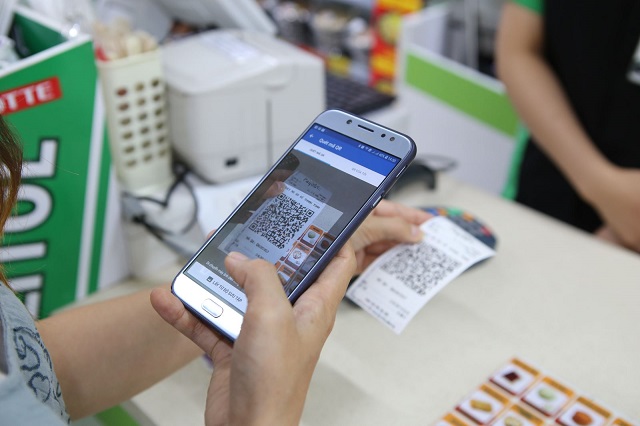
| Locals are getting accustomed to online payment. Photo: Viet Linh |
Nguyen Hoang Linh, an accountant at Thai Phu Company in Hanoi, said his daily working routine has now changed for the better, thanks to the availability of digital payment services.
“Up to 80% of the company’s transactions have shifted from cash to online payment. And even better, all related fees are no longer an issue as banks are providing certain digital payment services free of charge,” Linh told The Hanoi Times.
Referring to mobile payment as a lifeline during the pandemic, Nguyen Thu Trang in Tay Ho District, said everything could now be purchased online.
“From foodstuffs to clothes or books, I can easily find them in online shopping apps of ShopeeFood, Gojek, or in e-commerce platforms including Sendo, Lazada, with more comfort than going out,” she told The Hanoi Times.
For the past months, the majority of local payment services providers have expanded their online payment services with attractive discounts to further encourage customers to switch to non-cash payment.
In addition, grocery stores, shopping malls, or supermarkets have also turned to non-cash payment methods for customers’ convenience.
Getting accustomed to online payment
To catch up with the growing demand for online payment, banks such as VIB, HSBC, Techcombank, or HDBank have been quick in offering promotions, including free registration of bank account, lowering fees in inter-banking transactions, as well as working with schools, hospitals for integration of online payment in their operation.
Pham Duc Duy, director of Card Center at Sacombank, said one month after returning to a new normal, the proportion of non-cash payments in total transactions in his bank rose by 40% against the previous months.
“The people have gotten accustomed to online payment during the lockdown period,” Duy said, noting revenue from digital services also went up by 30% in October.
A survey conducted by Visa revealed the Covid-19 pandemic was the key catalyst in accelerating non-cash payment, especially for small-value transactions. In this regard, 77% of Vietnamese customers have been aware of digital banking and 31% are using these services.
According to Visa, online bill payment is the most preferred service among local Vietnamese, followed by wire transfer for friends and families.
Six percent of the respondents noted they would not return to cash payment, which shows the ease of Covid-19 restrictions does not impact people’s preference for non-cash payment methods.
Meanwhile, the number of e-transactions via inter-banking systems rose by 1.88% in quantity and 42.58% in volume year-on-year in the first nine months of 2021, data from the State Bank of Vietnam (SBV) revealed.
Payments via the internet also climbed up sharply by 51% in quantity and 29% in value during the period, along with mobile payment with the corresponding rates of 76% and 88.3%, respectively.
As of September, the number of payment accounts stood at 110.92 million, representing an increase of 15.4% year-on-year.
Pham Xuan Hoe, former deputy director-general of the Banking Strategy Institute at the SBV, argued the use of non-cash payment would significantly reduce cash circulated in the economy, in turn reducing social cost and time in completing economic transaction activities.
"In the long term, non-cash payment as one of the key payment methods would promote sustainable growth and ensure a transparent business environment," he told The Hanoi Times.
Hoe, however, noted the necessity for data protection during online payment activities, adding this is the responsibility of the banking sector and services providers.
From a legal perspective, Hoe suggested the SBV should soon finalize the legal framework in online payment management and a decree on sandbox for Fintech activities and Mobile Money services.
Under Vietnam’s non-cash payment strategy in the 2021-2025 period, the Government targets the amount of non-cash payment value to be 25 times bigger than the GDP by 2025; non-cash payment in e-commerce to make up 50% of total transactions, and 80% of the people from 15 years of age to have a bank account.
| "Hanoi has issued a plan to promote non-cash payment in the city in 2021, with the goal of driving up digital transformation in the banking sector and expanding the digital ecosystem of banking services and products. The national strategy on non-cash payment during the 2021-2025 period would serve as the basis for Hanoi to promote e-payment in public services, eventually forming e-government for the benefits of the people and businesses," Director of Hanoi’s Department of Finance Nguyen Xuan Luu told The Hanoi Times. |
| "While the pandemic could be the catalyst for non-cash payment acceleration, there is no doubt that a booming of such a trend comes from the thorough preparation of payment service providers. I see fierce competition in the payment market, which requires every company to further innovate and enhance service quality to bring the best possible experience for customers," Pham Xuan Hoe, former deputy director-general of the Banking Strategy Institute told The Hanoi Times. |