Covid-19 outbreak accelerates renovation of old buildings in Hanoi
The use of shared utilities in old apartment buildings is among the main reasons leading to Covid-19 infection in the community.
It is not a coincidence that Thanh Xuan Trung Ward, Thanh Xuan District, one of Hanoi’s most densely populated places where nearly 2,000 families living in narrow space, has been the epicenter of the current Covid-19 outbreak in the city.
| Covid-19 testing for locals at Thanh Xuan Trung Ward. Photo: Hong Thai |
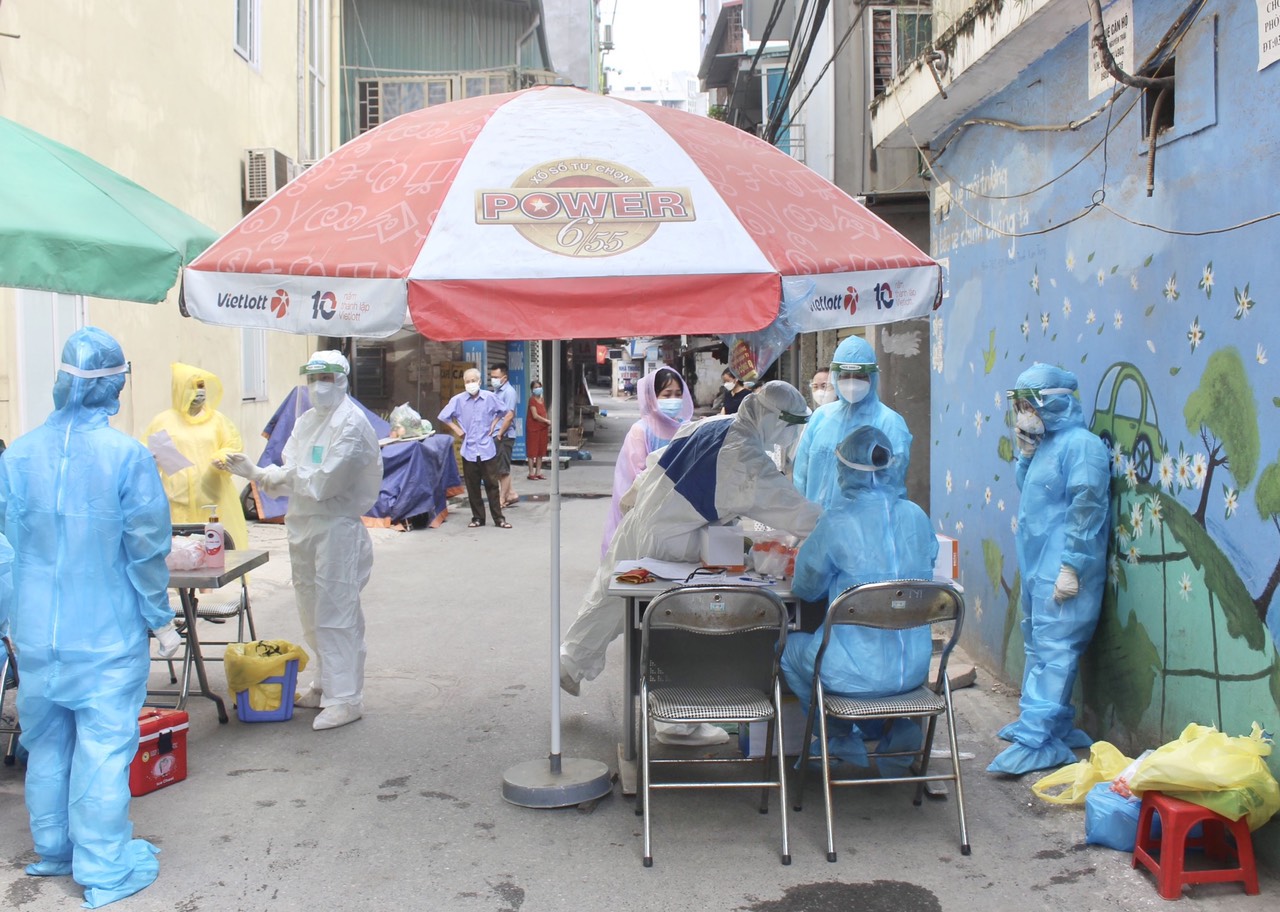
From the first two infection cases detected on the morning of August 23, there have been nearly 600 cases related to this ward as of present – the largest number in a single cluster in Hanoi, mainly concentrated at valley No.328-330 Nguyen Trai Street.
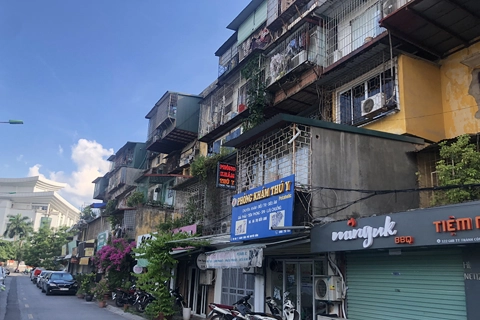
“The majority of old apartments here were built during the 60-70s period, many do not have their own toilet but a shared bathroom. The humidity also adds to higher risks of virus spreading,” Chairman of the Thanh Xuan District People’s Committee Vo Dang Dung told The Hanoi Times.
Nguyen Xuan Quang, living at Rang Dong Apartment Building, a corner of the epicenter, told The Hanoi Times that the situation seems perfect for the virus. “From early morning to late afternoon, people were lining up to use the bathroom,” Quang added.
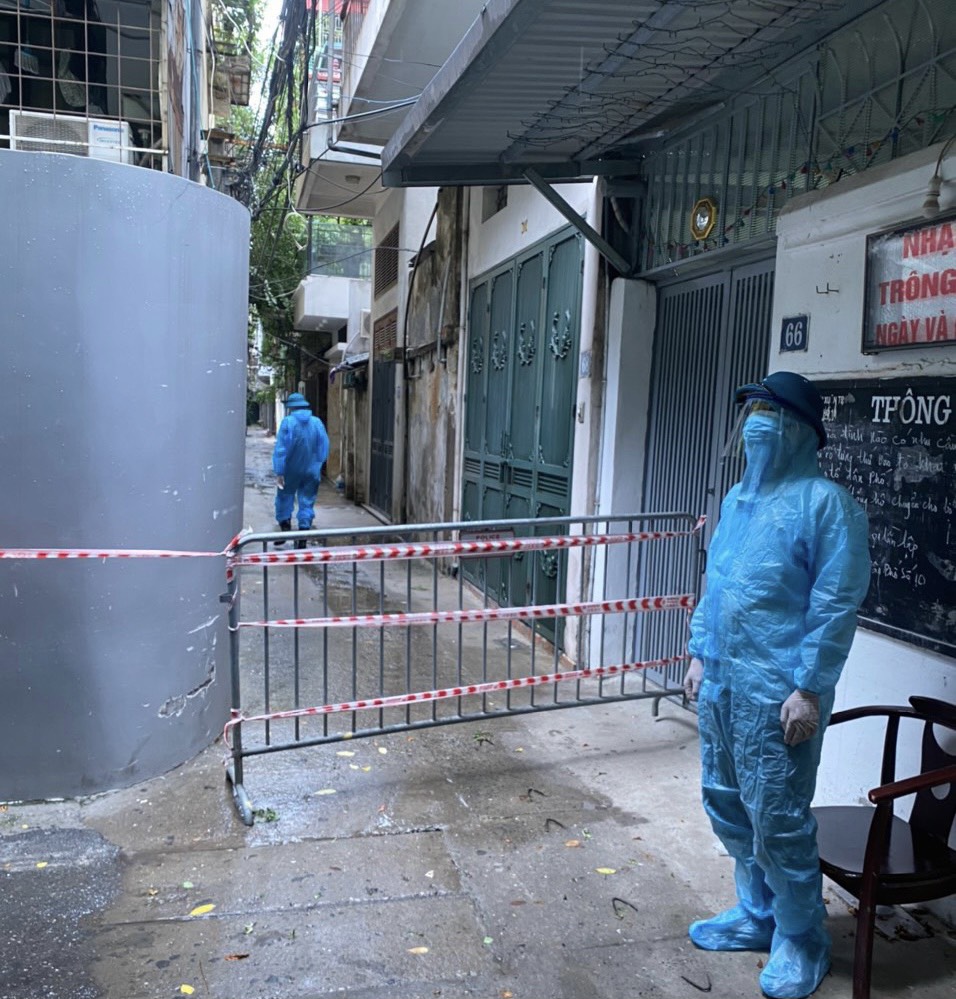
| Quarantine zone in Thanh Xuan Trung Ward. |
Burning question
Strong efforts from the authorities and active response of the locals for nearly a month helped control the situation, but the burning question continues to linger as to whether this would once again become a Covid-19 hotspot in the future, given the fact that Covid-19 would not go away soon.
“People would return to their normal lives, but as we continue to live in a densely populated place and use the shared toilet, I am afraid the recent outbreak would not be the last,” Quang shared.
Quang’s concern is also the view of many that are living in nearly 1,580 old apartment buildings of two to five floors built during the 1960-1990 period. Among those, 25% are in the D category, the most dangerous in a four-scale classification with decaying conditions and inadequate utilities.
However, for the past 20 years, Hanoi has been able to renovate only 1% of the total old apartment buildings.
“Even before the pandemic struck, living in these houses is dangerous enough. But the pandemic has added more urgency for the city to act,” Nguyen Hai Yen at Giang Vo Ward, another locality housing dozens of old apartments, told The Hanoi Times.
Renovating 10 apartment buildings in 2021-2025
Such issue has not gone unnoticed and was raised in the second session of the 16th Hanoi People’s Council, which took place on September 22-23.
“The use of shared utilities in old apartment buildings are among main reasons leading to Covid-19 infection in the community,” said Vice Head of the Urban Committee under the Hanoi People’s Council Tran Hop Dung.
| G6B Thanh Cong Apartment Building in Thanh Cong Ward, Hanoi, classified in the D Category. Photo: Thanh Luan |
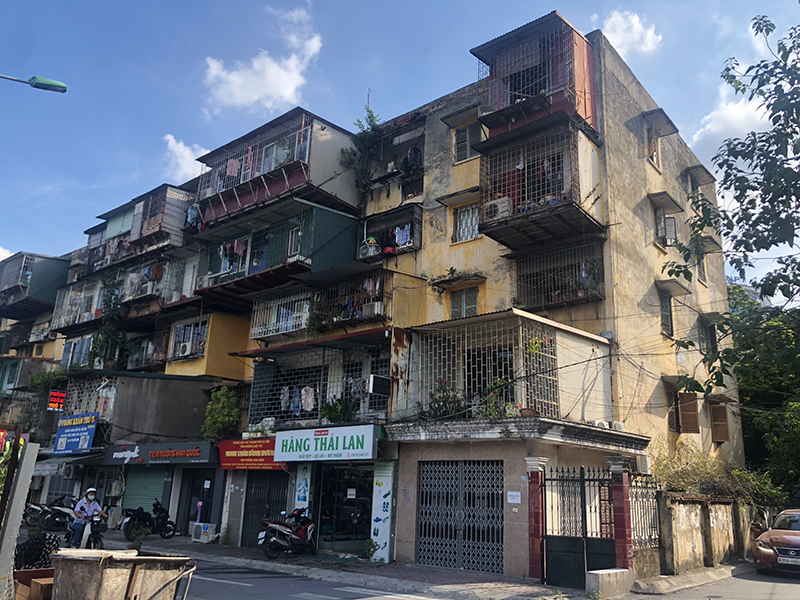
On the second working day on September 23, 100% of deputies present agreed on a resolution to renovate and repair old apartments in Hanoi with an estimated budget of VND500 billion ($22 million) for the 2021-2025 period.
Director of the municipal Department of Construction Vo Nguyen Phong said the city would first review the current conditions of old and dangerous apartments that are at high risk of collapsing, and the process is set to be complete before the second quarter of 2023.
“Around 10 old apartment buildings would be selected for reparation during the 2021-2025 period, including those in Kim Lien, Trung Tu, Nghia Tan, Thanh Xuan Bac, or Thanh Xuan Trung wards,” Phong added.
Deputy Head of the Urban Committee Dung urged local authorities to speed up the review process to soon relocate locals out of dangerous zones for safety.
“There should be a long-term and consistent plan to renovate old buildings to improve living standards, which is part of the city’s efforts to transform itself into a green urban city,” Dung said.
While acknowledging shortcomings in this regard for the past two decades, Dung called for greater support policies and incentives to further attract investors joining the city’s efforts in renovating old buildings, Dung added.
Chairman of the Hanoi People’s Committee Chu Ngoc Anh said the local authorities would cooperate with other agencies in ensuring efficient implementation of the resolution.
“Hanoi gives priority to addressing a series of concerns from the public, ranging from Covid-19 fighting, environmental pollution, old building renovation, to speeding up projects of waste treatment and clean water provision,” Anh added.
In July, the Government issued decree No.69/2021/ND-CP on renovation and reconstruction of apartment buildings, including a legal framework on compensation and resettlement for affected households.
According to experts, the decree is seen as a major step towards the acceleration of renovation and reconstruction of old apartment buildings, as it defines in detail which types of condominiums are subject to rebuilding along with compensation plans and support for resettlement.
The decree and this latest resolution of the Hanoi People’s Council could drive forward the transformation of the old building landscape in the city, as Mayor Anh has stressed that “the reconstruction of old apartments remain a priority for Hanoi in the 2021-2025 period.”