Finance ministry considers removing petrol price stabilization fund
The Government needs a financial tool to control the prices of strategic commodities, including petroleum products, to avoid a sudden rise in prices and impact on people’s lives.
The Ministry of Finance (MoF) is seeking public opinion on the revision of the Law on Prices, including the removal of the petrol price stabilization fund, a financial instrument aimed at keeping petrol prices stable in the domestic market.
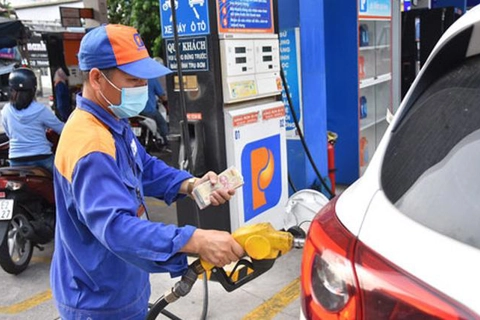
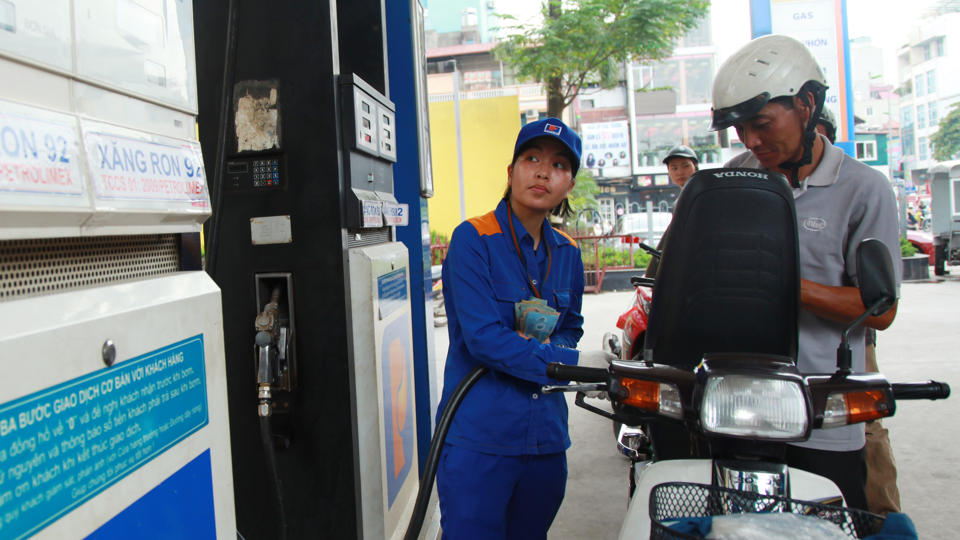
| A petrol station in Dong Da District. Photo: Pham Hung |
In its proposal, the MoF argued that such a change would help gasoline prices to be fully regulated by the market mechanism.
Do Van Tien, owner of a transport company in Ha Dong District, Hanoi, expressed support for the ministry’s initiative by referring to the fact that every liter of petrol is subject to multiple taxes, including the contribution to the petrol price stabilization fund.
At present, petroleum companies are required to contribute VND500 for every liter of gasoline, kerosene, diesel, and related products sold.
“Petrol prices make up an average of 30-40% of total operational costs, so rising prices are causing severe impacts on businesses’ performance,” Tien told The Hanoi Times.
Tien said the fund has not been effective in curbing rises in petrol prices while pointing out its failure to drive down prices.
“It may be better for the domestic prices to vary according to those in the international market,” he added.
Sharing Tien’s view, Tran Thu Hang, a local shopkeeper at Phung Khoang market, Nam Tu Liem District, said the fund has not fulfilled its role as a price stabilizer against the volatility in the international market.
“The fund should have been able to prevent prices from going up at a difficult time to aid the economy, but recent subsidies from the fund proved insignificant,” Hang told The Hanoi Times.
Data from the MoF suggested as of late March, the petrol price stabilization fund remained in a deficit of VND170 billion (US$7.3 million). In the latest price review on June 13, the joint inter-ministerial team of the Ministry of Finance and Ministry of Industry and Trade decided to raise prices of biofuel E5-RON92 to new records of VND31,110 per liter, and RON95 to VND32,370, marking the 11th price hike since early 2022.
Careful consideration needed
Some economists, however, have different ideas about the removal of the petrol price stabilization fund, especially at a time of high volatile period.
Former Director of the General Statistics Office Nguyen Bich Lam noted the presence of the fund remains significant to avoid a sudden increase in domestic prices for the benefit of local consumers.
“Without the fund, petrol prices in Vietnam would not stay below the world’s average,” he added.
National Assembly Deputy Tran Hoang Ngan from Ho Chi Minh City shared the view with Lam and suggested other feasible options, including the removal of excise tax and environmental protection tax to prevent petrol prices from going up.
“It is inappropriate to impose an excise tax on petroleum products, seen as an essential commodity for the economy,” Ngan said.
Meanwhile, economist Nguyen Dinh Anh noted the key mission of petrol price management is to keep prices of input materials from going up.
“The Government has to decide a trade-off between declines in the state budget and control the rise of petrol prices,” he said.
Given the fact that 40% of the retail prices of petrol products are made up of taxes and fees, Anh noted the Government has the required tool in its hands to further lower the prices without removing the petrol price stabilization fund.
“In a market economy, it is inevitable for the Government to remove the petrol price stabilization fund. However, in the current situation in Vietnam, the Government needs a financial tool to control prices of strategic commodities, including petroleum products, to avoid a sudden rise in prices and impact the people’s lives,” To Hoai Nam, Vice Chairman of Vietnam Small and Medium Business Association. “For Vietnam to have a petrol market operating under the market mechanism, Vietnam should further expand the supply sources, in which all market participants, including foreign companies, are allowed to join the petrol trading business. Only then, the Government may consider to remove the petrol price stabilization fund and replace it with other tools, such as taxes or oil storage,” Economist Dinh Trong Thinh, lecturer at the Academy of Finance. |