From Viet Bac to Hanoi: Reenacting President Ho Chi Minh’s revolutionary journey
The cai luong piece portrays Nguyen Ai Quoc, later known as Ho Chi Minh, after 30 years searching for a path to national salvation.
THE HANOI TIMES —
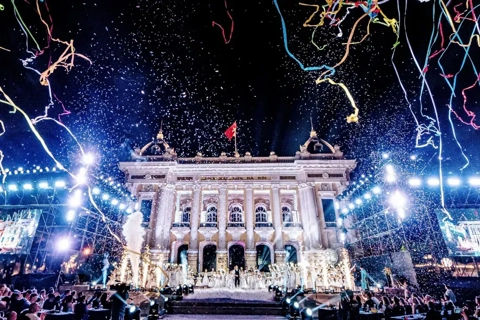
In addition, around one million people gathered at Ba Dinh Square for the great national celebration, where President Ho Chi Minh proclaimed the birth of the Democratic Republic of Vietnam.
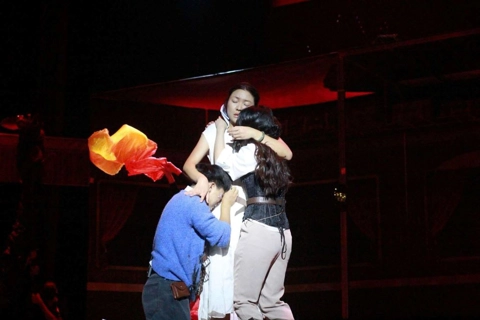
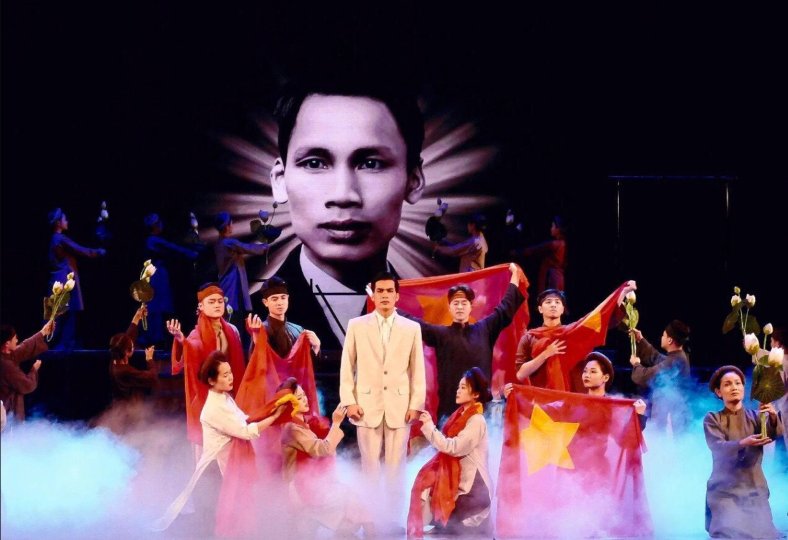
This is one of the grand scenes from the cai luong (Vietnamese Southern reformed theater) production From Viet Bac to Hanoi, to be staged on August 11–12 at the Hanoi Opera House.
The production, mounted by the Vietnam National Traditional Opera Theatre, is based on playwright Nguyen The Ky’s script to mark the 80th anniversary of the August Revolution and National Day (September 2).
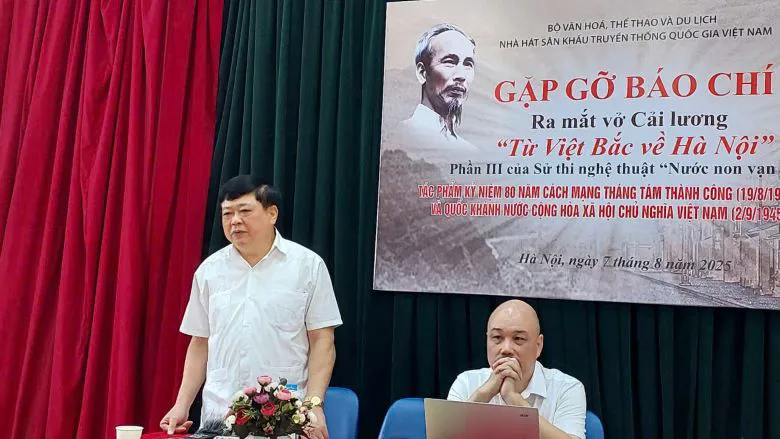
Adapted from Volume 3 of Nuoc Non Van Dam (The Mighty Country), the play follows President Ho Chi Minh’s journey after embracing Marxism–Leninism, founding the Communist Party of Vietnam, and returning to the homeland in 1941, to lead the revolution.
Through the performance, audiences gain insights into President Ho Chi Minh’s revolutionary activities in the northern mountain provinces of Cao Bang, Bac Kan, Tuyen Quang and Thai Nguyen, his border crossings into China to coordinate with the Chinese Communist Party and assess the Kuomintang government’s situation.
It also features his arrest and more than a year of imprisonment by Chiang Kai-shek’s regime in numerous jails and his eventual return to Hanoi to lead the resistance independence struggle. The play closes with the iconic moment when he reads the Declaration of Independence.
According to playwright Nguyen The Ky, President Ho Chi Minh embodied boundless patriotism, deep compassion for the people, and a sincere commitment to great national unity. He was both simple and close, yet profoundly great. His ideals, virtues, and style were expressed through concrete, practical deeds, often quietly and humbly.
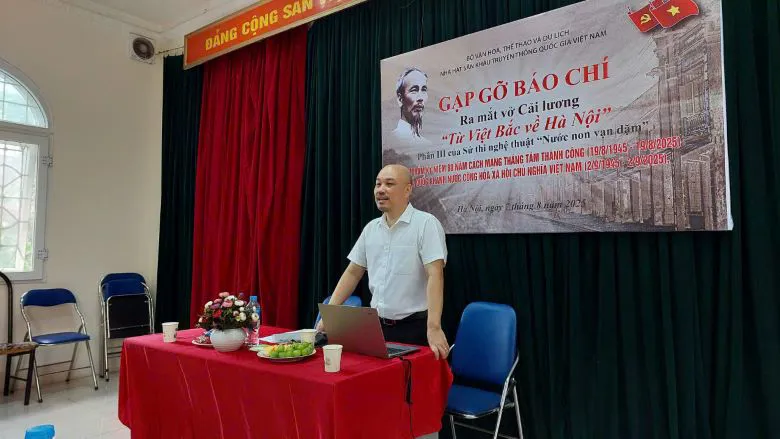
Remaining faithful to the novel’s historical narrative, director Trieu Trung Kien retains its chronological storytelling while ensuring a smooth dramatic flow. The third part of the play spans the years 1941–1945, when Vietnam’s revolution, though outwardly quiet, was simmering beneath the surface, awaiting the right moment to erupt.
“The greatest challenge was condensing five years of history across a vast geographic scope, with a large cast of characters and complex, interwoven events while keeping the story compelling, vivid, and convincing,” said Kien.
Casting the role of President Ho Chi Minh was another formidable task. After working with four candidates, the director ultimately chose actor Van Thuan.
“At first I was extremely anxious and sleepless for many nights, because this was such a tremendous challenge for me,” Thuan admitted. “But I gradually gained confidence and determination to fulfill the role. I trained hard, from voice and posture to mannerisms, especially capturing Uncle Ho’s unique aura so I could embody the character as fully as possible.”
|
From 2022 to 2025, the Literature Publishing House and Lien Viet Culture and Communication Joint Stock Company printed and published a 5-volume historical novel called Nuoc non van dam (The mighty country) by writer Nguyen The Ky. Director Trieu Trung Kien and playwright Hoang Song Viet, along with artists from the Vietnam Cai Luong Theater (now the Vietnam National Traditional Theater), planned to adapt and stage five parts of the epic novel to five theater pieces. Part 1: No nuoc non (Dedicate to the country) was introduced to the public in Hanoi, Ho Chi Minh City, and many provinces and cities across the country from 2022 to present over 100 performances on wooden floors and television and radio. Part 2: Lenh denh bon bien (Adrifting) is in the staging plan. Part 3: From Viet Bac to Hanoi was given priority to be built first and premiered to the public on August 11-12 at the Hanoi Opera House, practically celebrating the 80th anniversary of the successful August Revolution and National Day on September 2 (1945-2025). |