Log in
Social Affairs

Gov’t to earmark over $3.2 billion for poverty reduction 2021-2025

The poverty rate declined sharply from 9.88% in 2015 to 2.75% in 2020, with over eight million people being left the poor and near-poor status.

As part of the national program on sustainable poverty reduction in 2021-2025, the Vietnamese Government is set to earmark VND75 trillion (US$3.2 billion) for this purpose.

Minister of Labor, Invalids and Social Affairs Dao Ngoc Dung revealed the figure at a sitting of the National Assembly today [July 23].

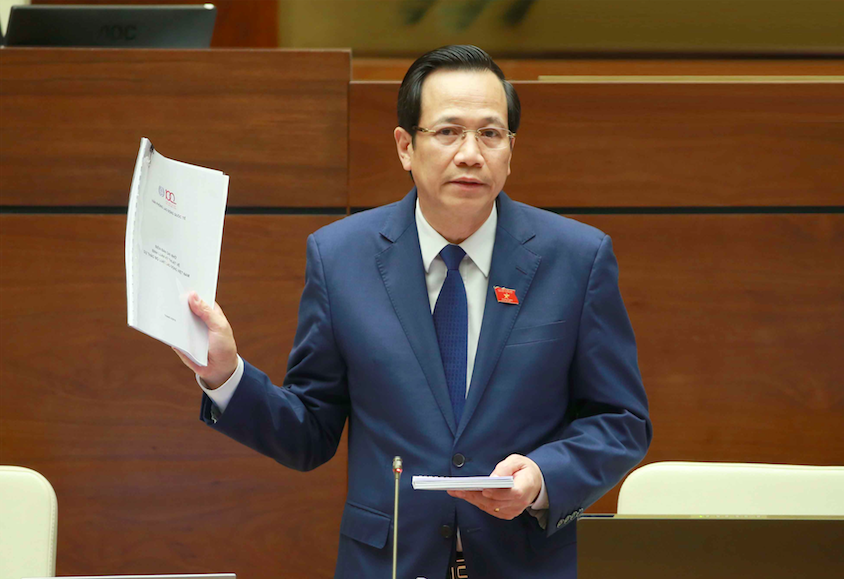
 Minister of Labor, Invalids, and Social Affairs Dao Ngoc Dung at the sitting. Photo: Le Son

For the past five years, Dung said the poverty rate declined sharply from 9.88% in 2015 to 2.75% in 2020, saying over eight million people escaped from the poor and near-poor status.

“Vietnam is the first and also among 30 countries adopting the multi-dimensional approach for assessing poverty, in line with sustainable development goals,” he noted, saying the country has achieved the UN’s millennial goals on poverty reduction ahead of schedule.

Giving the specific plan on poverty reduction in the next period, Dung noted the Government's plans to address localities with a high poverty rate of over 40%, including the Muong Nhe District (Dien Bien Province) at 59.97%, Ky Son District (Nghe An Province) with 42.21%; and Dong Van District (Ha Giang Province) with 41.96%.

“Unsustainable poverty reduction in certain provinces are partly due to natural disasters and diseases, along with the lack of necessary skills of its population to compete in the labor market,” Dung added.

Under the multi-dimensional poverty standards in 2022-2025, Vietnam is expected to have 4.47 million households, or 17.44 million people, having income under the poverty threshold by January 2022.

“Growing economic development leads to higher living standards, and therefore also raises the poverty standards, which require huge resources to fully resolve the issue,” Dung added.

Among measures set up by the government, Dung said the focus would be to improve socio-economic infrastructures as a means to boost livelihood diversification for the poor.

According to Dung, the specific goals of the program is to reduce the national poverty rate by 1-1.5% per year; the rate of poor households in poor areas to decline by 4-5% per year; rate of poverty in ethnic groups to drop by 3% per year under the multi-dimensional poverty standards.

The government expects the rate of people in poor areas to have access to job training by 60%, and at least one member in the poor and near-poor households to have a sustainable job.

Reactions:
Share:
Trending
Most Viewed
Related news
Poverty rate in Hanoi falls sharply

Poverty rate in Hanoi falls sharply

13 Sep, 10:19

Hanoi’s government has considered the goal of reducing poverty and ensuring social security one of the key socio-economic development tasks.

Nearly 80,000 public employees receive benefits after early retirement

Nearly 80,000 public employees receive benefits after early retirement

According to the Ministry of Home Affairs, around 100,000 public employees will leave public service due to restructuring, including about 85,000 early retirees, from 2025 to 2027,

Vietnam to implement first child-centered Juvenile Justice Law in 2026

Vietnam to implement first child-centered Juvenile Justice Law in 2026

Vietnam has taken a major step toward child-centered justice with the adoption of the Juvenile Justice Law, a landmark outcome of four years of international cooperation aimed at strengthening protections for children across the criminal justice system.

Vietnam marks 25 years of ILO Convention commitment in labor law enforcement

Vietnam marks 25 years of ILO Convention commitment in labor law enforcement

Marking 25 years since ratifying ILO Convention No. 182, Vietnam and its international partners reaffirmed their commitment to harness labor law enforcement, particularly ending child labor amid remaining challenges.

15-year campaign builds a safer, more responsible traffic culture across Hanoi

15-year campaign builds a safer, more responsible traffic culture across Hanoi

After 15 years, a long-running traffic safety campaign continues to shape safer behavior and shared responsibility on Hanoi’s streets.

Border soldiers walk alongside children on Lai Chau’s hardships to school

Border soldiers walk alongside children on Lai Chau’s hardships to school

In Vietnam’s northern border highlands, many children begin their school day hours before sunrise, walking dangerous mountain paths to reach class. Behind their perseverance stands quiet, long-term support from border soldiers, teachers and local authorities.

PM requests emergency in house rebuilding for flood-hit residents 

PM requests emergency in house rebuilding for flood-hit residents 

The Government leader has called the mission a mandate from the heart, urging all authorities to act as a moral commitment to the people.

Two-tier local government model strengthens Hanoi’s efforts to end urban flooding

Two-tier local government model strengthens Hanoi’s efforts to end urban flooding

Associate Professor Nguyen Hong Tien analyzes why Hanoi still faces chronic flooding, explains weaknesses in drainage planning and implementation and outlines how the two-tier local government model can support long-term solutions.

PetroVietnam advances nationwide STEM classrooms to drive innovation and future talent

PetroVietnam advances nationwide STEM classrooms to drive innovation and future talent

PetroVietnam expands its STEM Innovation program to develop high-quality classrooms and strengthen Vietnam’s future workforce in science, technology and innovation.