Hanoi celebrates 10th anniversary of UNESCO's recognition of Imperial Citadel
Hanoi still preserves in itself valuable historical and cultural relics, including the Thang Long Imperial Citadel.
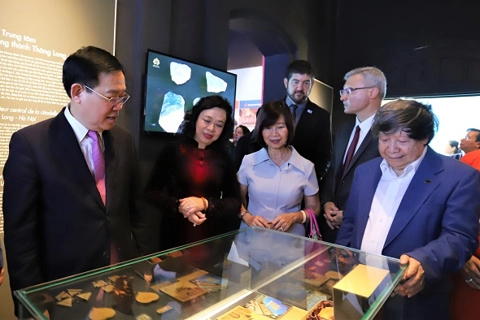
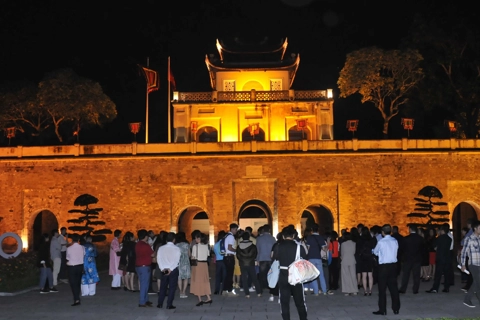
The Thang Long Heritage Conservation Center on November 23 celebrated the 10th anniversary since the historical site was recognized by UNESCO as a World Cultural Heritage.
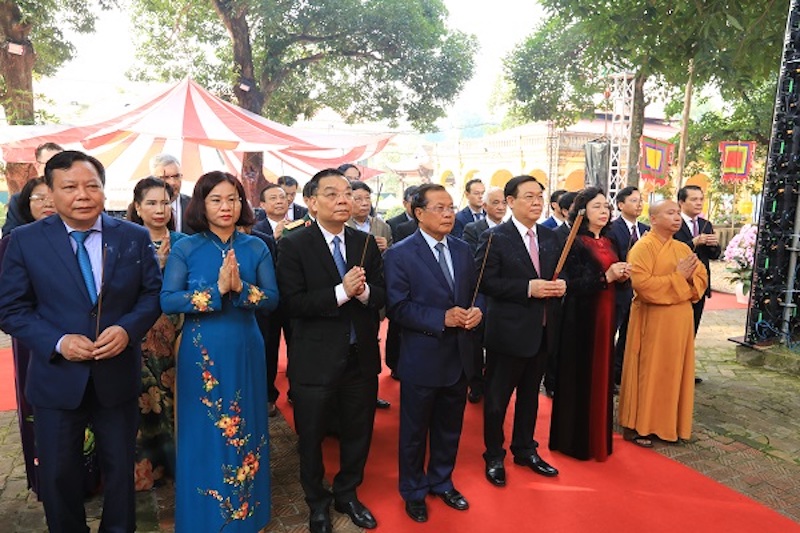
Delegates at the ceremony offered incense to the feudal monarchs, who used to rule the country from Thang Long citadel. Photo: Lai Tan |
The event aimed to honor the cultural and heroic traditions of the capital; promote outstanding heritage values dating back more than a thousand years; celebrate the 1010th anniversary of Thang Long - Hanoi and the success of the 17th Congress of the City Party Committee, as well as the 15th anniversary of Vietnam Cultural Heritage Day (November 23, 2005 - November 23, 2020).
Mr. Vuong Dinh Hue - Politburo member, Secretary of Hanoi Party Committee and Mr. Chu Ngoc Anh, Chairman of Hanoi People's Committee attended the event together with Mr. Michael Croft, chief representative of UNESCO in Vietnam, and other representatives of ministries and departments in Hanoi.
Delegates at the ceremony offered incense to the feudal monarchs, who used to rule the country from the Thang Long citadel. They were treated to a festival drum performance and an epic reenactment of a historic event that happened in 1010, when King Ly Cong Uan moved his kingdom’s capital from Hoa Lu in Ninh Binh province to Thang Long- now Hanoi city.
The ruler started the construction of the Imperial Citadel of Thang Long and finished it 1011. The massive architectural work, which had later been fortified by successive feudal dynasties, plays an important role in the system of Vietnamese historical monuments.
Mr. Tran Viet Anh, director of the Thang Long Heritage Conservation Center. Photo: Lai Tan |
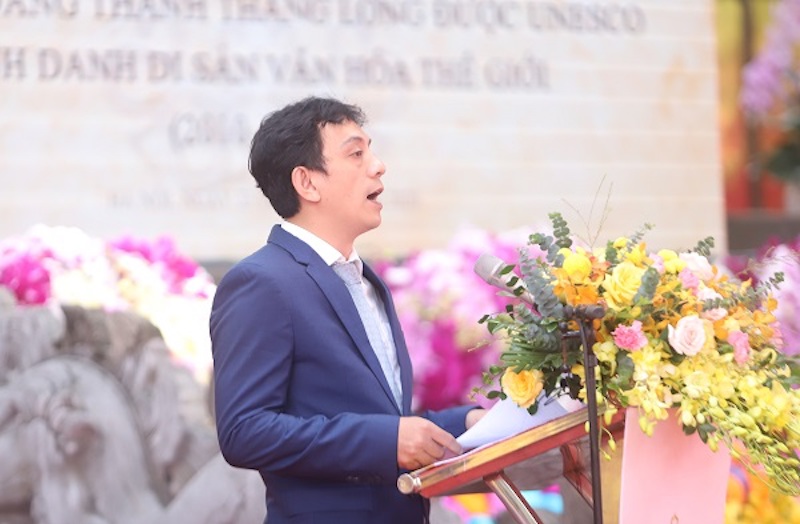
At the ceremony, Mr. Tran Viet Anh, director of the Thang Long Heritage Conservation Center, said that from 2002 to 2003, a massive archaeological excavation had been conducted at 18 Hoang Dieu (the present Thang Long Imperial) revealing an extremely valuable relic complex, affirming the existence and longevity of the Thang Long Imperial Citadel through a thousand of years. Since 2004, the Ministry of Defense has gradually handed over the Ancient Citadel relic to Hanoi. In October 2004, the Thang Long Imperial Citadel opened its doors to visitors for the first time.
"A decade since the heritage site was honored by UNESCO, the work of preserving the heritage value of the Imperial Citadel of Thang Long has been implemented synchronously and methodically," said Mr. Viet Anh.
“We've already approved the detailed planning on conservation, embellishment and promotion of the ancient citadel relic area. In addition, the Center has formulated a project on overall conservation of the heritage site; as well as did a research on restoration of palaces and other royal ceremonies.”
Hanoi People's Committee Chairman Chu Ngoc Anh. Photo: Lai Tan |
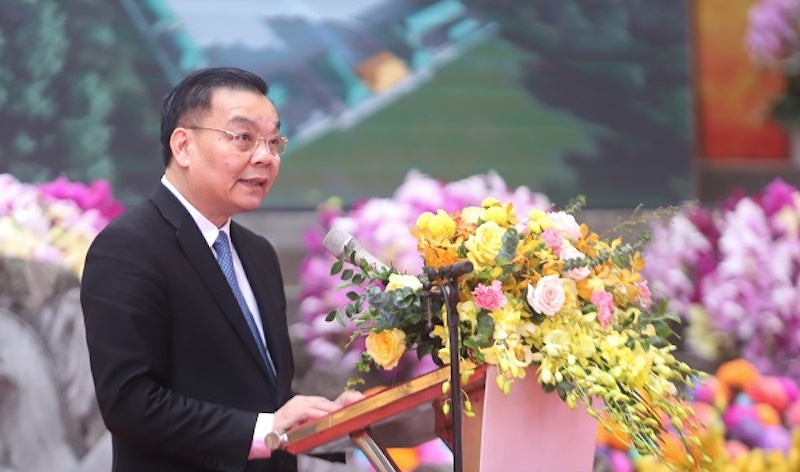
Speaking at the ceremony, Hanoi People's Committee Chairman Chu Ngoc Anh emphasized that Hanoi is a city with a long history, a place of convergence, crystallization and diffusion of national cultural values. Enduring historical upheavals, Hanoi still preserves in itself valuable historical and cultural relics, including the Thang Long Imperial Citadel.
“Over the past 10 years, in implementing the government's commitments to UNESCO, the People's Committee of Hanoi has focused on leading the Thang Long Heritage Conservation Center on preserving and promoting the value of the heritage,” Mr. Ngoc Anh said.
In the next phase, Hanoi will continue to make more efforts in calling for domestic and international cooperation to bring the unique value of this world heritage into full play, strengthening activities of sustainable tourism development, effectively contributing on the process of building a wealthier and more beautiful capital, Mr. Ngoc Anh said.
Deputy Minister of Foreign Affairs Nguyen Minh Vu. Photo: Lai Tan |
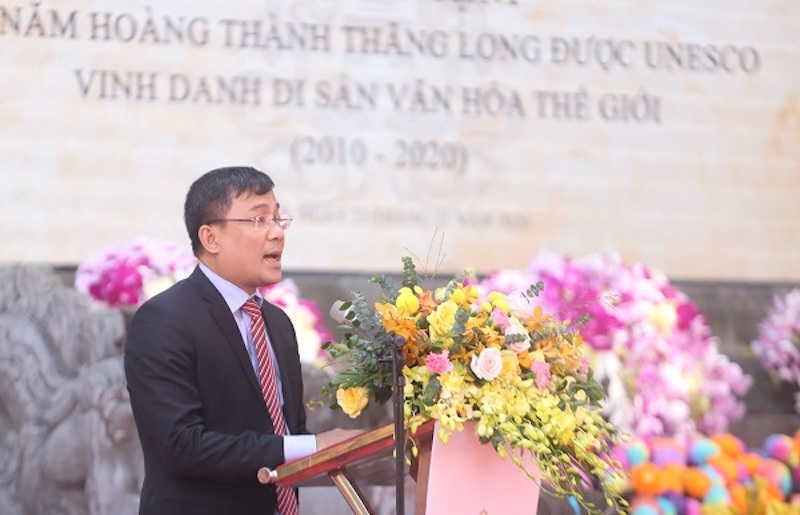
Deputy Minister of Foreign Affairs Nguyen Minh Vu said that the heritage along with other UNESCO titles are contributing to creating a proud cultural profile of Hanoi, enhancing the national image of Vietnam in general and Hanoi in particular.
He suggested Hanoi and the Thang Long Heritage Conservation Center continue to promote the implementation of the remaining contents in the commitments of the Government of Vietnam to UNESCO 2010; coordinate with relevant agencies, private organizations, domestic and foreign scientists to research forms of combination between UNESCO titles to create diversified and unique tourism products, then contributing to the formation of Hanoi as a prestigious cultural destination of the country.
Mr. Michael Croft, chief representative of UNESCO in Vietnam. Photo: Lai Tan |
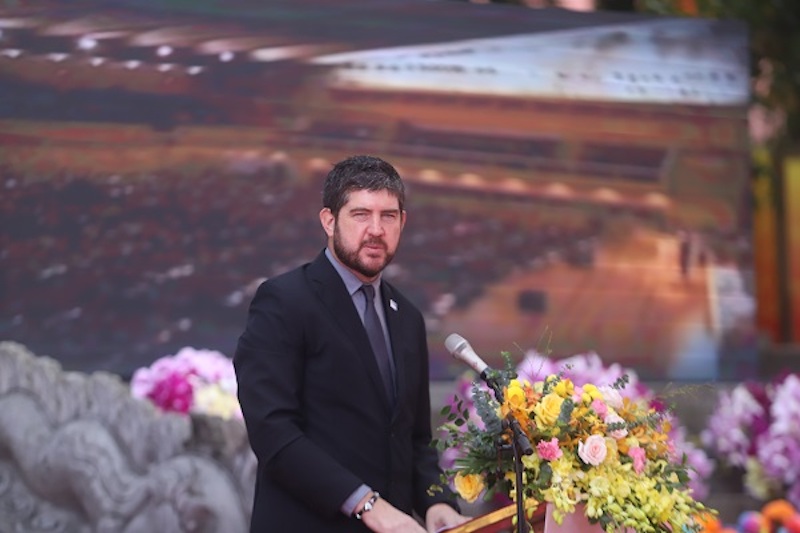
At the ceremony, Mr. Michael Croft, chief representative of UNESCO in Vietnam gave his acknowledgment to the efforts of Hanoi in implementing commitments with UNESCO on preserving and promoting heritage values at the Thang Long Imperial Citadel during the past years. “Today Hanoi has become a member of the UNESCO Network of Creative Cities. We call on the Thang Long Heritage Conservation Center, partners and the whole people here to make more efforts in preserving and promoting the heritage,” he said.
On this occasion, the municipal People’s Committee presented certificates of merit to four individuals and three collectives who have made achievements in the management, embellishment and promotion of cultural heritage values of Thang Long- Hanoi.