Hanoi committed to accompanying FDI companies to success
In the first nine months of 2021, Hanoi attracted US$922 million in FDI, ranking among the top five localities in Vietnam.
As Hanoi is gradually lifting restriction measures to reopen the economy, one of the priorities for the city is to support FDI companies recover and lay the foundation for them to thrive.
| Production at YPE Vina Electronics. Photo: Hoang Hung |
.jpeg)
“The Covid-19 impacts on the global economy remains a huge challenge to Vietnam in general, and Hanoi in particular, but at the same time have offered further opportunities for FDI attraction,” Director of the municipal Planning and Investment Department Do Anh Tuan told The Hanoi Times.
In the first nine months of 2021, Hanoi attracted US$922 million in FDI, including $160 million for 242 new projects, while foreign investors pumped additional funds of $491 million to 85 existing projects.
It was estimated that 315 projects have also received capital contributions from foreign investors worth $272 million.
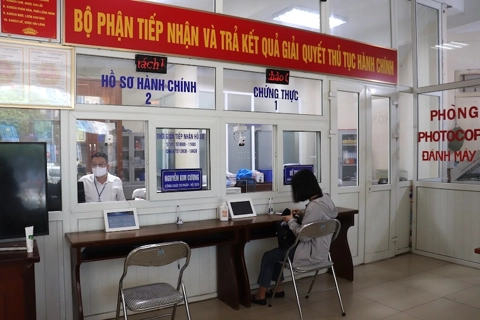
“The Department is expected to address the concern of foreign businesses on procedures for international experts to enter Vietnam, Covid-19 testing, vaccination, along with administrative formalities over investment, taxes, or logistics,” Tuan said.
According to Tuan, the local authorities would strive to ensure effective and timely implementation of the Government’s supporting programs for foreign businesses, including waiving and freezing fees, taxes, or social insurance premium payments, or providing preferential loans for firms to pay workers’ salaries.
In the coming time, Tuan expected the city to further call for investment in the city and attract foreign investors doing business in the city from the early stage of business registration to project implementation.
For the time being, Hanoi would continue to prepare high quality and skilled workforce and the infrastructure system to grasp opportunities from a shift in global investment capital.
“More investment incentives are set to provide for firms operating in priority fields, especially those with technology transfer or in supporting industries,” Tuan said.
FDI commitments during the first nine months of 2021 in Vietnam rose by 4.4% year-on-year to US$22.15 billion.
Investors have poured money into 18 fields and sectors, in which manufacturing and processing led the pack with investment capital of nearly $11.8 billion, accounting for 53.4% of total registered capital. Electricity production and distribution came second with $5.5 billion, or 25%, followed by real estate with $1.78 billion.
Out of 94 countries and territories having projects in Vietnam in the January-September period, Singapore took the lead with $6.3 billion, or 28.4% of the total newly registered FDI projects, followed by South Korea with $3.9 billion, or 17.7%, and Japan with US$3.3 billion, or 14.7%.
The majority of FDI projects are concentrated in major cities with good infrastructure systems, including HCMC, Hanoi, and Bac Ninh, with the capital city currently standing second nationwide in terms of new projects, or 21.1% of the total, only behind HCMC with 33.3%.
Prime Minister Pham Minh Chinh has issued a new incentive policy for large-scale investment projects. The new policy stipulates projects under priority fields with investment capital of over VND30 trillion ($1.3 billion) would be subject to preferential corporate income tax (CIT) of 9% in 30 years. Meanwhile, investors would be qualified for CIT of 7% in 33 years in case they are investing in new or existing R&D projects with the capital of over VND3 trillion ($130 million) and commit to disbursing at least VND1 trillion ($44 million) within three years since the issuance of investment license. Investors are entitled to a CIT tax of 5% in 37 years for projects in priority fields with value-added generated in Vietnam accounting for 40% of the final prices, along with conditions on technology transfer and investment scale. The new policy also gives further preferential treatment in terms of waiving CIT for the first five or six years, and a 50% cut in CIT for the following 10-13 years. Vice-Chairman of Vietnam Association of Foreign Invested Enterprises (VAFIE) Nguyen Van Toan said these new policies are designed to encourage multinationals to further invest in Vietnam, at the same time persuading major Vietnamese firms to form supply chains and compete squarely with their foreign peers. |