Hanoi explores development plans in its South
All five southern districts are located along major transportation routes and are subject to residential development.
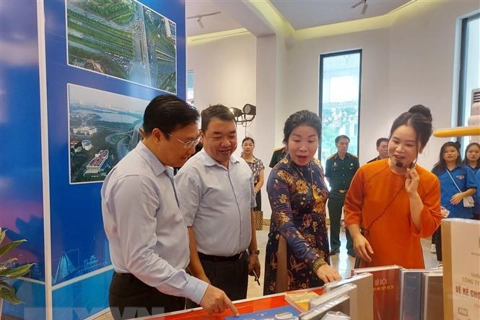
The Hanoi Institute for Socio-Economic Development Studies (HISEDS) held a conference early this week to discuss development plans for five districts in the south of the capital, including My Duc, Thuong Tin, Phu Xuyen, Ung Hoa, and Thanh Oai.
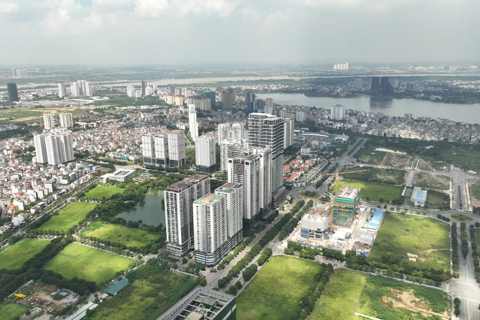
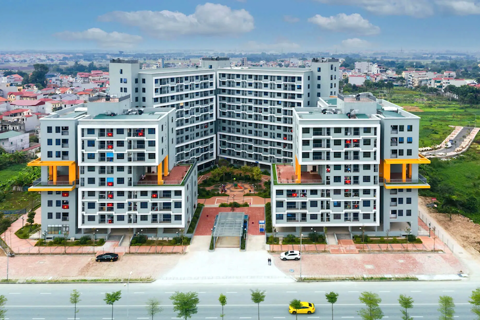
| Bird's eye view of Phu Xuyen District. Photo: Nguyen Ha/The Hanoi Times |

According to a report presented at the conference, these five districts share several similarities, such as extensive agricultural land, which accounts for about 60-70% of their total natural area, low urbanization, and a notable presence of recognized trade villages and historical-cultural landmarks.
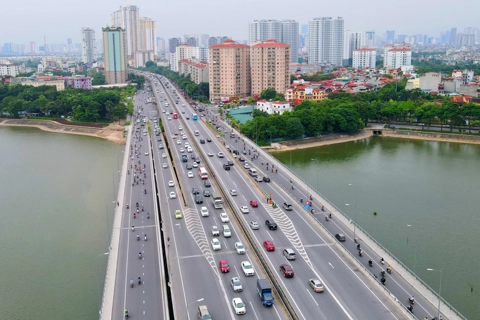
Following Hanoi’s administrative boundary expansion 15 years ago, the position of these five districts became strategic, located along various transportation corridors such as highways, railways, and waterways. They are all key national arteries (Thuong Tin and Phu Xuyen), when the Ring Road No.4 will pass through Thuong Tin and Thanh Oai completed.
There are also plans for future domestic and international airports, which are expected to be built after 2030.
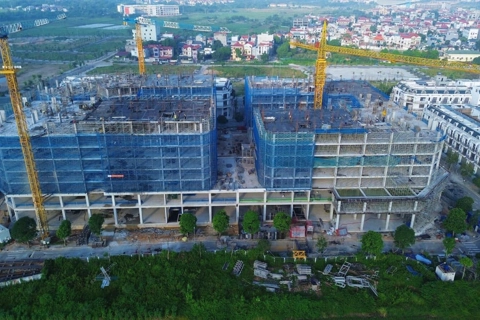
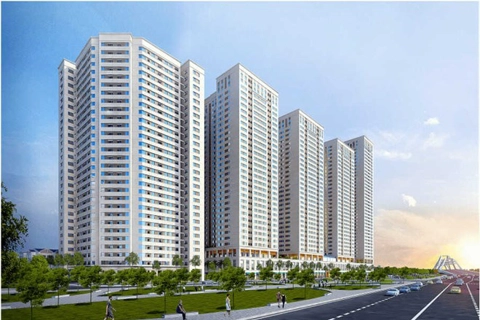
Meanwhile, there are also ambitious urbanization plans for these districts. The Phu Xuyen Satellite town project includes Phu Xuyen and Phu Minh towns, along with the expansion of nine more communes in Phu Xuyen and five communes in Thuong Tin.
Urban areas such as Van Dinh, Thuong Tin, Kim Bai and Dai Nghia will be targeted for ecological development and expansion. In the northern part of Thanh Oai, the Cienco 5 road corridor is witnessing the emergence of several new urban zones. Some rural areas have been urbanized and are seeking urban district status.
Ta Van Tuong, Deputy Director of the Department of Agriculture and Rural Development, offers insight into the agricultural sector in this area, suggesting that the capital's agricultural efforts should focus on high-tech practices, particularly in selected areas such as plant production, seed cultivation, and the growth of key products.
Agriculture would be developed according to ecological principles, contributing to green and diverse landscape aesthetics while addressing climate change. The harmonious integration of agricultural zones with other functional areas, such as urban and industrial spaces, is emphasized to achieve a balanced and cohesive landscape.
"A gradual shift away from livestock farming in residential areas is proposed, with attention given to planning key products in conjunction with value chain creation. Cultural values would be linked to agricultural efforts, and special emphasis is placed on the organized spatial layout of rural residential areas to preserve their cultural identity," Tuong said.
Highlighting the importance of culture, Deputy Chairman of the Hanoi People's Committee Ha Minh Hai emphasized Hanoi's pioneering role as the first locality in the country to issue a specialized resolution regarding the cultural industry.
Resolution No.09-NQ/TU outlines the goal that by 2030, the cultural industry in the capital will establish itself as a key economic sector, making a strong contribution to the development of other industries and fields.
The guiding principles of the 13th National Party Congress Resolution, which outlines the nation's development path from 2021 to 2030, emphasize comprehensive human development and the cultivation of an advanced Vietnamese culture deeply rooted in national identity. This vision positions culture as an innate driving force that drives both national development and defense efforts.
Furthermore, Politburo Resolution 15-NQ/TW maps out directions and goals for Hanoi's development through 2030, with an extended vision through 2045. This resolution emphasizes the need to harmoniously combine the preservation of cultural identity with economic progress. It underlined that the synergy between economic and cultural growth should be a reciprocal relationship, where culture and its people are not only the goal, but also the foundation, resource and impetus for the capital's development.
During the seminar, experts highlighted the potential of cultural heritage as a substantial resource that can be harnessed to contribute to the overall socio-economic growth of the capital.
Hai suggested that both the districts and the consulting unit should focus on explaining the rationale for prioritizing the development of this distinctive cultural region. This effort should include the presentation of new perspectives and higher aspirations, with the goal of making the best use of the capital's resources in the planning process.