Hanoi industrial production recovers in May
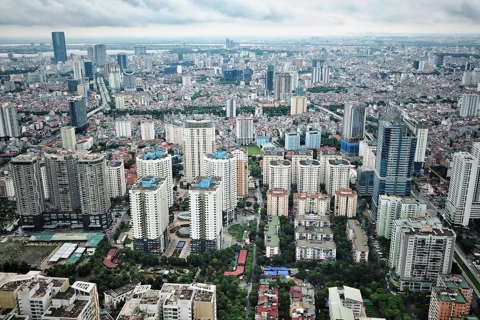
A positive growth rate of Hanoi’s industrial production in May led to an expansion of 2.6% year-on-year in the January – May period.
Hanoi’s effective containment of the Covid-19 pandemic has helped the city’s Index of Industrial Production (IIP) in May grow 12.3% month-on-month and 1.5% year-on-year, a stark contrast from a contraction of 14.7% recorded in April, according to the Hanoi Statistics Office.
| Hanoi industrial production recovers in May. |
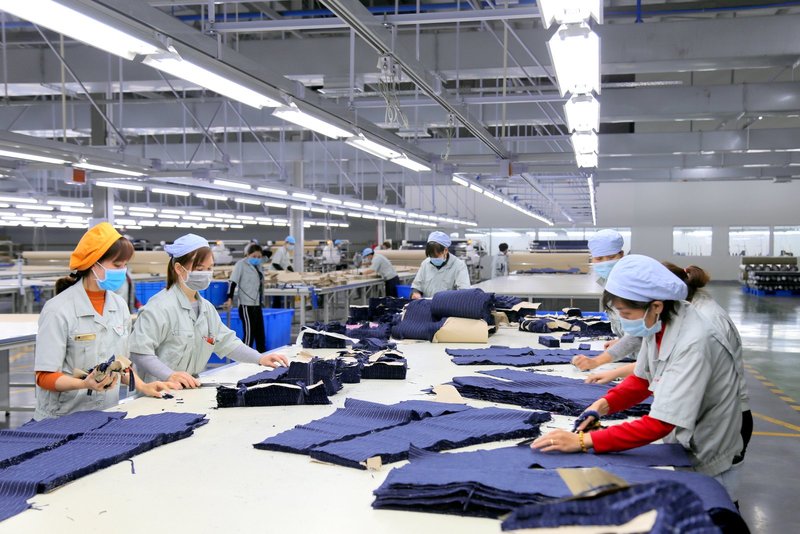
A rebound of industrial production in May led to an expansion of 2.6% year-on-year of the IIP in the January – May period.
However, the complicated progression of the pandemic globally continues to put pressure on the industry sector, said the municipal Statistics Office in its monthly report.
Specifically, the mining industry’s output decreased 14.4% year-on-year between January and May, while the manufacturing and processing industry expanded at a modest rate of 2.3%.
Production and distribution of electricity rose 5.9% year-on-year; and water supply, sewage treatment and water collection was up 5.5%.
Major industrial subsectors that saw their output down in the January – May period were beverage (-27.5% year-on-year), transportation vehicles (-13.6%), electricity equipment (-8.6%), and machinery (-8.9%).
Meanwhile, other subsectors increased sharply due to growing demand during the pandemic, including medicine and drugs (up 41.7% year-on-year); furniture production (22.9%); computers and electronic products (22.5%), among others.
According to the report, the employment rate at industrial companies declined by 2% year-on-year, in which the rate at state sector was down by 5.8%; that of the private sector contracted 0.9%, and that of the foreign-invested sector dipped 1.7%.
In the January – May period, Hanoi’s exports slipped 8.5% year-on-year to US$5.33 billion, and imports were down 13.5% to US$11.2 billion, resulting in a trade deficit of US$5.87 billion.
The city's state budget revenue dwindled 5.8% year-on-year to VND95.6 trillion (US$4.13 billion), of which revenue from crude oil was VND1.76 trillion (US$76.13 million), up 29.3%, and domestic revenue totaled VND93.8 trillion (US$4.05 billion), down 6.3%.
Notably, foreign direct investment (FDI) commitments to Hanoi in the year to May 19 increased 6.1% against the previous month to US$1.04 billion.
Since the beginning of May, Hanoi started promoting domestic tourism with the reopening of cultural and tourist attraction spots, albeit at a limited scale.
In the first five months, the number of foreign tourists coming to Hanoi declined 64.8% year-on-year to 684,000 during the period, while that of domestic tourists fell 65.8% to 1.7 million.
As the city is now stepping up efforts towards economic recovery, the majority of businesses and service activities have reopened, except for bars or karaoke parlors.
However, the pandemic’s negative impacts on the economy remain severe, which has significantly affected the people’s income, and subsequently consumer spending.
Total retail sales of consumer goods and services in Hanoi in the five-month period are estimated at VND212.8 trillion (US$9.11 billion), down 4.4% year-on-year.
Notably, revenue from catering and hospitality services suffered a decline of 36% year-on-year in revenue to VND16.1 trillion (US$689.94 million).