Hanoi launches more experiential tours
Hanoi sees culture as an infinite resource to create tourism products and attract more tourists.
Hanoi is home to a number of cultural and historical sites that are considered valuable resources for tourism development.
As a sacred land of talented people, with a rich history and culture, the city boasts 5,922 relics, 1,793 intangible heritages, and 1,350 craft villages, along with beautiful natural landscapes.
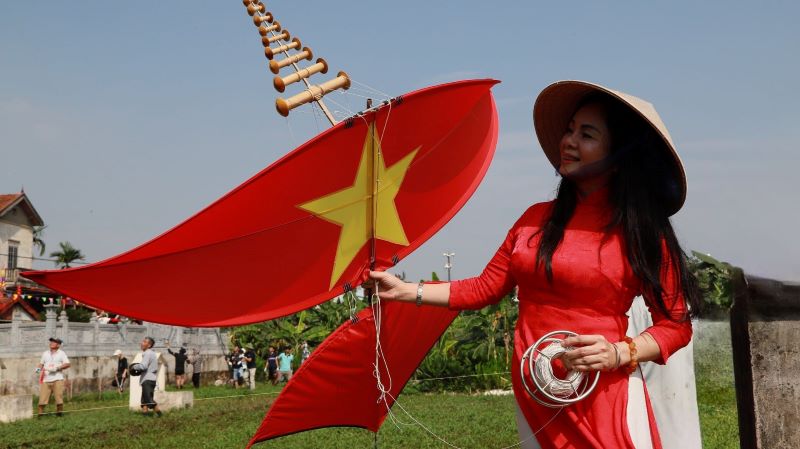
| Ba Duong Noi Kite Flying Festival in Dan Phuong District, Hanoi. Photo: Mai Anh |
The capital's tourism sector sees cultural tourism as its hallmark, with the sub-category of experiential tourism being particularly promoted, offering more tours to Hanoi's heritage sites and handicraft villages.
Add meaning to tourism products
Located in the west of Hanoi, with the magnificent scenery of Xu Doai (one of the four ancient provinces surrounding Thang Long - Hanoi today), and good feng shui according to folk religion, Quoc Oai District has unique and diverse cultural values.
It has 101 listed relics in total, notably the special national relic complex of Thay Pagoda and the special national relic of So Communal House. Besides, the district is home to various types of valuable intangible cultural heritage, such as water puppetry, Do singing, Ham Rong Vi singing, Tuong singing or Cheo singing, Gong performances of the Muong people, as well as 55 traditional festivals. Conveniently located just half an hour's drive from central Hanoi, Quoc Oai attracts a large number of visitors every year.
According to Hoang Nguyen Ung, Vice-Chairman of the Quoc Oai District People's Committee, Quoc Oai District has so far implemented the project "Preserving and Utilising Traditional Cultural Identity and Values in Tourism Development in the District" in order to capitalize on available resources, make a leap forward in tourism development and contribute to the preservation and utilization of traditional cultural values.
| A visitor to Duong Lam Ancient Village, Son Tay Town, Hanoi. Photo: Cap Thu Ha |
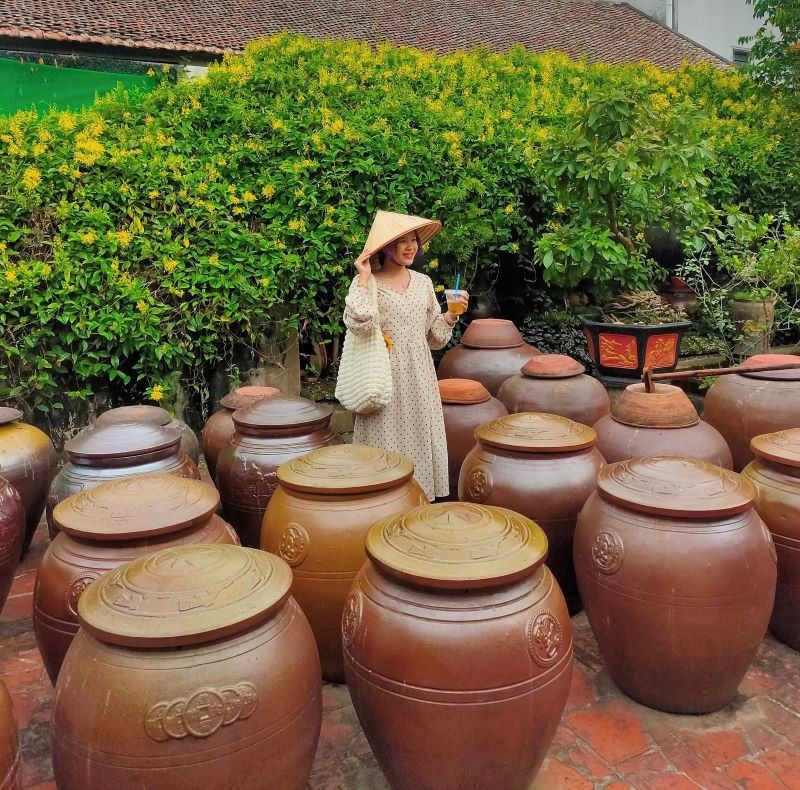
Long known as the 'Land of Two Kings', Duong Lam Ancient Village as it is the home of Phung Hung and Ngo Quyen, two national heroes who had the courage to cast off the invaders in the 8th and 10th centuries, is a 'living' museum that preserves the basic characteristics of a northern Vietnamese village, with a village gate, banyan trees, a wharf, a common house yard, and 956 traditional houses. On average, the site attracts nearly 150,000 tourists a year, including 6,000-7,000 foreign tourists.
Visitors to Duong Lam not only learn about the architecture, landscape, and local way of life but also participate in farming, cooking, and living with the villagers. These activities leave deep impressions and emotions on every visitor, especially foreigners.
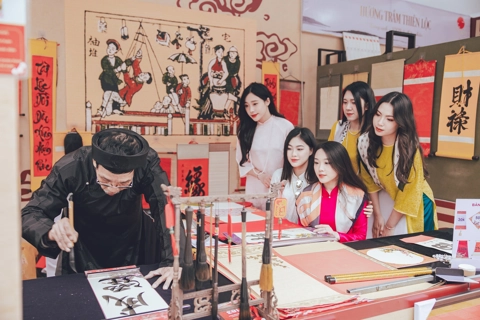
Meanwhile, coming to Bat Trang Ceramics Village, travelers enjoy kneading and shaping clay with their own hands to create souvenirs for taking home. At the Temple of Literature - Imperial Academy or Thang Long Imperial Citadel, visitors both learn about the relic site and take part in cultural activities and games of deciphering heritage values. In addition, the Dao Thuc Water Puppetry Guild (Dong Anh District) not only gives performances for visitors, but the peasant artists also regularly interact with them and teach them to work puppets themselves.
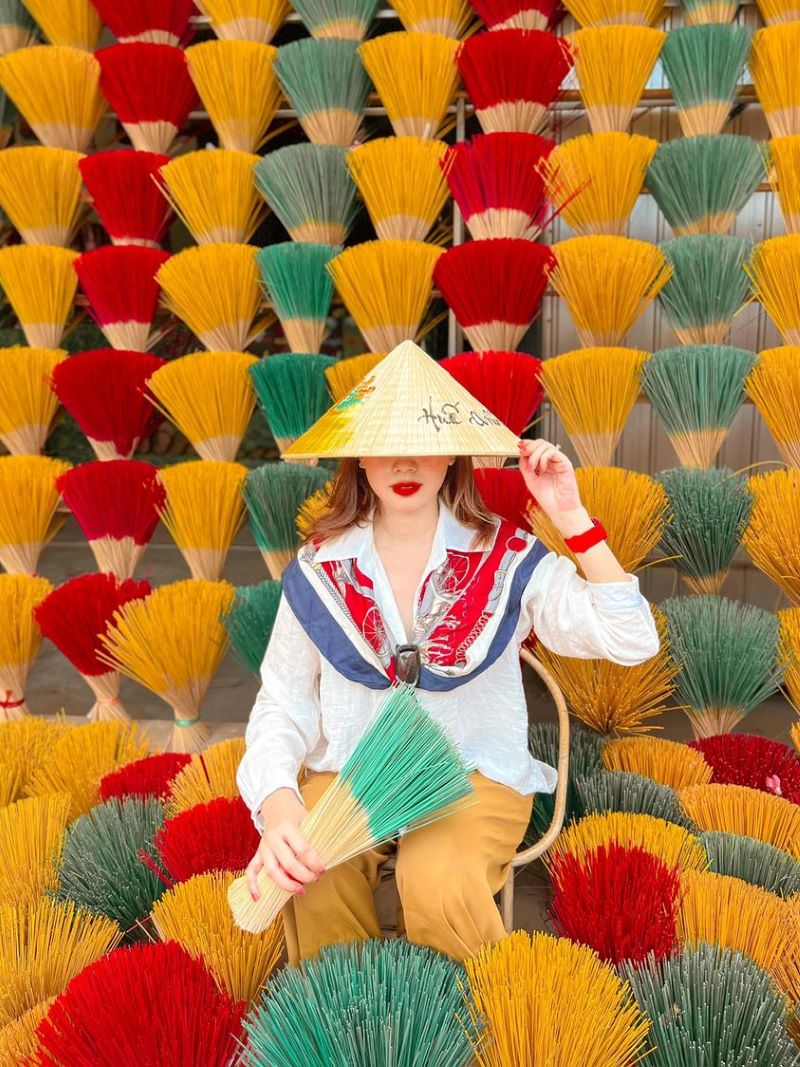
| The vibrant Quang Phu Cau incense-making village. Photo: Trang Coco |
As Hanoi Travel Association Chairman Phung Quang Thang commented, the variety of heritages and craft villages is an extremely valuable resource for the capital’s tourism industry to develop products typical of each locality and serving a diverse range of domestic and international tourists. This will also improve the locals’ knowledge and spiritual life as well as the amenities surrounding the sights.
Enhance tourist experience
Currently, the number of tourists coming to Hanoi is soaring, especially foreign travelers. This is a positive sign for the city’s tourism sector to implement solutions to attract visitors and boost tourism growth. In particular, the development of new tourism products with characteristics of Hanoi to broaden appeal for tourists receives special attention.
Hanoi has launched numerous tourism products, including a piloted model of community-based tourism combined with real-life experiences in craft villages and tourist attractions with traditional cultural values of ethnic minorities in Ba Vi District.
In February, the Hanoi Tourism Department developed experiential tourism products associated with heritages, relics, and craft villages along the routes of Hanoi Center - Thanh Tri - Thuong Tin - Phu Xuyen, Hanoi Center - Thanh Oai - Ung Hoa - My Duc, Hanoi Center - Son Tay - Ba Vi, among others.
| The Bat Trang Ceramic Museum. Photo: Bich Hoi |
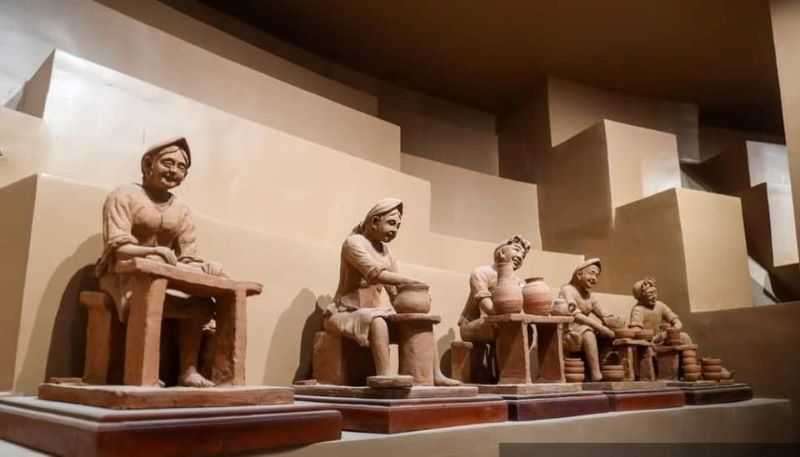
At present, the agency is continuing to develop a community-based tourism model linked to hands-on experiences in craft villages and tourist destinations with traditional cultural values of ethnic minorities in districts such as My Duc and Chuong My.
However, experts say that for these products to become attractive and unique, a synchronized roll-out is needed.
First of all, it is important to clearly understand the visitors to each locality, their needs and desires, and thereby offer appropriate experiential products. For example, the tourist experience at the Quang Phu Cau incense-making village has only equaled check-in photography, while tourists have many other needs.
According to Phung Quang Thang, Hanoi needs to develop various tourist experiences in the direction of designing unique tours that involve exploring history or experiencing the rich local cultures and production stages of typical handicrafts and cuisines.
In addition, visitors should be able to interact with locals, craftsmen, and famous people in the villages, as well as learn about traditional crafts and local festivals. In terms of developing tourist routes, it is advisable to create a more diverse service supply chain and enhance the tourist experience.
There is also a need to strengthen the promotion of tourism and the links between localities in the transport of visitors to experience heritage and artisan villages. If this tourism product flourishes, it will bring enormous benefits, from attracting visitors to exploiting the value of the capital's cultural heritage.