Hanoi remains committed to transforming into a smart city: Mayor
Hanoi aims to build a highly competitive economy on a regional and global scale.
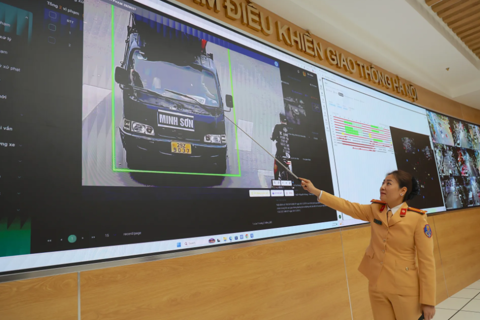
Hanoi is committed to transforming itself into a modern, smart city, serving as an engine of growth for the Red River Delta and the nation as a whole.
| Chairman of the Hanoi People's Committee Tran Sy Thanh at the conference. Photo: VGP |
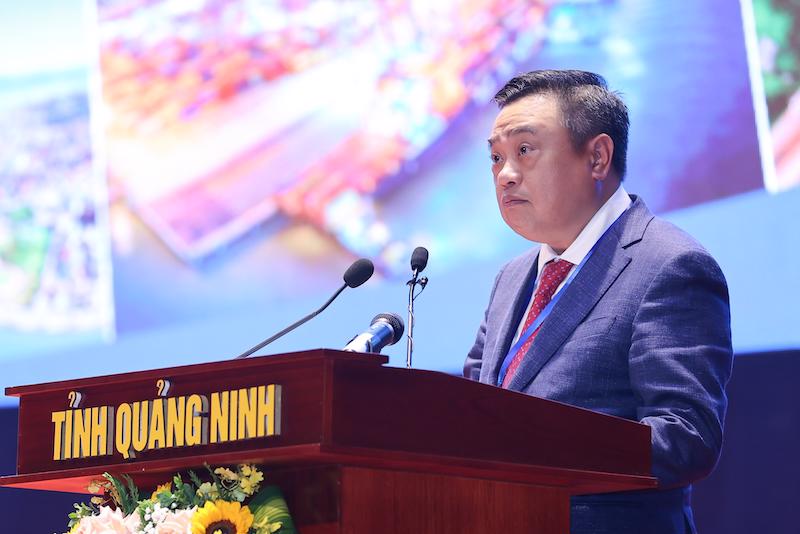
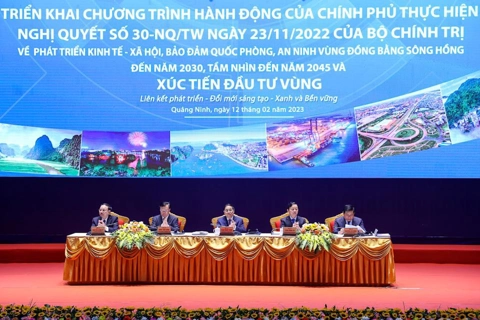
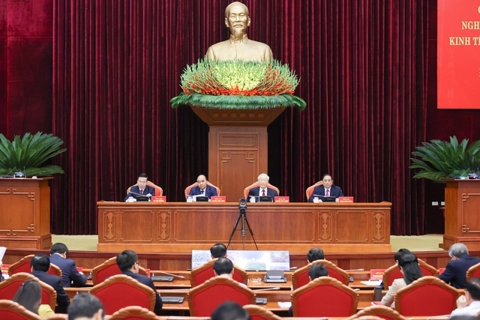
Chairman of the Hanoi People’s Committee Tran Sy Thanh pledged on February 12 at the Government conference to focus on achieving Politburo's resolution No.30 for the development vision of the Red River Delta until 2030, with a vision to 2045.
A global city by 2045
According to Thanh, Hanoi is located in the center of the Red River Delta, a strategic area of political, economic, cultural, social, national defense, and foreign affairs.
The city has about 10 million inhabitants and is home to many leading research institutions, universities, and hospitals.
In addition, it remains the largest cultural center in the country. It plays a pivotal role in the economic development of the region, with a nominal GRDP size of over VND1,000 trillion (US$42.4 billion), which represents 43% of the GDP of the Red River Delta region and 16.2% of the national GDP.
"Hanoi is a leading force and serves as a nucleus that exerts a broad impact on the region, especially in the Northern region, in various fields," Thanh said.
The mayor added that the local authorities issued an action plan No.23 on February 3 to implement resolution No.30 of the Politburo, outlining the capital's role in developing the capital region and the entire country.
"The program aims to transform Hanoi into a smart, modern, and unique city that will serve as a driving force for regional and national growth," he continued.
Among the key goals, Hanoi aims to build a highly competitive economy on a regional and global scale. The city intends to achieve an average GRDP growth rate of 7.5-8% from 2021 to 2025, which is higher than the country's average. The target for 2026 to 2030 is to increase the growth rate to 8-8.5% per year and a GRDP per capita of $12,000-13,000.
Looking ahead to 2045, Hanoi aims to become a globally connected city with a high standard of living and quality of life, a GRDP per capita of around $36,000, and comprehensive and harmonious economic, cultural, and social development. Hanoi would have a development level comparable to the capitals of developed countries in the region and the world.
Enhancing Hanoi's role as a hub for fostering inter-provincial development
According to Thanh, Hanoi plans to maximize the use of resources to develop various economic sectors and take advantage of the advancements in Industry 4.0.
The city focuses on developing smart infrastructure and high-value industries such as finance, banking, insurance, and logistics. In addition, it would strive to make the cultural and tourism industry a major economic sector and establish a number of leading centers for goods and services exchange in the country and region.
He stated that the specific goals of Hanoi include transforming the capital into a regional and international center for finance, trade, services, and tourism.
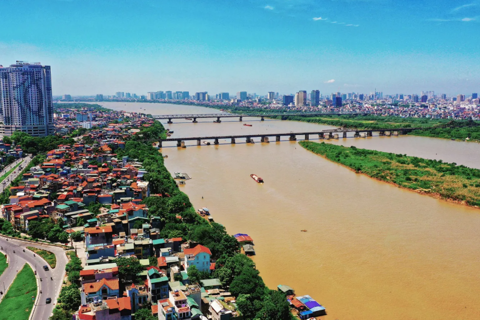
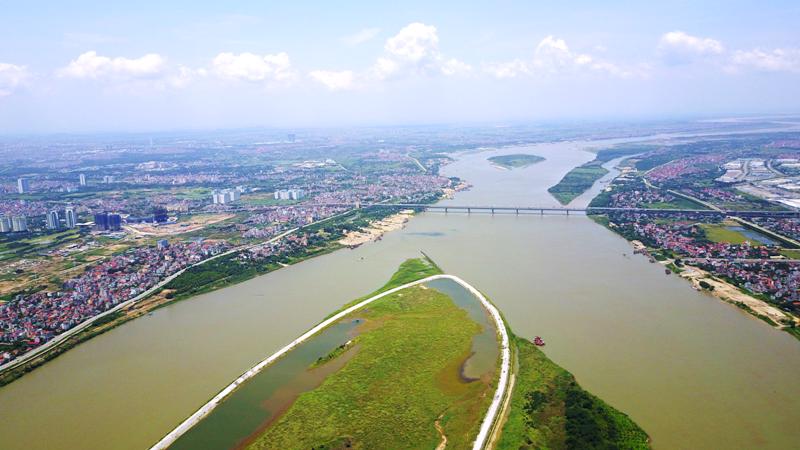
| Red River from above. Photo: Pham Hung/The Hanoi Times |
"The city is devising synchronous solutions for trade development planning for the entire capital region and each locality and exploring the possibility of setting up an international trade promotion center in Hanoi to support local development and trade linkages," Thanh said.
"Hanoi also focuses on forming regional tourism clusters and linkage chains to effectively utilize the region's rich tourism resources. This includes actively involving provinces and cities in drawing up tourism development strategies and regional tourism development master plans and projects," he continued.
In this regard, the city plans to invest in large-scale and significant projects to integrate them into the Red River Delta planning, aiming to link tourism with other industries such as culture, commerce, and infrastructure development.
Thanh stated Hanoi would prioritize the development of industries with high technology and low carbon emissions, and focus on ecologically friendly agriculture, modernizing the countryside and its farmers.
During the conference, the local authorities licensed five projects in trade, service, and entertainment with a total investment capital of VND10 trillion ($424.2 million).
"Cultural development must parallel socio-economic growth while preserving its millennia-old cultural heritage," Thanh said, noting that the city aims to make its cultural industry a new driving force and resource for its development, with a target of 5% of the cultural industry being part of its GRDP by 2025, and 8% by 2030.
In addition, Hanoi intends to build a smart, modern, green, clean, beautiful, secure, and safe city with modern and harmonious rural development and to become a center of cultural convergence for the whole country.
Hanoi will also focus on synchronizing its urban areas and infrastructure to promote regional linkages and become the growth pole of the Northern region (Hanoi - Haiphong - Quang Ninh). The capital city will have a modern and synchronized transport system connected to the national transport system and encourages reasonable development between different modes of transport.
The capital city is currently working on completing Ring Road No.4 by 2027 and preparing for the investment in Ring Road No.5 project before 2030, he said.