Discover Thang Long Tu Tran - the four most sacred temples in Hanoi
Visiting sacred temples on the occasion of the New Year is a sincere way for Hanoians to remember the past and pay respects to their predecessors.
The tradition of visiting and offering incense at the Capital’s four most sacred temples is a long-standing tradition that has been passed down from generation to generation among Hanoians.
The beautiful custom
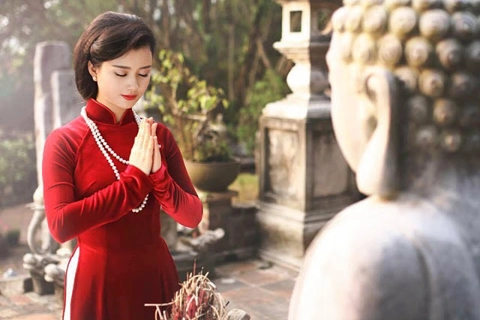
Going to pagoda and temple on the first lunar year of the Lunar New Year is one of the traditional activities that Vietnamese people have maintained for generations in the country that Buddhism is the predominant religion.
Thang Long Tu Tran or Thang Long’s Four Sacred Temples are among the favorite places of Hanoians for the ritual practicing to mark the nice beginning of the new Lunar Year.
People not only come to pray for a healthier, luckier, and happier coming year but also to show their respects to Buddha and deities of the pagodas or temples as well as to learn about the history or tales of the places.
In addition, praying at these temples is among the best way to go out and enjoy the spring.
Mixing ones’ soul with the spiritual spaces, breathing in the aroma of burning incense and flowers, and enjoying a relaxing glimpse in the garden of the pagodas help dissipate all the stresses and worries of the previous year.
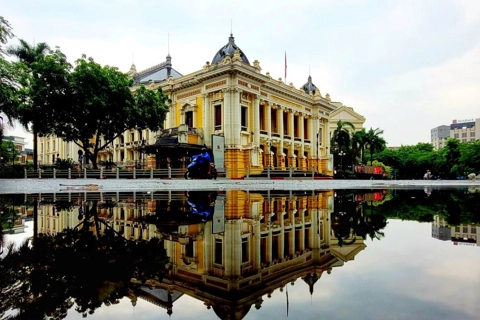
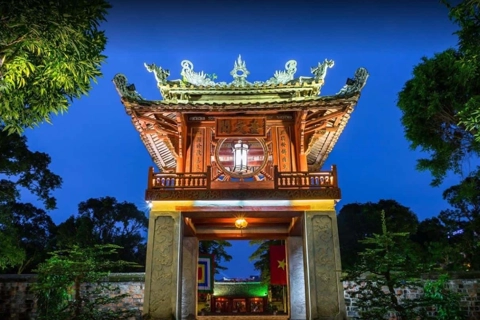
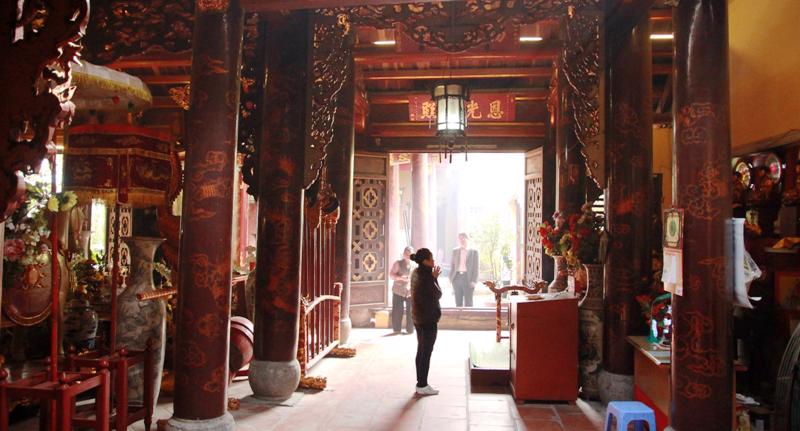
| The holy land of ancient Thang Long Imperial Citadel or Hanoi today is home to various ritual sites, old temples, and Buddhist pagodas. Photo: Duy Khanh |
Notable historical stories
Since earning the status of the nation’s capital in 1010, the ancient Thang Long Imperial Citadel or Hanoi today has withstood the test of time thanks to the four sacred protectors who are currently worshiped at four temples in the four cardinal points of the city.
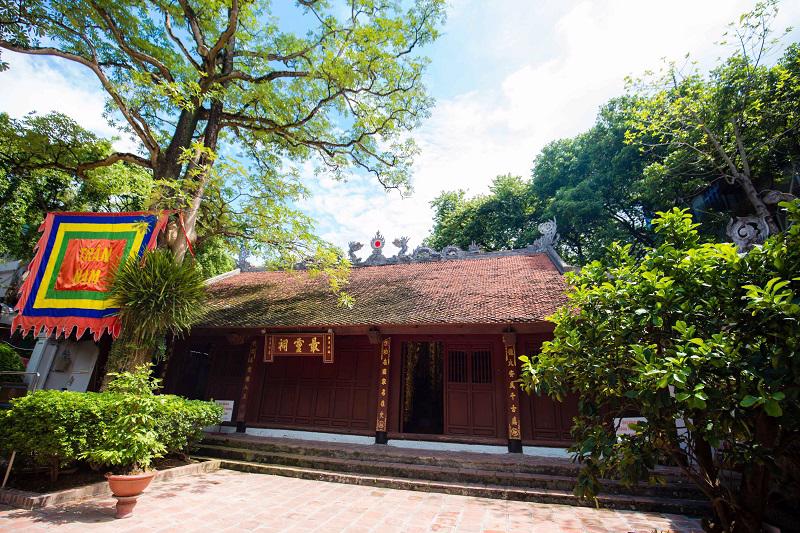
These four sacred temples are the Bach Ma Temple guarding the East of the Thang Long Imperial Citadel; the Quan Thanh Temple securing the North; Voi Phuc Temple protecting the West, and Kim Lien Temple watching over the South.
Each of these temples embodies a story with its own historical, cultural, and architectural values, also showing Vietnamese people’s worshiping tradition of thousands of years at hundreds of holy sites across the country.
Thank its outstanding spiritual and historical values, these Thang Long’s Four Sacred Temples in Hanoi have just been recognized by the Government as new special monuments of the nation.
The recognition would contribute to enhancing the cultural and spiritual values of these famous destinations in Hanoi.
| The sacred white horse inside the Bach Ma Temple. Photo: Ung Binh Minh |
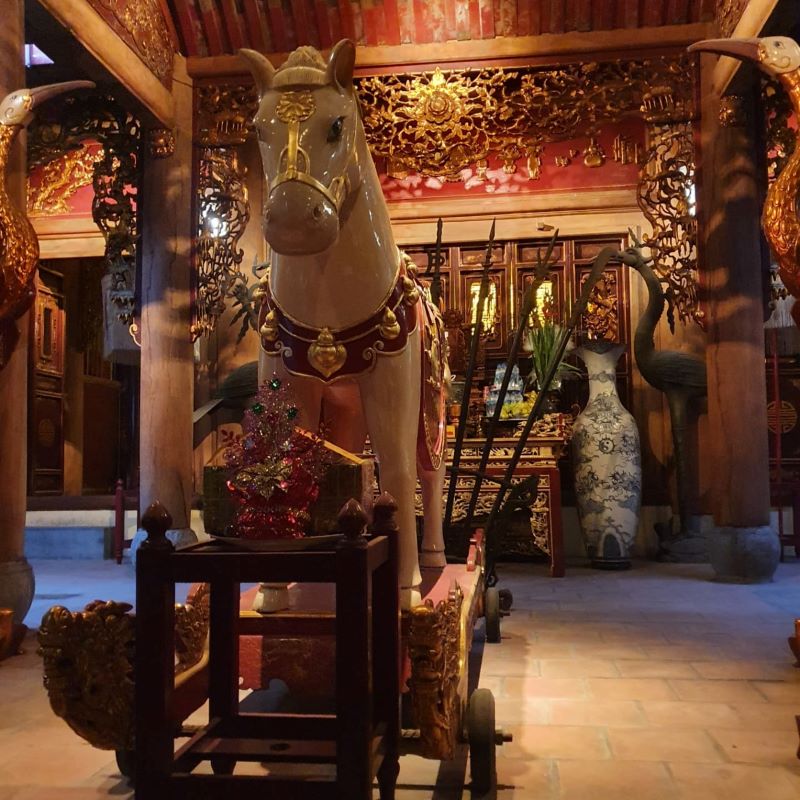
The Bach Ma Temple, which literally means the white horse was built under the reign of King Ly Thai To (974-1028) during the 1010s.
It features a wooden frame and large columns in the main building with a three-door gate, a place for burning incense, a forbidden chamber, and sophisticated effigies. It still keeps lots of old valuable relics such as stone steles, palanquins, cranes, and pairs of earthen statues for worshiping.
Located in Hoan Kiem central district, Bach Ma Temple is easy for tourists to reach by foot.
Among these four sacred temples, Quan Thanh Temple is the most famous. According to historians, the temple was also built in the 1010s to protect the north of today’s capital. It worships Tran Vu Genie who was believed to help Hung Kings (regarded as the founders of the nation) expel invaders and assist the people in the fight against evil ghosts and natural disasters.
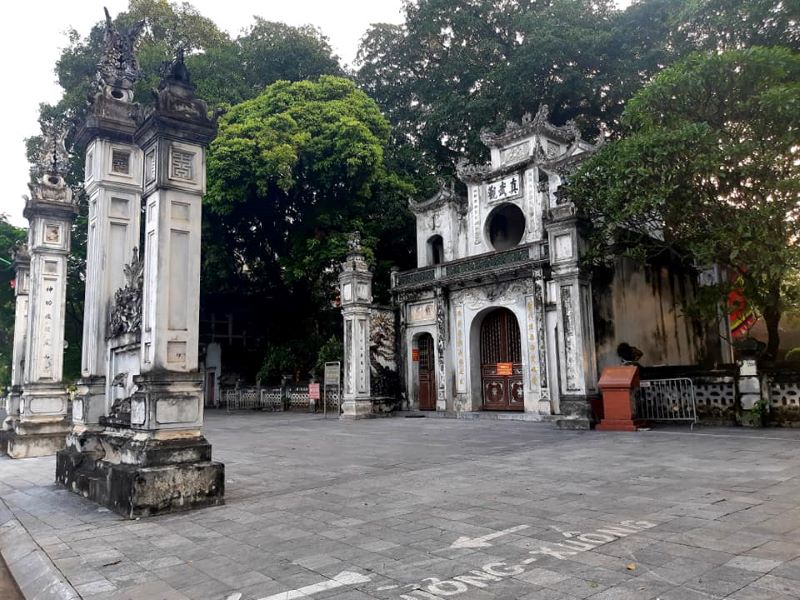
The tourist attraction which is located on the bank of the West Lake is famous for its architecture that includes a three-arch gate, temple yard, and the three main buildings of the front hall, annex, and back hall.
Inside Quan Thanh Temple, there is a four-meter height black copper statue of Tran Vu Genie holding a sword on the back of a turtle epitomizing strength and longevity. The statue was built in 1677 to show the respect of local people to the genie and the unique representation of the artistic creation of the period.
Dated in the 11th century, Quan Thanh Temple is dedicated to Tran Vu, one of the principal deities in Taoism. Photo: Tuan Ngo |
The lesser-known Voi Phuc Temple was built inside today’s Thu Le Zoo. Built in a muddy lagoon in 1065, the temple stands now on a high mound south of the zoo with a nice view to a large beautiful lake and is surrounded by gardens and many luxuriant ancient trees.
Voi Phuc Temple is dedicated to Prince Hoang Chan, also known as Linh Lang Dai Vuong, the son of King Ly Thai Tong (1000–1054). The temple, however, was heavily damaged under French colonialism and rebuilt later.
According to historian Le Van Lan, the architecture of the temple is typical of the 19-20th century, highlighting feng shui which represents vitality. “Meanwhile, the squared-shape well stands for abundant and prosperity, and a couple of wood dragons and tigers showcase the power of the supreme being,” he said.
The remaining objects of the relic site today are two elephant statues kneeling in front of the temple. Every year, to commemorate the merits of Linh Lang Genie, Voi Phuc Temple Festival is held from the 9th to the 11th day of the second lunar month.
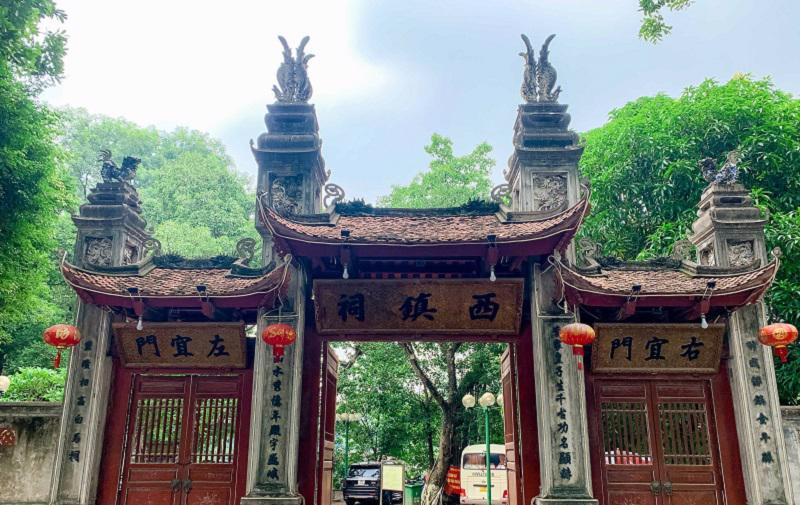
| Voi Phuc Temple was built in 1065 during the dynasty of King Ly Thanh Tong in the former Thu Le village, western Thang Long citadel, now in Ba Dinh District, Hanoi. |
Kim Lien Temple is the last one that was built to protect the South of ancient Thang Long Imperial Citadel. The youngest protector of the city was built in 1509 to honor Cao Son Dai Vuong.
The renowned temple is now located at No 176 Kim Hoa Street, Phuong Lien Ward, Dong Da District.
On a high hill, the temple consists of two separate parts: the arched gate and the main structure on the hill itself. According to experts, the temple architecture is similar to the Kinh Thien Palace in the Thang Long Imperial Citadel.
In front of the yard, there is a gate with two square bronze pillars leading to a small spring. This was thought of as the convergence of water and happiness.
The three-arch entrance gate is lively decorated with motifs such as phoenixes keeping books in their beaks, clouds, and a unicorn. It also conserved 39 imperial edicts of Le and Nguyen's dynasties conferred to Cao Son and several parallel sentences.
| Kim Lien Temple was built in honor of Cao Son Dai Vuong - the deity who secretly supported King Le Tuong Duc quelling the rebellions and restoring him to the throne (980 to 1009). Photo: Duy Khanh |
Other four newly recognized special national monuments are including Tay Son Thuong Dao Relic Complex (An Khe Town, Dak Po District, Gia Lai Province); President Ho Chi Minh Memorial Site on Co To Island (Co To District, Quang Ninh Province); Vietnam-Laos Revolutionary Historical Site (Yen Chau District, Son La Province); and the two historical relics of the American war in Vietnam (1945-1975)- The High Point 1015 and 1049 which are located in Sa Thay and Dak To Districts, Kon Tum Province.