Hanoi to approve capital planning for 2021-2030 in March
The planning will lay the groundwork for Hanoi to launch development initiatives up to 2030 to become a cultured, civilized, and modern city.
The Hanoi People’s Council will ratify the capital planning for the 2021-2030 period, with a vision to 2050, at its 15th session scheduled for one day during the week of March 25-29.
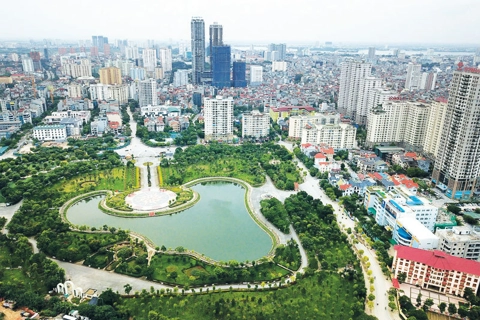
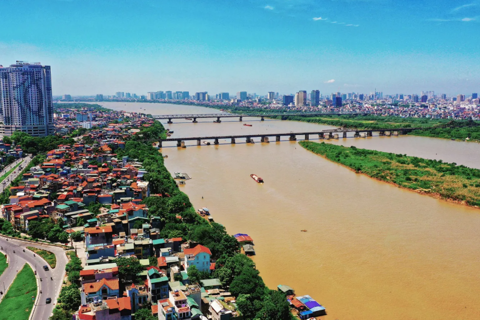
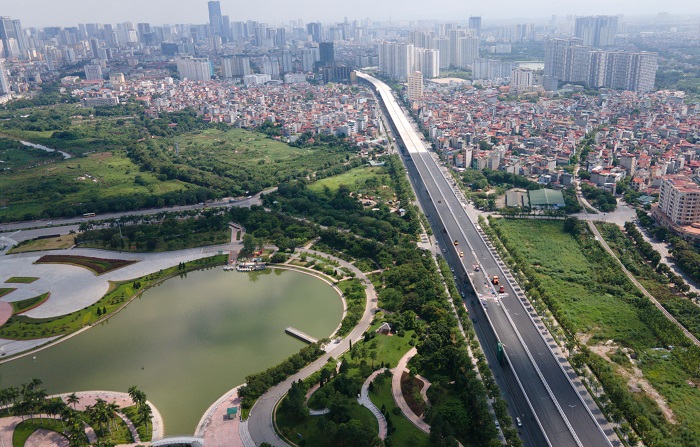
| Hanoi from above. Photo: Pham Hung/The Hanoi Times |
During the upcoming session, the municipal People’s Council will review and approve critical issues that significantly impact the city's socio-economic development in the medium and long term. These include adjustments to the public investment plan for 2024, updates and amendments to the city's mid-term public investment plan for the 2021-2025 period, as well as the approval and adjustment of investment policies for publicly funded projects.
Additionally, the council will consider revising and supplementing the list of land revocation projects for 2024, the list of projects that need to change the use of rice-growing land in 2024 within the city's territory, and the issuance of a list of public service facilities in the field of science and technology in Hanoi.
Based on the potentials, advantages, and achieved results in socio-economic development, Hanoi's capital planning proposes breakthrough points for development.
Regarding spatial organization, capital planning focuses on developing industries and sectors concentrated along five economic corridors and economic belts, aligned with five development axes. It also emphasizes the development of five types of space: construction space, underground space, digital space, cultural space, and public space (especially green spaces).
Capital Planning sets out 20 specific targets, including six economic goals, five social goals, six environmental goals, two urban and rural goals, and one defense and security goal. Among the targets set for this phase, Hanoi identifies some targets higher than the national average such as: The digital economy accounting for 40% of GRDP; per capita GRDP reaching about US$13,500-US$14,000; public green space in urban areas of about 10-12m2 per person; urbanization rate reaching 65-70%, among others.
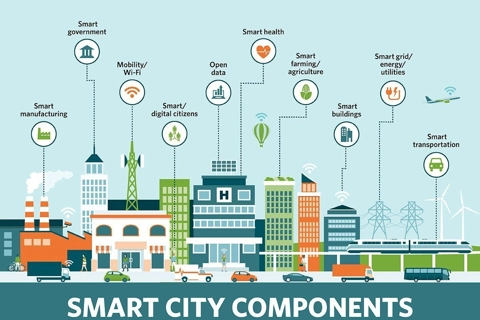
In addition, it identifies five pillars of Hanoi's development including: Culture and heritage; three transformations (green transformation, digital transformation, circular economy); comprehensive, modern, and highly connected infrastructure; digital society, digital economy, smart city; science, technology, and innovation.
The planning also proposes four development breakthroughs, including Institutional and governance breakthroughs; breakthroughs in investing in comprehensive, modern, and interconnected infrastructure; breakthroughs in developing quality human resources and exploiting human and natural resources; and breakthroughs in urban, environmental, and landscape development.