Hanoi, World Bank strengthen cooperation in green and smart urban development
This comprehensive approach aims to transform the city's landscape, enhance the quality of life for its residents, and align with global trends in clean energy conversion and digital transformation.
Hanoi expects to strengthen cooperation with the World Bank in promoting green, clean, and smart urban development.
| Chairman of the Hanoi People's Committee Tran Sy Thanh and World Bank Country Director to Vietnam Carolyn Turk. Photo: The Hanoi Times |
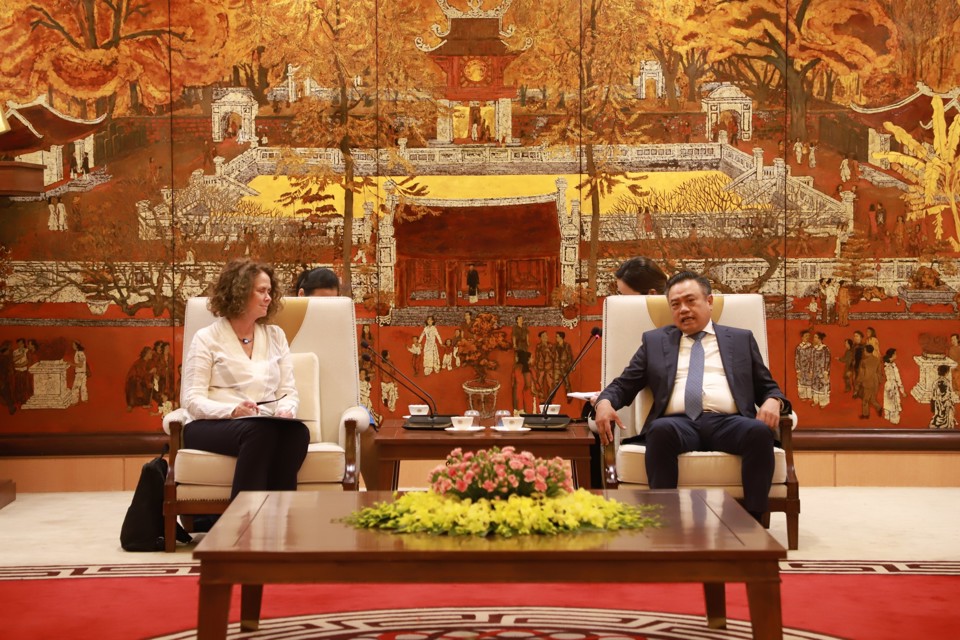
Chairman of the Hanoi People's Committee Tran Sy Thanh shared the view during a meeting with World Bank Country Director to Vietnam Carolyn Turk on October 25.
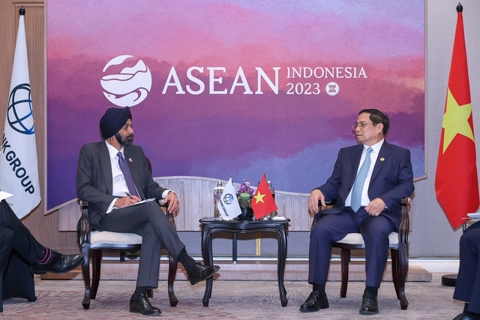
World Bank Country Director to Vietnam Turk referred to a prior meeting between Prime Minister Pham Minh Chinh and World Bank President Ajay Banga in September. In this meeting, the Vietnamese government leader proposed the World Bank increase its support for Vietnam, particularly in the realm of urban transportation, with investments ranging from US$5 to 7 billion over the next three years.
Turk said building upon this proposal, the World Bank is currently engaged in discussions with various Vietnamese localities, including Hanoi, to execute specific projects.
She expressed interest in understanding Hanoi's specific development objectives and exploring future steps to support and align with the capital's developmental journey.
Emphasizing that this is an opportune moment to update Hanoi's new priority targets and establish a more efficient cooperation framework, the Director of the World Bank Vietnam stressed the importance of this endeavor.
Expressing appreciation for the World Bank's proactive and effective support to Hanoi throughout the preceding years, Chairman of Hanoi People's Committee Tran Sy Thanh noted that the World Bank has thus far sponsored 11 projects in the capital with a loan capital of $270 million.
These projects have spanned various sectors, from delivering clean water to suburban areas and addressing river and lake wastewater to constructing numerous public transportation routes.
In discussions regarding prospective collaboration, Thanh mentioned that Hanoi is in the process of formulating the capital planning for 2030, with a vision for 2045, adjustments to the Capital's General Plan to 2045, and a vision for 2065, outlining the city's primary objectives. These plans are anticipated to be presented to the National Assembly in May 2024, Thanh noted.
Furthermore, Hanoi is in the midst of amending the Capital Law to establish policy mechanisms that align with its evolving development goals. The city is eager to share information with the World Bank to facilitate their participation and benefit from valuable insights and initiatives, Thanh continued.
Stressing that Hanoi regards the World Bank as a significant development partner, Thanh affirmed that through collaborative projects, the World Bank would contribute to technology transfer and facilitate access to advanced knowledge sources for the city.
With the objective of creating an eco-friendly, clean, and intelligent urban area, Thanh called upon the World Bank to persist in supporting and collaborating with Hanoi in implementing projects across various domains, including wastewater management, infrastructure completion, the establishment of ten urban railway routes, and measures to combat water and air pollution.
This comprehensive approach aims to transform the city's landscape, enhance the quality of life for its residents, and align with global trends in clean energy conversion, digital transformation, efficient governance, and smart urban development.
"Hanoi has formulated a plan to have 50% of its city buses operating on clean fuel by 2030, and the goal is to achieve 100% by 2050," noted Thanh.