Historical relics in connection with capital's defense and liberation
Hanoi's history, especially the events surrounding the liberation of the capital 70 years ago, is reflected in many of the city's tourist attractions.
Ups and downs have changed the places where Hanoi's soldiers and citizens heroically defended their city seven decades ago, as well as the joyous moments when the victorious army marched in. Yet they continue to tell timeless stories to future generations.
Five city gates
| Quan Chuong Gate on an early autumn day. Photo: Khanh Huy/The Hanoi Times |
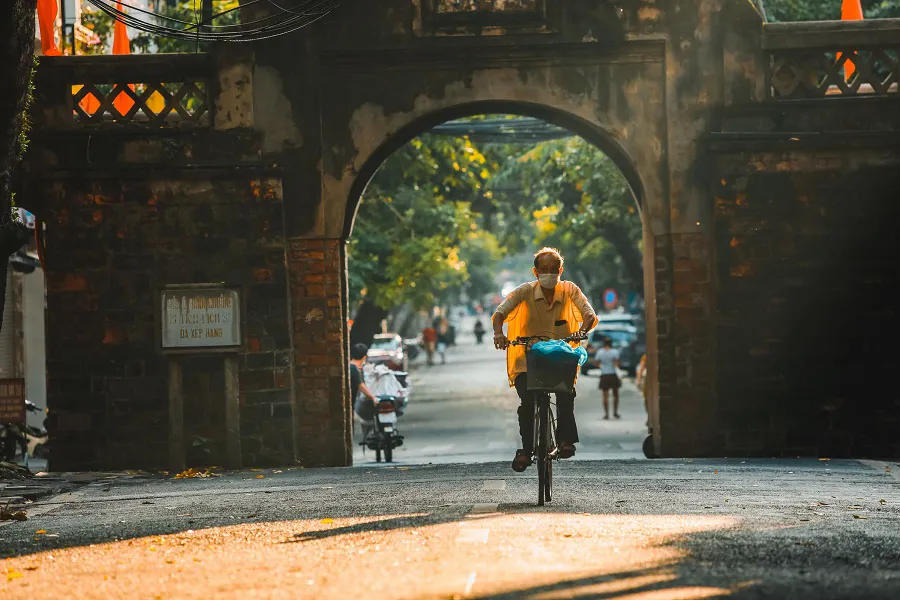
The image of the five city gates became a symbol of the capital's liberation day, as composer Van Cao wrote in the song Tien Ve Ha Noi (Advance to Hanoi): "Five city gates heartily welcome the returning army..." It is worth noting that this popular song was written in 1949, five years before the memorable event.
"Composer Van Cao's prophecy came true when five columns of the Vietnamese army entered Hanoi in early October 1954. From October 7 to 9, the units marched into Hanoi through the gates of Cau Giay, Cau Den, Yen Phu, Hang Dau, and Thuy Khue," commented writer Nguyen Ngoc Tien.
In fact, except for Quan Chuong Gate, nearly twenty city gates in Hanoi were demolished one by one by the end of the 19th century. Today, the monument can be seen on Hang Chieu Street, Dong Xuan Ward, Hoan Kiem District. From afar, visitors can see the ancient mossy wall and gate and read the inscription: "Dong Ha Gate" - its official name.
Apart from this special one, the others, especially the gates of Cau Den, Cau Giay, Cho Dua, and Dong Mac, have disappeared to make way for roads, intersections, flyovers, or houses.
Long Bien Bridge
| Hanoi's iconic Long Bien Bridge. Photo: Tran Thanh Hoa |
.jpg)
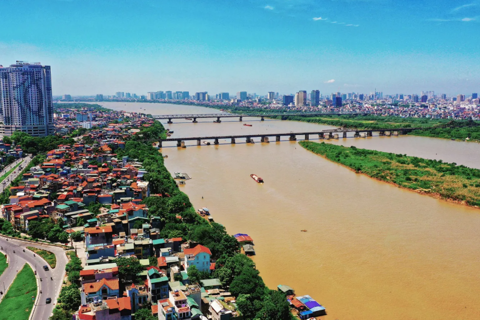
Long Bien Bridge is a key historical witness to the liberation of the capital. On the drizzly night of February 17, 1947, the 102nd Capital Regiment crossed the Red River stealthily and in small units under the Long Bien Bridge. About 1,000 soldiers successfully left behind the unwitting French guards on the bridge, preserving their strength for the 9-year anti-French resistance war.
At 4pm on October 9, 1954, the last French troops withdrew from Hanoi across Long Bien Bridge to Gia Lam District and from there to Haiphong City, as stipulated in the Geneva Accords. A unit of the Capital Regiment reached one end of Long Bien Bridge to the cheers and applause of people standing along Hang Dau and Tran Nhat Duat streets.
During the anti-US resistance war, the bridge was a high-profile bombing target for the US Air Force. Since then, it has undergone several renovations, while many more modern and ornate bridges such as Nhat Tan or Vinh Tuy span the Red River.
Despite its diminished role in local transportation, Hanoi's beloved rusting Long Bien Bridge continues to attract domestic and international tourists for its historical, cultural and architectural significance.
Hanoi Flag Tower
| The Hanoi Flag Tower on Dien Bien Phu Street, Ba Dinh District, Photo: Duy Khanh/ The Hanoi Times |
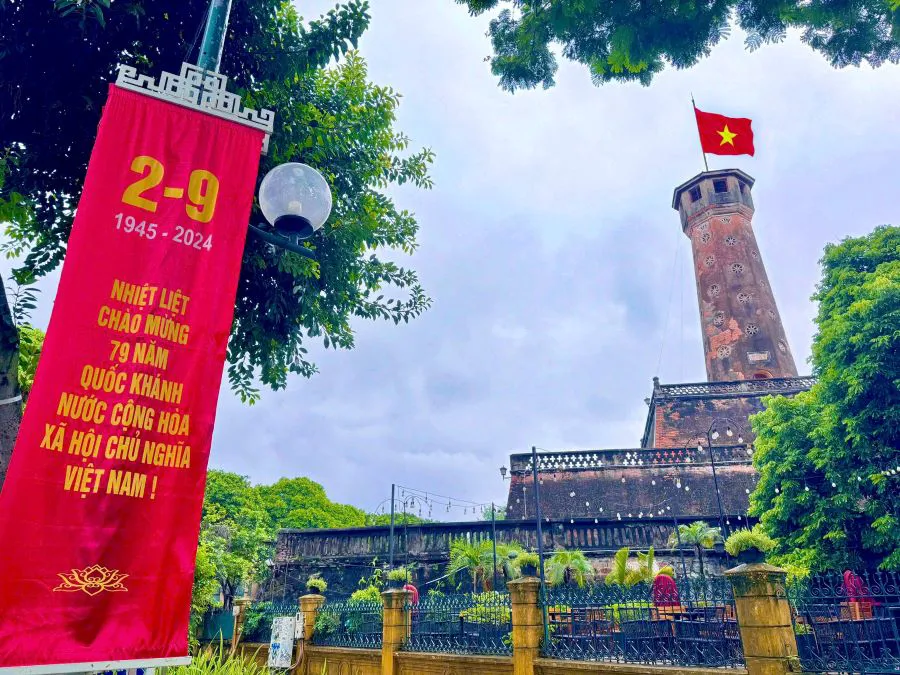
On October 10, 1954, the first flag-raising ceremony after the liberation of Hanoi was held in the Doan Mon courtyard of the Thang Long Imperial Citadel (then called the Flag Tower Courtyard) in a jubilant atmosphere.
The ceremony was held by the Hanoi City Political-Military Committee in the presence of the military units involved in the capital takeover and tens of thousands of their fellow citizens. The military band played the national anthem, the Opera House siren sounded a long blast, and the yellow-starred red flag was hoisted to the top of the Flag Tower, fluttering in the wind.
At this historic ceremony, the people of Hanoi listened to President Ho Chi Minh's appeal to the people of the capital on the occasion of Liberation Day, which was read by Committee Chairman Vuong Thua Vu.
In 1989, the Flag Tower was officially recognized by the State as a historical relic. The Hanoi Flag Tower is currently located on the grounds of the Vietnam Museum of Military History, across from Lenin Park on Dien Bien Phu Street in Ba Dinh District. The capital's iconic landmark is also the first stop on tours of the Thang Long Imperial Citadel.
Hanoi Opera House
| The Hanoi Opera House. Photo: Dang Dung/ Yeu Ha Noi Group |
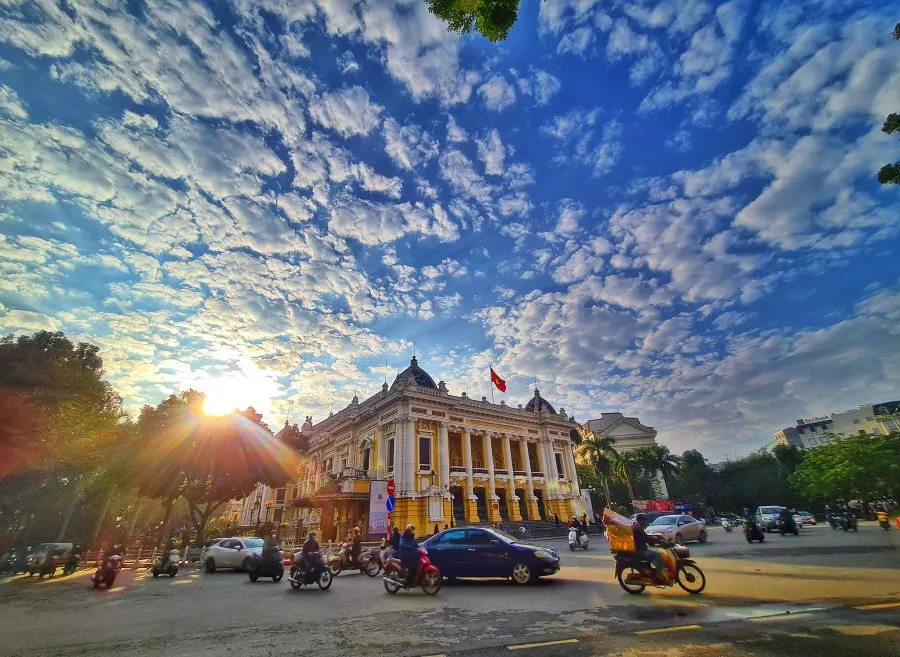
As well as being a cultural venue, the Hanoi Opera House and August Revolution Square have been the site of many historic events. The first Parliament of the Democratic Republic of Vietnam held its first session in the theater on March 2, 1946. After the liberation of the capital, the Opera House hosted meetings of the legislative body from March 20 to 26, 1955, until Ba Dinh Hall was built in 1963.
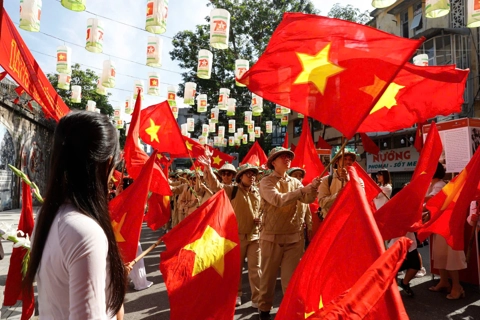
It was here that Hanoians hung portraits of President Ho Chi Minh, banners, and red flags with yellow stars to greet the triumphant army as it marched into the capital. It was also where the siren sounded to signal the historic flag-hoisting ceremony on the afternoon of October 10, 1954.
Since its restoration from 1995 to 1997, the Hanoi Opera House has continued its past role as one of the most important performing arts venues in the city. It regularly hosts cultural activities and performances by Vietnamese and foreign troupes, with priority given to folk art and traditional music. In 2011, the Hanoi Opera House and August Revolution Square were recognized as national historical and architectural relics by the Ministry of Culture, Sports and Tourism.
Hang Dao Street
| The Dong Lac Communal House on Hang Dao Street. Photo: Old Quarter Management Board |

On October 10, 1954, the Political-Military Committee of Hanoi City, led by Brigadier General Vuong Thua Vu (Chairman) and Doctor Tran Duy Hung (Vice-Chairman), together with the Capital Regiment, Mechanized Infantry and Artillery, entered the city via Hang Dao Street.
Le Suu, a resident of Hang Dao, was only 17 when he took the famous black and white photograph entitled "Hang Dao Street on Takeover Day, October 54". His wife, Hoang Lan Huong, then 12, recalled that in the days before the Vietnamese troops arrived, their houses and streets were aglow with colorful papers, flags, banners, and flowers.
"People stood on both sides of the crowded street, bursting with happiness. Students in uniform waved yellow-star red flags at the soldiers. The liberation army passed through the street to the cheers of everyone," she said.
In 2003, the Hoan Kiem District People's Committee approved the opening of the Hang Dao - Dong Xuan Night Market walking street on weekend evenings. The market sells handicrafts and Hanoi specialties, creating a new cultural feature in the capital. If you're strolling around Hanoi's Old Quarter, you can't miss the streets of Hang Ngang, Hang Dao, Hang Duong, and Dong Xuan.
Dong Xuan Market
| Dong Xuan Market. Photo: Dong Xuan Market Management Board |
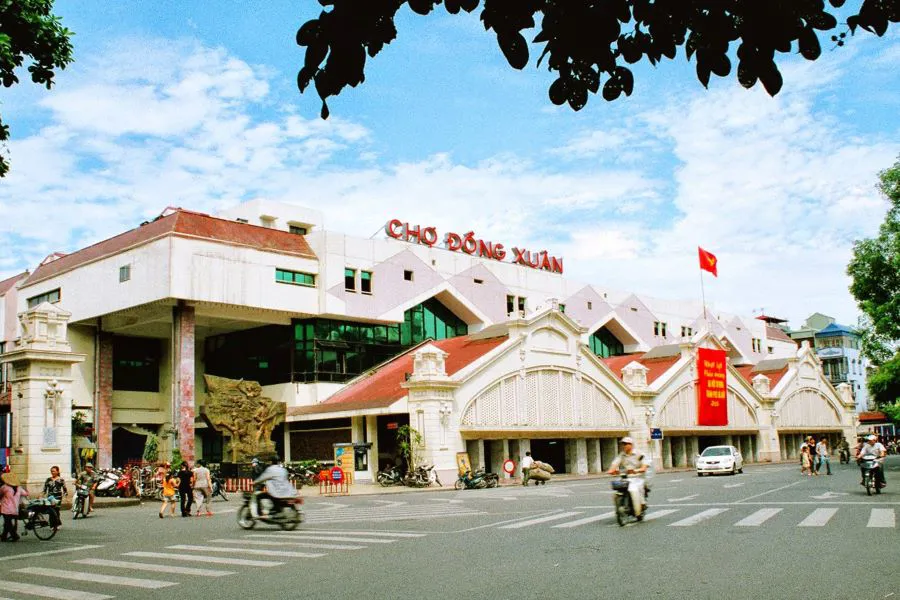
Dong Xuan Market witnessed the 60-day and night battle for Hanoi in late 1946 and early 1947. The fiercest fight was the siege of Dong Xuan Market on February 14, 1947. According to Lieutenant General Vuong Thua Vu, the French army bombarded the market non-stop for three days, encircling it with over 400 soldiers and combat vehicles. Their plan was to directly attack the Military Zone I command center and then take control of Hanoi.
With only 130 men left, the 101st Suicide Battalion of the Capital Regiment fought bravely to hold their positions and create a safe escape route for the retreat mentioned above on the night of February 17, 1947. As a result, the Central Command remained intact.
While retaining its classical style, Dong Xuan Market has undergone a modern facelift seven decades after the 1946 Winter Battle. Bustling year-round, it is now the largest wholesale center in the North and the largest market in Hanoi's Old Quarter.