Marine protection: Vietnam’s 10-year program works
Marine protected areas are aimed to shield threatened marine ecosystems and undersea resources from intrusive human activity.
Vietnam has set up marine protected areas as part of its efforts to sustainably develop fisheries resources and improve fishing traditions to protect aquatic environment in the country with more than 3,600 kilometers of coastline.
| Vietnam is rich in marine resources |
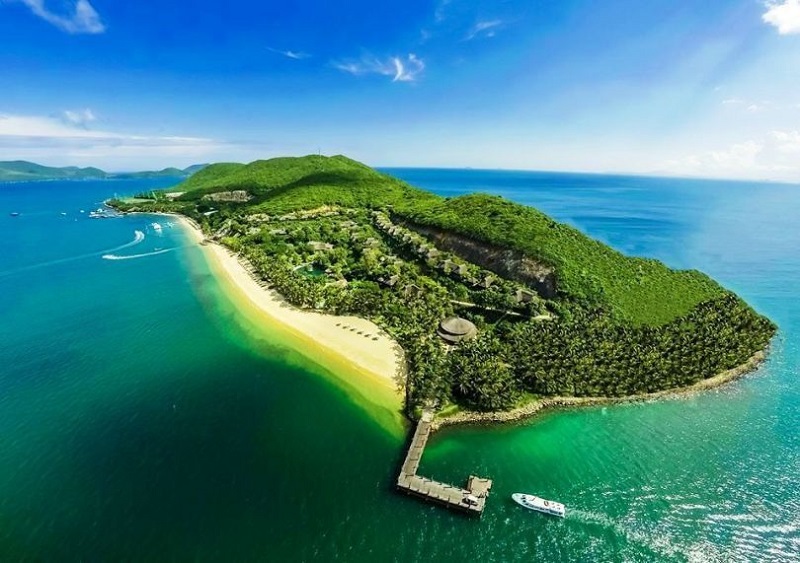
The ratio of marine protected areas (MPAs), which are essential for safeguarding biodiversity and the health of marine ecosystems, is around 0.185%, compared to 0.24% of the country’s sea given in the government’s Resolution 742/QĐ-TTg dated in 2010.
As of September 2020, MPAs cover 213,400 ha out of 270,271 ha set in the resolution, the information was released at a conference reviewing 10 years of protection and development of Vietnam’s marine resources by 2020 held last weekend by the Ministry of Agriculture and Rural Development (MARD).
Years ago, Vietnam was aware of the need to protect marine resources to tap potential of the country having more than one million square kilometers (sq.km) of sea as stated in the United Nations Convention on the Law of the Seas (UNCLOS) 1982.
Results
Over the past decade, Vietnam has formed 16 marine protected areas (MPAs) to shield threatened marine ecosystems and other undersea resources from intrusive human activity.
MPAs also provide living laboratories for oceanographers and marine biologists to conduct research.
| Marine protected areas in Vietnam help protect fisheries resources |
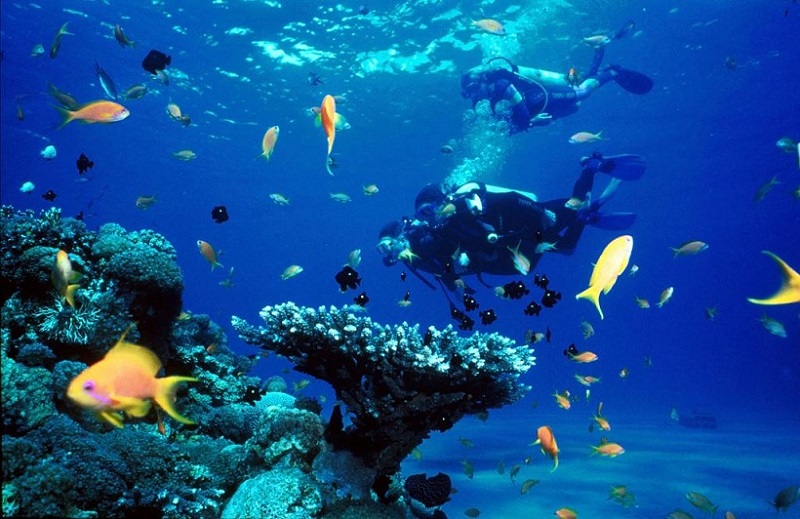
The list covers 12 operating MPAs namely Bach Long Vi (Haiphong city), Con Co (Quang Tri province), Cu Lao Cham (Quang Nam), Ly Son (Quang Ngai), Nha Trang Bay (Khanh Hoa), Cau Island (Binh Thuan); Phu Quoc (Kien Giang), Co To – Dao Tran (Quang Ninh), Bai Tu Long (Quang Ninh), Cat Ba (Haiphong), Nui Chua (Ninh Thuan), and Con Dao (Ba Ria-Vung Tau).
Four others under planning include Hon Me in Thanh Hoa province, Nam Yet in Khanh Hoa, Phu Quy in Binh Thuan, and Hai Van – Son Tra in Danang city and Thua Thien-Hue province.
In 2019, the country’s total seafood output hit 8.15 million tons, including 3.77 million tons of fishing and 4.38 million tons of aquaculture. Its seafood exports recorded US$8.6 billion, listing Vietnam the third largest seafood exporter behind China and Norway.
Great efforts
In 2017, the National Assembly passed Law on Fisheries that supplements the 2003 law with a focus on the protection and conservation of marine resources and biodiversity to ensure sustainable fishing industry.
The 2017 law details Illegal, Unreported and Unregulated (IUU) fishing activities and stipulates strict punishments compared to administrative penalties for violations in other fields. It takes into account EU recommendations, and extends to fishery products sourced from illegal fishing for temporary importation, re-export, temporary export, re-import, trans-shipment and transit through Vietnamese territory.
The dialogue on IUU fishing between the EU and Vietnam started in September 2012. The Commission identified Vietnam as non-cooperating country (yellow card) on October 23, 2017 following Vietnam’s failure to address the structural deficiencies in its legal and administrative frameworks to fight IUU fishing that was identified during previous visits.
This yellow card only signals the formalization of the existing dialogue. The Commission continues cooperating with Vietnamese authorities to address the situation that led to the yellow card.