Promising FDI outlook for Hanoi amidst global Covid-19 crisis
FDI to Hanoi continues to rise while global investment activities shrink due to the growing impacts of the Covid-19 pandemic.
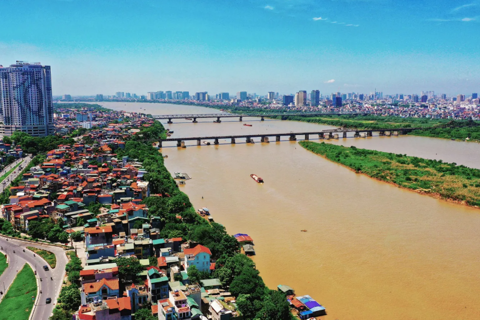
Despite the complicated Covid-19 progression globally, the foreign direct investment (FDI) outlook for Hanoi remains positive, thanks to the city’s strong efforts to improve the business environment.
| Data: Municipal Statistics Office. Chart: Nguyen Tung. |
.png)
In the first five months of 2020, FDI commitments to Hanoi increased 6.1% against the previous month to US$1.05 billion.
The growing trend of FDI in Hanoi demonstrates the city authorities‘ efforts to reform administrative procedures and ensure a favorable investment environment, especially at a time when global investment activities continue to shrink.
At a recent meeting with Secretary of the Hanoi Party Committee Vuong Dinh Hue, CEO of Japan-based Aeon Mall Vietnam Tetsuyuki Nakagawa revealed the group’s plan to invest in a shopping mall and a parking lot at Giap Bat bus station, stressing this would be Aeon’s largest investment project to date in Vietnam.
In March, Samsung started construction of a US$200-million R&D center project in Hanoi, the largest of its kind in Southeast Asia, which showed the South Korean IT giant’s vision to make Vietnam become its strategic base for R&D, not only a production hub.
Chief Representative of the Japan External Trade Organization (JETRO) in Hanoi Takeo Nakajima said given Vietnam’s large-scale domestic market and its active participation in a number of free trade agreements, major Japanese corporations, such as Uniqlo and Aeon, are expanding their respective investment projects in the country.
Nakajima expected the Covid-19 crisis would accelerate capital inflows to Vietnam, during this context, Japanese enterprises are looking for stronger cooperation with local peers in the fields of automobile, energy, logistics, and industrial production, among others.
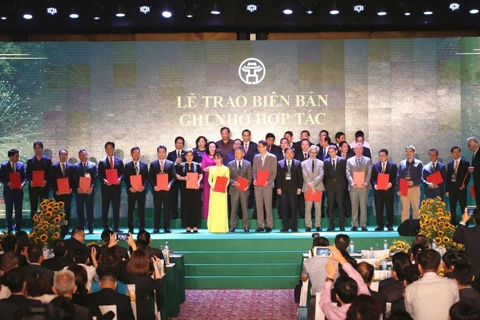
By the end of this month, Hanoi is scheduled to hold an investment promotion conference to stimulate investment and accelerate its economic recovery.
At the event, the city will issue investment certificates for some 100 projects. Among them, domestic investors are expected to commit nearly VND330 trillion (US$14.28 billion), including 26 social housing projects worth VND72 trillion (US$3.11 billion) for low-income buyers.
Notably, investment certificates will be granted for foreign-invested projects worth US$3.5 billion.
In 2019, Hanoi topped nationwide in terms of FDI attraction with total registered capital of US$8.45 billion, accounting for 22.2% of total FDI to Vietnam.
As the FDI continues to play a major role in the city’s economic development, Hanoi is committed to creating favorable conditions for investors to do long-term business here.
Hanoi targets to offer 100% of its administrative procedures online at advanced stages 3 and 4 out of the 4-scale level by June 30, including 25% at stage 4, while it plans to integrate 250 public services into the national online services portal in June.
Additionally, Hanoi would focus on addressing businesses' concerns, supporting startups and helping more domestic firms join multinationals’ value chains.
Hanoi is committed to supporting the development of science and technology activities, logistics and e-commerce.
All investment procedures have been published on the online portal of Hanoi’s Department of Planning and Investment (http://hapi.gov.vn).
This year, Hanoi targets to achieve an economic growth rate 1.3 times higher than the national average, showcasing the city’s determination of becoming a pioneer in economic recovery in the post-Covid-19 pandemic era.