Log in
Business

Trade deficit poses little impacts on USD/VND exchange rate: Expert

Prospect of possible trade deficit in upcoming months and the impacts from current Covid-19 pandemic in Vietnam would pose pressure on the USD/VND exchange rate.

Vietnam’s high trade deficit of US$2 billion in May poses little impacts on the USD/VND exchange rate, economist Ngo Tri Long told Hanoitimes.

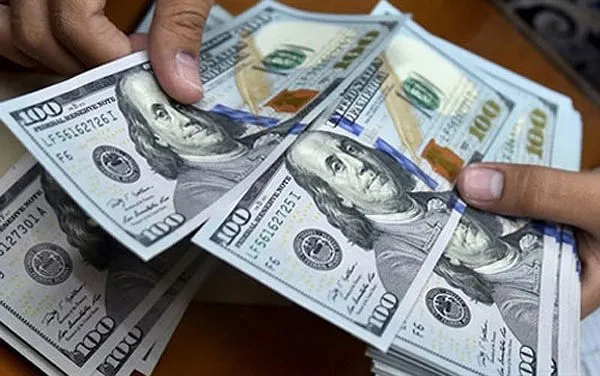
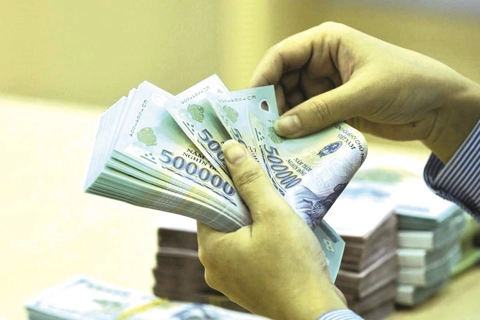
 Vietnam's trade deficit has posed little impact on the USD/VND rate. File photo

Long referred to the fact that the USD/VND rate quoted by commercial banks was lowered by a marginal of VND10 to VND22,910/23,140 (buying-selling prices) and further declined by VND60 in the free market to VND23,170/23,220.

“This proves the stability of the Vietnamese dong (VND), which has been one of the most stable currencies in Asia in the past months,” Long told Hanoitimes.

Sharing the same view, SSI Securities Corporation (SSI) in a report noted that given the supply-demand balance of foreign currencies at the moment, the USD/VND rate would continue to move sideways in short-term.

SSI, however, pointed out if the trade deficit continues to go up along with the current Covid-19 outbreak in Vietnam, there will be more pressure on the exchange rate in mid- to long-term.

Another factor that could impact the exchange rate was the inter-bank interest rates that have slightly increased by 0.03-0.09 percentage points in the past week, standing at 1.36% per annum for overnight interest rate and 1.44% rate for the one-week loan.

Such rates were higher by 0.35-0.53 percentage points against late April.

“Inter-bank interest rates are dependent on the credit supply-demand balance. Therefore, higher rates reflect the recovery of economic activities as more firms are looking for capital,” Long said.

As the economy continues to stay on the upward trend, there is a possibility that banks would raise capital mobilization rate, he noted.

However, for the immediate future, Long suggested interest rates would stay unchanged as the consumer price index (CPI), a gauge for inflation, rose at a modest rate of 0.16% month-on-month in May and expanded by 1.29% in the five-month period, the lowest in the past five years.

“Vietnam remains on track to keep the inflation below the 4% target for this year,” Long asserted.

HSBC in a recent report predicted Vietnam’s inflation rate in 2021 to average around 3%, saying the impact of moderating food prices would more than offset recovering oil-related prices.

With inflation staying below the 4% inflation ceiling set by the State Bank of Vietnam, this would allow the central bank to maintain its accommodative monetary policy throughout 2021 and keep its refinancing rate unchanged at 4%, it noted.

At present, deposit interest rates average 2.8-4% per annum for one-month to less than six-month deposit; 3.5-5.4% per annum for six- to less than 12-month period; and 4.6-6.5% for 12-13-month period.
Reactions:
Share:
Trending
Most Viewed
Related news
VND set to continue trading stable in 2021

VND set to continue trading stable in 2021

28 Jan, 15:26

Strong currency inflows from trade surpluses and FDI will support the VND, while an adequate foreign reserve position will also allow the central bank to ease off its foreign currency purchases over the near term.

Inclusive innovation must give everyone equal voice, experts say at TECHFEST Vietnam 2025

Inclusive innovation must give everyone equal voice, experts say at TECHFEST Vietnam 2025

Open innovation is becoming a cornerstone of Vietnam’s development strategy, as policymakers, experts and international partners emphasize people-centered collaboration to tackle inequality, climate change and urbanization through inclusive, technology-driven solutions showcased at TECHFEST Vietnam 2025.

Vietnam attracts $400 million in venture capital as tech startups surge

Vietnam attracts $400 million in venture capital as tech startups surge

Vietnam’s startup ecosystem continues to expand rapidly, with strong venture capital inflows and fast growth in digital, AI and green technologies, reinforcing the country’s appeal to global investors.

Vietnamese policymakers push for early launch of gold exchange

Vietnamese policymakers push for early launch of gold exchange

A transparent gold exchange would not only offer a safe investment channel for the public but also provide a foundation for Vietnam to become a regional hub for jewelry manufacturing and exports.

Rosatom commits to advanced-technology Ninh Thuan 1 nuclear plant in Vietnam

Rosatom commits to advanced-technology Ninh Thuan 1 nuclear plant in Vietnam

Rosatom will transfer technology, localize nuclear products in Vietnam and support the development of the country’s nuclear science and industry for peaceful purposes.

Hanoi accelerates innovation reforms to become favorite destinations for investors, technology talents

Hanoi accelerates innovation reforms to become favorite destinations for investors, technology talents

Hanoi is pushing forward a wide range of innovation-driven reforms and investment initiatives as it works to become one of the world’s most attractive destinations for high-tech and strategic investors.

Vietnam mulls sharp rise in casino entry fee for locals

Vietnam mulls sharp rise in casino entry fee for locals

Such higher rates are intended to discourage individuals without adequate financial capacity from entering casinos.

Vietnam’s export strength in 2025 builds solid momentum for 2026 growth

Vietnam’s export strength in 2025 builds solid momentum for 2026 growth

With trade turnover nearing the US$900-billion mark, Vietnam enters 2026 with renewed confidence despite global volatility, rising trade barriers and shifting supply chains. Deputy Director of the Import–Export Department Tran Thanh Hai has outlined the drivers of this growth and the priorities for sustaining momentum next year.

Vietnam sets new trade record as import–export turnover nears $840 billion

Vietnam sets new trade record as import–export turnover nears $840 billion

Vietnam recorded its highest-ever trade performance in January-November as import–export turnover surged, driven by strong export growth and a continued trade surplus.