Vietnam encourages private investment in power industry with new master plan
National Power Development Plan VIII should be open, creating a space to mobilize and promote resources from enterpries.
The eight version of National Power Development Plan, or PDP VIII for short, will encourage private sector investment in the energy sector to feed Vietnam's demand in the next decade.
| General Director Hoang Tien Dung of ERED. Photo: nangluongvietnam |
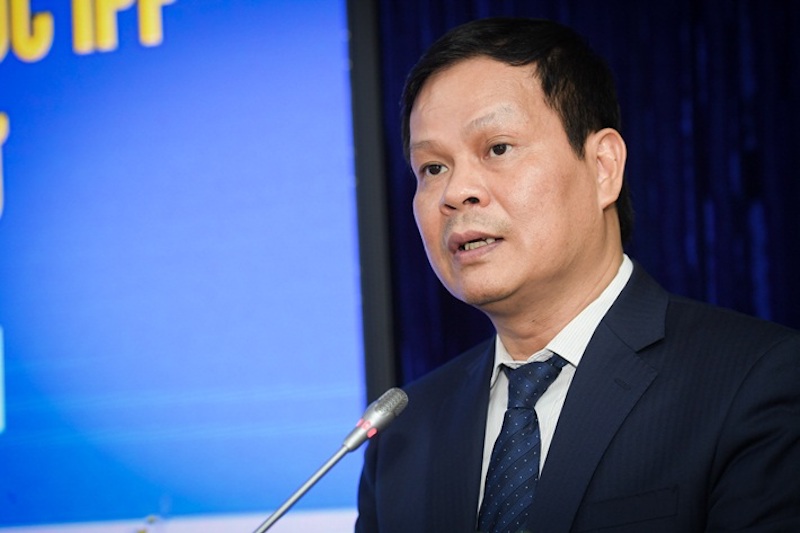
The Electricity and Renewable Energy Department (ERED) under the Ministry of Industry and Trade (MoIT) is working with the Institute of Energy to draft National Power Development Plan VIII (PDP VIII) and expects to submit it to the ministry by the end of this September, according to General Director of ERED Hoang Tien Dung.
Earlier, at the Vietnam Energy Summit 2020 in July, Minister of Industry and Trade Tran Tuan Anh announced that the ministry will submit PDP VIII for 2021-2030 and the National Energy Development Master Plan to Prime Minister Nguyen Xuan Phuc in October and by the end of 2020, respectively.
Accordingly, PDP VIII is required to address the limitations of the current PDP VII, and be open, creating a space to mobilize and promote resources of enterprises.
Increasing electricity demand
Vietnam's electricity demand is expected to increase by 8.5% per year until 2025 and 7% per year until 2030, making Vietnam an attractive market for foreign energy investors.
Speaking at the seminar on the development of Independent Power Producers (IPP) on September 18, Deputy Minister of Industry and Trade Hoang Quoc Vuong said that from now to 2030, electricity demand will increase on average by about 7.5-8% per year.
According to the preliminary results of the PDP VIII report, electricity demand in the base scenario by 2030 is forecast to exceed 526 billion kWh, corresponding to the installed capacity of the whole system of up to 131,000MW. Thus, from now to 2030 the power industry will need to develop an additional 75,100MW of capacity, averaging 7,500MW per year.
Until 2019, all power projects had been built and operated by state-owned enterprises. However, up to now, the scale and proportion of private investors has been increasing.
Specifically, as of the end of 2019, some 19,253MW had been developed by the private sector (including power plants invested in the form of IPP and build-operate-transfer (BOT)), accounting for 34.4% of the total national capacity.
Potential for private investors
From now to 2030, some US$7-8 billion is needed to develop 7,500MW of power capacity each year, indicating large potential of the power industry, Deputy Minister Hoang Quoc Vuong said.
In recent years, a spate of incentive policies have attracted private invest into energy development in Vietnam. However, in this process, private investors have faced a wide range of hurdles such as out-of-date policies; poor transmission system; lack of coordination between state agencies and local authorities in supporting investors (land compensation and site clearance).
Besides, Dung from the ERED stressed the importance of the planning of electricity system development whichs sets the direction for the development of the electricity industry and orientation of target power supply values; determines the scale and progress of power source and grid works, and proposes solutions for implementation of the planning.