Vietnam may prioritize economic growth over inflation control: PM
It may be necessary to accept a certain level of higher inflation because injecting more money into business requires this trade-off.
Vietnam needs to boost GDP growth beyond "moderate levels," acknowledging that achieving this goal may require accepting some inflation.
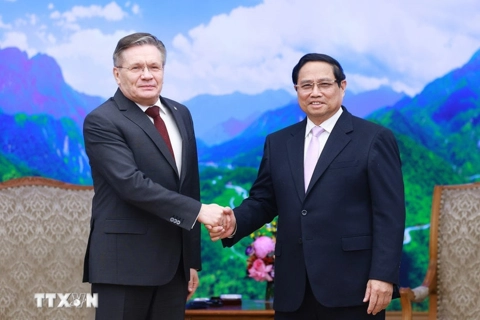
| Prime Minister Pham Minh Chinh during the session. Photos: Nhat Bac/VGP |
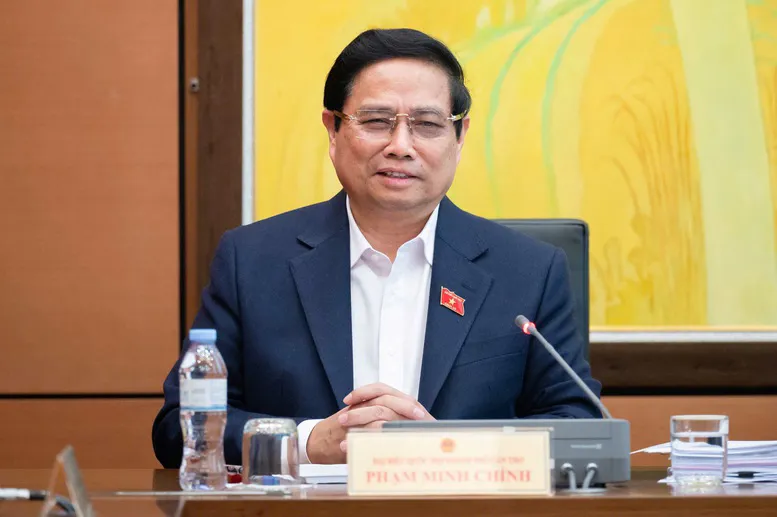
Prime Minister Pham Minh Chinh shared the view during a group discussion session at the National Assembly on February 14, adding that adjusting the GDP growth target to over 8% this year is an objective necessity to meet the goals set at the 13th National Congress and transition Vietnam into a high-income country by 2045.
However, he acknowledged the challenges as the global economy is expected to grow at a low rate of around 3%, while ASEAN economies are projected to expand by 4-4.5%. Nevertheless, he affirmed, "No matter how difficult the target is, we must achieve it."
To achieve high growth, bank credit remains a crucial funding channel, Chinh said. This year, credit growth is expected to reach approximately 16%, a 0.92 percentage point increase from 2024.
The Prime Minister highlighted that monetary policy will continue to be managed flexibly and harmonized with fiscal policy (taxes, fees, revenue increases, and spending cuts) to create a favorable environment for businesses and individuals.
"It may be necessary to accept a certain level of higher inflation because injecting more money into production and business requires this trade-off," he said, adding that Vietnam prioritizes growth while ensuring macroeconomic stability, inflation control, and large-scale economic balances with high surpluses. Apart from GDP growth, it has also been proposed that the inflation target be adjusted to an average of 4.5-5% of GDP.
Nguyen Thi Yen, Deputy Secretary of the Ba Ria - Vung Tau Party Committee, suggested that monetary policy should be managed cautiously to prevent excessive inflation.
The Economic Committee previously assessed that adjusting the targets is necessary to create room for fiscal and monetary policy management and to support economic growth.
However, inflation remains a critical indicator that has a direct impact on macroeconomic stability, living standards, and the cost of doing business. Last year, the Consumer Price Index (CPI) increased by 3.63%, yet many basic goods remained expensive. For instance, food prices rose by 12.2%, medical services by 9%, and education services by 5.7%. Meanwhile, the average wage increase for workers was 8.6%, lower than the price increases for essential goods.
"This is a strategic railway project that complements air and sea transport, so it needs to be accelerated for high investment efficiency," he stated.
| Overview of the session. |
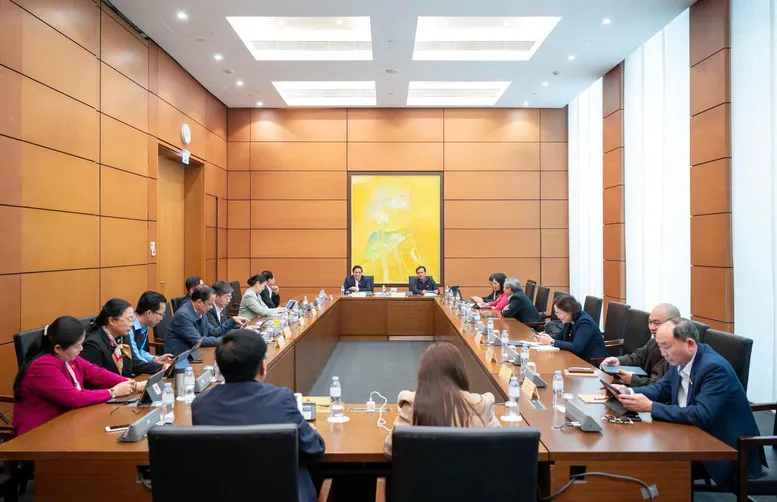
Additionally, Vietnam will develop urban rail systems in Hanoi and Ho Chi Minh City.
However, regarding public investment measures, Ha Sy Dong, Acting Chairman of Quang Tri Province People’s Committee, suggested focusing on investments in transport infrastructure, technology infrastructure, and digital transformation within the government to drive future economic growth.
Besides public investment, National Assembly Chairman Tran Thanh Man emphasized that private sector growth is essential for achieving the 8% GDP target, as private enterprises account for 55% of total social investment.
To develop the private sector, the Chairman stressed the importance of institutional reforms to ensure investor confidence. "We need bold reforms to simplify and streamline investment procedures. Now is the time to focus on expanding revenue sources, ensuring correct and sufficient tax collection, and facilitating investment in production and business," he said.
Regarding the fiscal deficit, the Government has proposed to adjust the budget deficit ratio to 4-4.5% of GDP in order to mobilize resources for development investment. This may bring public debt, government debt, and external debt to the warning threshold or slightly above (around 5% of GDP).
Commenting on this proposal, Dong cautioned against raising the public debt ceiling, arguing that increased borrowing could lead to higher interest rates, making it harder for private enterprises to access bank loans. He suggested that increasing revenue, raising the budget deficit, and raising the public debt ceiling should only be emergency measures, such as in the event of a trade war, rather than a strategy for achieving 8% growth.
Instead, he recommended that the government focus on cost savings to free up resources for public investment, avoiding budget deficits or unnecessary borrowing. He also stressed the importance of improving the legal framework and ensuring that civil and economic disputes are not criminalized, which would allow businesses to expand their investments.
Increasing the money supply in the economy could raise the fiscal deficit, public debt, and foreign debt. However, Prime Minister Chinh assured that these indicators have been well managed, following the principle of "borrowing responsibly, repaying on time, and investing effectively."
This year, the Government has set double-digit growth targets for each locality. Le Tien Chau, Party Secretary of the Haiphong Party Committee, emphasized that special institutional and policy mechanisms are the most critical resources for local economic growth. He cited Haiphong’s implementation of Resolution 35, which granted five special policy mechanisms, leading to a steady economic growth rate of over 10%.
"Institutions are a crucial resource for creating space for local economic development. Therefore, the scope of special policies and mechanisms should be expanded to help localities achieve high growth," he stated.