Vietnam poised to become financial hub
International organizations recognize Vietnam as a potential financial center with many factors converging for developing a modern financial market with high connectivity.
Vietnam is among the countries with highly favorable conditions for developing a financial center, presenting a unique opportunity to undergo a transformative shift through technology and potentially avoid the pitfalls of poor choices made by countries that preceded it.
| UBS Bank representative Claudio Cisullo. Photos: Nhat Bac/VGP |
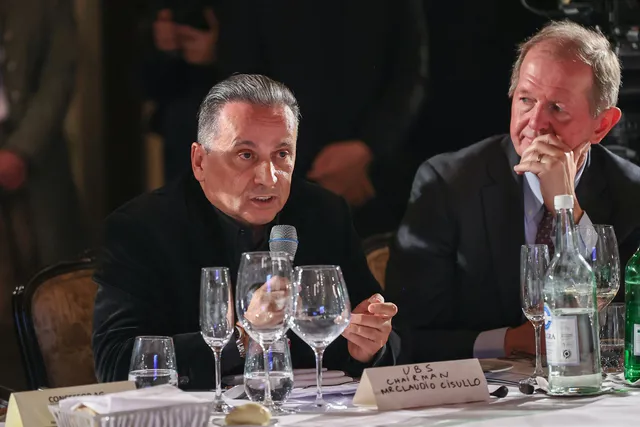
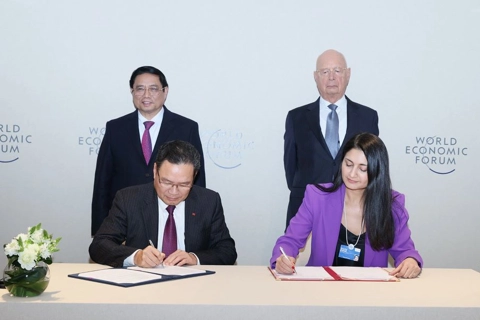
UBS Bank representative Claudio Cisullo shared the view at a roundtable discussion on Vietnam's financial market potential and investment opportunities held in Davos on January 17, attended by Prime Minister Pham Minh Chinh, experts and leaders of major financial conglomerates.
These factors include maintaining stable macroeconomic and political conditions, a strategically advantageous geographical location, and a significant time zone difference with 21 major global financial centers. This unique advantage is particularly significant in attracting idle capital from these financial hubs during non-trading hours.
Vietnam is progressively refining its legal framework, restructuring its financial markets (banking, insurance, securities), and attracting the attention of many investors, especially foreign investors entering the financial market, he noted.
Dr. Philipp Rösler, former Deputy Prime Minister of Germany, acknowledged Vietnam as one of the fastest developing countries in the world in recent years, emphasizing that while this is just the beginning, many nations are looking toward Vietnam with interest.
Assessing Vietnam's potential to become a financial hub and make significant strides in this field, representatives from conglomerates and banks expressed admiration for Vietnam's achievements post-Covid-19. They focused on analyzing Vietnam's potential, advantages, and the model and experience in building an international financial center.
| Dr. Philipp Rösler, former Deputy Prime Minister of Germany. |
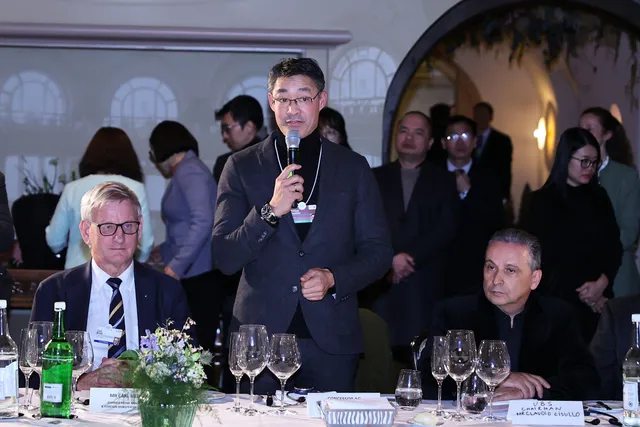
Recommendations for Vietnam included creating the conditions and platforms necessary for building a financial center, attracting investment through legal frameworks, tax policies, energy infrastructure, information technology, transportation, skilled labor, and maintaining economic stability.
Cho Huyn-sang, Vice Chairman of Hyosung, stated that many South Korean companies are eager to establish a presence in Vietnam. With an annual revenue of US$25 billion, Hyosung has already invested $3.5 billion in Vietnam and employs around 9,000 local staff.
Considering Vietnam's investment environment as one of the most reasonable and effective, Hyosung plans to increase its investment in Vietnam by $540 million by 2024, he said.
Cho also highlighted Vietnam's strengths, including strong leadership and efficient governance from the central government, positive support from local authorities, and the diligent and serious work ethic of the Vietnamese people.
Don Lam, CEO of VinaCapital, mentioned that the Young Presidents' Organization (YPO) plans to organize a business delegation to Vietnam in February 2025, with 200-member companies interested in various fields.
At the discussion, delegates raised various questions regarding Vietnam's regulations and policies related to foreign investor ownership of credit institutions, workforce training, talent attraction, the timeline for opening the financial market to retail companies, and the implementation of the Just Energy Transition Partnership (JETP).
Minister of Planning and Investment Nguyen Chi Dung emphasized Vietnam's need for the guidance, initiatives, and collaboration of major financial institutions to build a financial center in Ho Chi Minh City.
Chairman of the Ho Chi Minh City People's Committee Phan Van Mai outlined the city's plan to become a regional financial center by 2030. The legal framework for this center will be submitted to the National Assembly this year and will be continuously updated and supplemented. The city will also enhance infrastructure, especially in District 1 and Thủ Thiêm, and focus on training and attracting high-quality human resources to meet the requirements of an international financial center.
In response to delegates' interest in the foreign investor ownership ratio, the Governor of the State Bank of Vietnam Nguyen Thi Hong stated that the ownership ratio of a foreign individual in a Vietnamese credit institution cannot exceed 5% of its charter capital. The limit is 15% for a foreign organization and 20% for a foreign strategic investor. The total ownership ratio of foreign investors cannot exceed 30% of the charter capital.
However, in special cases to restructure weak credit institutions facing difficulties and to ensure the safety of the credit institution system, the Prime Minister will decide on the ownership ratio of foreign investors on a case-by-case basis. Governor Nguyen Thi Hong pointed out that, in reality, foreign investors currently only hold around 15% of the charter capital of some banks, indicating a significant gap with the prescribed limit.
| Prime Minister Pham Minh Chinh (mid) and other senior officials answer questions from foreign investors. |
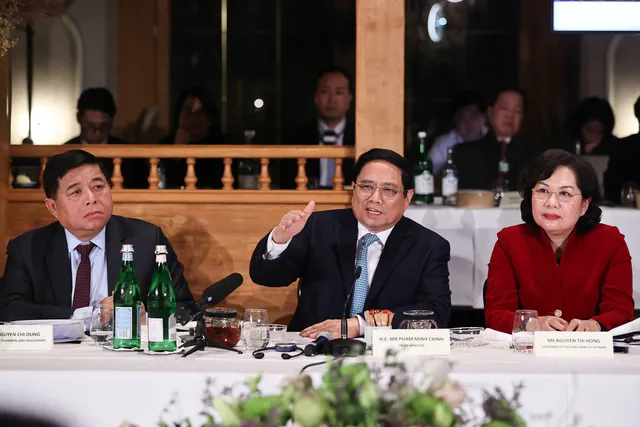
Facilitating favorable conditions for foreign investors
For his part, Prime Minister Pham Minh Chinh highlighted that, by the end of 2023, Vietnam had attracted a total of over $468 billion in registered FDI, with around $300 billion disbursed. In 2023, individuals and economic organizations deposited around VND13,500 trillion ($550 billion) in banks, the highest so far, indicating improved incomes and people's trust.
The Prime Minister reiterated Vietnam's commitment to rapid and sustainable development based on science, technology, innovation, and digital transformation.
He added that Vietnam aims to become a developing country with a modern industry and high average income by 2030 and a high-income developed country by 2045.
The country is focusing on three strategic breakthroughs: building and improving institutions and legal frameworks; reforming administrative procedures and high-quality human resource training; and developing strategic infrastructure, especially transportation infrastructure, with a policy of "open policies, smooth infrastructure, smart management."
In addition, Chinh noted that Vietnam is renewing existing motivations such as exports, consumption, and investment, while introducing new ones like the digital, green, circular, sharing, and knowledge economies.
In particular, Chinh said the Government is intensifying efforts to combat corruption.
| The Government leader and delegates at the event. |
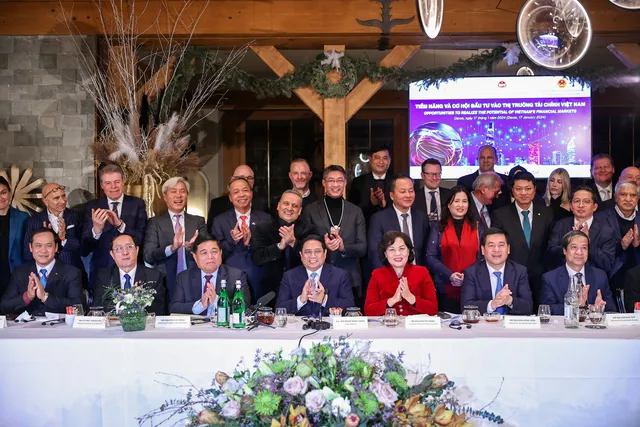
“Vietnam seamlessly combines key policies to create a peaceful and stable political environment, social order and security, and favorable conditions for efficient and sustainable business operations,” he continued.
Chinh also emphasized the importance of international financial institutions supporting Vietnam in policy advice, promoting startups and innovation, restructuring banks, building and enhancing the national brand value, supporting infrastructure development, and training high-quality human resources.
The Prime Minister expressed the desire for global conglomerates and investment funds to share their experiences, advise on suitable development models, and propose appropriate solutions for developing a financial center in Vietnam, enhancing the financial ecosystem, improving national credit ratings, and raising standards in accounting, auditing, and financial reporting.
“The Vietnamese Government is committed to facilitating favorable conditions for foreign investors in general and Swiss investors in particular to invest efficiently and sustainably in Vietnam,” Chinh noted, adding the Government will play a constructive role, providing support, listening to opinions, and working together for mutual development, protecting the legitimate rights and interests of investors under all circumstances, avoiding criminalization of economic relations, and maintaining the spirit of "harmonious interests, shared risks," and "harmonizing interests between the State, people, and businesses."