Econ
Vietnam set to be among world’s 10 fastest growing economies in 2019 amid trade war
It is expected that Asian economies with the closest ties to China to be hardest hit in the trade war.
Vietnam, along with Indonesia and the Philippines, is set to be among the top ten fastest growing economies globally, according to the Institute of Chartered Accountants in England and Wales (ICAEW)’s latest Economic Insight: South-East Asia report.
With the global macroeconomic context still reasonably constructive, the report forecast GDP in the South-East Asia (SEA) region in 2019 to slow to 5%, after an estimated 5.3% this year, because of the US-China trade conflict and tighter global monetary conditions.
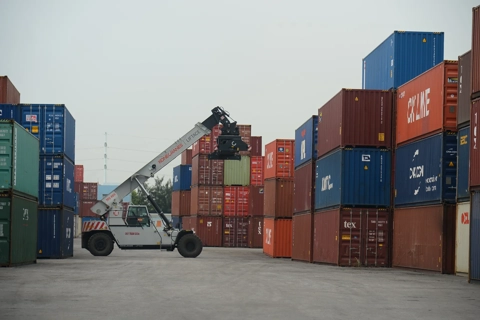
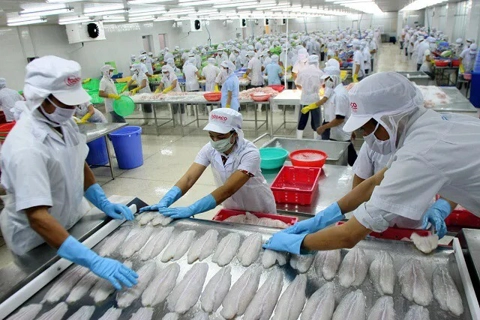
In the third quarter of 2018, economic growth continued to be moderate across most South-East Asia (SEA) economies. Average GDP growth as a whole slowed to 4.8% year-on-year, from 5.2% in the second quarter. Vietnam is an exception with GDP growth accelerating 6.9% on-year, up from 6.7% in the second quarter as FDI inflows continued to support growth in manufacturing activity and exports.
Domestic demand has held up well this year, although export growth has moderated. ICAEW expected the knock-on impact of the US-China trade war against a challenging global backdrop will be felt more strongly in 2019.
Many of the region’s economies are small open economies heavily dependent on exports, with a high level of exports to China. In particular, Malaysia and Vietnam are both highly exposed to China with total exports to this country in value added terms accounting for 10.7% and 10.3% of GDP respectively in 2017. Of this, more than half were to meet Chinese domestic demand. Hence the expected slowdown in China’s domestic economy next year will weigh significantly on growth in the region.
Moreover, it is expected that Asian economies with the closest ties to China will be hardest hit in a trade war. Looking across the SEA region, Singapore and Malaysia would see the biggest impact on GDP, with GDP growth of 1% points lower in Singapore by 2020 and Malaysian GDP is 0.4% lower. Meanwhile Indonesia and the Philippines are relatively unscathed.
Eventually, some economies may benefit from the relocation of supply chains and South-East Asia could be a preferred destination. But it is not an easy decision to uproot large parts of an electronics or car supply chain. The report’s suggested this as a medium-term structural change rather than a short-term remedy.
The report also expected domestic demand will provide some relief amid the more challenging outlook for exports. Fiscal spending is expected to be strong in Indonesia, Thailand and the Philippines ahead of upcoming elections in the first half of 2019 and many governments in the region, including Indonesia and Malaysia, could miss their ambitious fiscal consolidation targets for 2019.
In the case of Vietnam, while the government’s fiscal position has improved, there would be limited space for any expansionary fiscal policy next year, according to ICAEW.

Source: ICAEW.
|
In the third quarter of 2018, economic growth continued to be moderate across most South-East Asia (SEA) economies. Average GDP growth as a whole slowed to 4.8% year-on-year, from 5.2% in the second quarter. Vietnam is an exception with GDP growth accelerating 6.9% on-year, up from 6.7% in the second quarter as FDI inflows continued to support growth in manufacturing activity and exports.
Domestic demand has held up well this year, although export growth has moderated. ICAEW expected the knock-on impact of the US-China trade war against a challenging global backdrop will be felt more strongly in 2019.
Many of the region’s economies are small open economies heavily dependent on exports, with a high level of exports to China. In particular, Malaysia and Vietnam are both highly exposed to China with total exports to this country in value added terms accounting for 10.7% and 10.3% of GDP respectively in 2017. Of this, more than half were to meet Chinese domestic demand. Hence the expected slowdown in China’s domestic economy next year will weigh significantly on growth in the region.
Moreover, it is expected that Asian economies with the closest ties to China will be hardest hit in a trade war. Looking across the SEA region, Singapore and Malaysia would see the biggest impact on GDP, with GDP growth of 1% points lower in Singapore by 2020 and Malaysian GDP is 0.4% lower. Meanwhile Indonesia and the Philippines are relatively unscathed.
Eventually, some economies may benefit from the relocation of supply chains and South-East Asia could be a preferred destination. But it is not an easy decision to uproot large parts of an electronics or car supply chain. The report’s suggested this as a medium-term structural change rather than a short-term remedy.
The report also expected domestic demand will provide some relief amid the more challenging outlook for exports. Fiscal spending is expected to be strong in Indonesia, Thailand and the Philippines ahead of upcoming elections in the first half of 2019 and many governments in the region, including Indonesia and Malaysia, could miss their ambitious fiscal consolidation targets for 2019.
In the case of Vietnam, while the government’s fiscal position has improved, there would be limited space for any expansionary fiscal policy next year, according to ICAEW.