Vietnam warned easing monetary policy to cause asset price bubble: Experts
Credit has not been effectively channeled into fields that contribute directly to economic growth and ultimately social prosperity, but to risky fields such as real estate, stock market or cryptocurrencies.
The current low-interest rate environment as a result of monetary easing policy adopted by the Vietnamese government is channeling social capital into risky fields of real estate or stock market, instead of production and business activities.
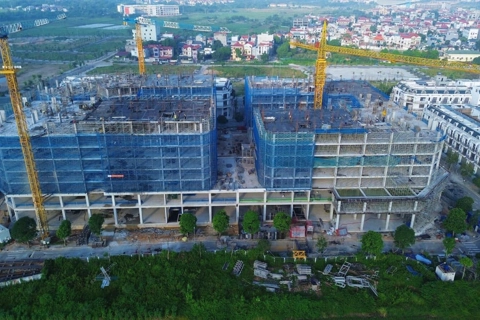
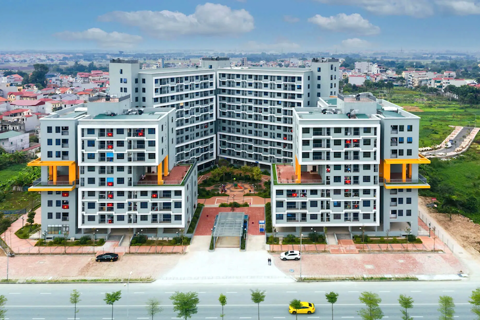
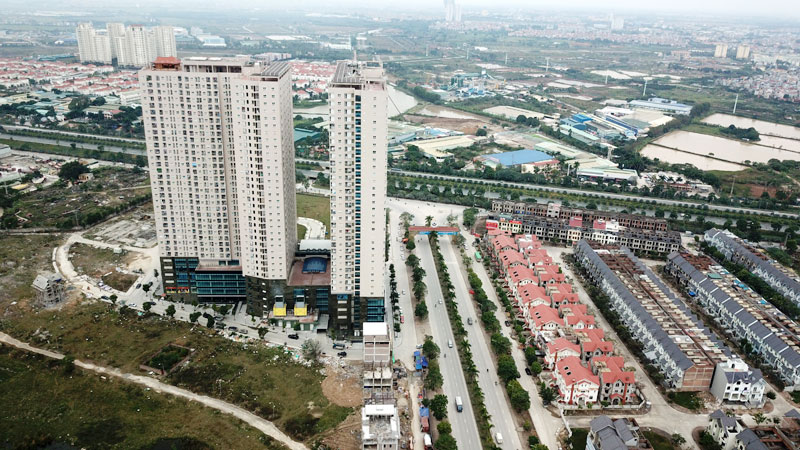
| Anh Khanh urban residential area in Hoai Duc district. Photo: Pham Hung |
Pham The Anh, chief economist at the Vietnam Institute for Economic and Policy Research (VEPR), told Hanoitimes in reference to the overheating of asset markets in recent months.
“With a cheap money policy from the central bank, investors tend to stay away from business and production expansion, which seems to be riskier than betting on real estate or stock markets,” Anh noted.
At present, Vietnam’s ratio of M2 money supply (covering cash in circulation and all deposits) to GDP is at nearly 200% and the credit-to-GDP ratio 140%, the highest among five major economies in ASEAN, said Anh, pointing out similar ratios of 60-70% in Thailand, Indonesia and Malaysia.
Last year, Vietnam registered a credit expansion of 12,13%, while the nominal GDP growth stood at 2.91%. “This indicated credit has not been effectively channeled into fields that contribute directly for economic growth, and eventually for social prosperity,” he added.
For the past five years, credit into real estate rose eight-fold and currently makes up 20% of total outstanding loans.
“Taking into account an addition of 20% in total outstanding loans from consumer credit, which also includes loans for home purchases, the dependent level of the economy into banks’ credit is growing at a rapid rate,” stated Anh.
Anh added idle money from the people and enterprises pouring into asset markets could also increase social inequality as real estate properties are becoming more expensive and thus making it harder for low- to middle-income groups to purchase.
On this issue, economist Can Van Luc said asset bubble price would become not sustainable and burst eventually, leading to severe consequences for the society.
“It is especially risky for those that are using financial leverage to invest in real estate, stock market or cryptocurrencies,” he noted, saying this is also a major issue for the global economy as global debt has now reached US$277 trillion, or 365% of world GDP.
Luc called for the government to act drastically in addressing hikes in land prices in many provinces/cities which have doubled or tripled in the past months in Vietnam by providing more transparent information on land planning, while working on measures to promote professionalism and transparency in the stock market.
In a recent meeting, Governor of the State Bank of Vietnam (SBV) Nguyen Thi Hong stressed the importance of tightening credit into risky fields and meeting growing capital needs for priority fields [agriculture, industry, small and medium enterprises], adding the move is in line with Vietnam’s ongoing restructuring process to ensure sustainable development and maintain stability in the banking sector.
| In the first quarter of 2021, credit channeled into real estate was estimated at VND1,850 trillion (US$80.35 billion) up 3% against late 2020 and higher than the overall credit expansion rate of 2.93% for the period. |