Vietnam’s businesses urged to get ready for CBAM
The government is actively engaging in multilateral forums to seek more flexible commitments and regulations that better support Vietnamese businesses.
Vietnamese officials and experts have stressed the need to be prepared for the enforcement of The European Union (EU)’s Carbon Border Adjustment Mechanism (CBAM), the bloc’s tool to put a fair price on the carbon emitted during the production of carbon intensive goods, which took effect in October 2023.
| Steel is one of six staples bearing carbon taxes when imported to Europe. Photo: Van Nghi |
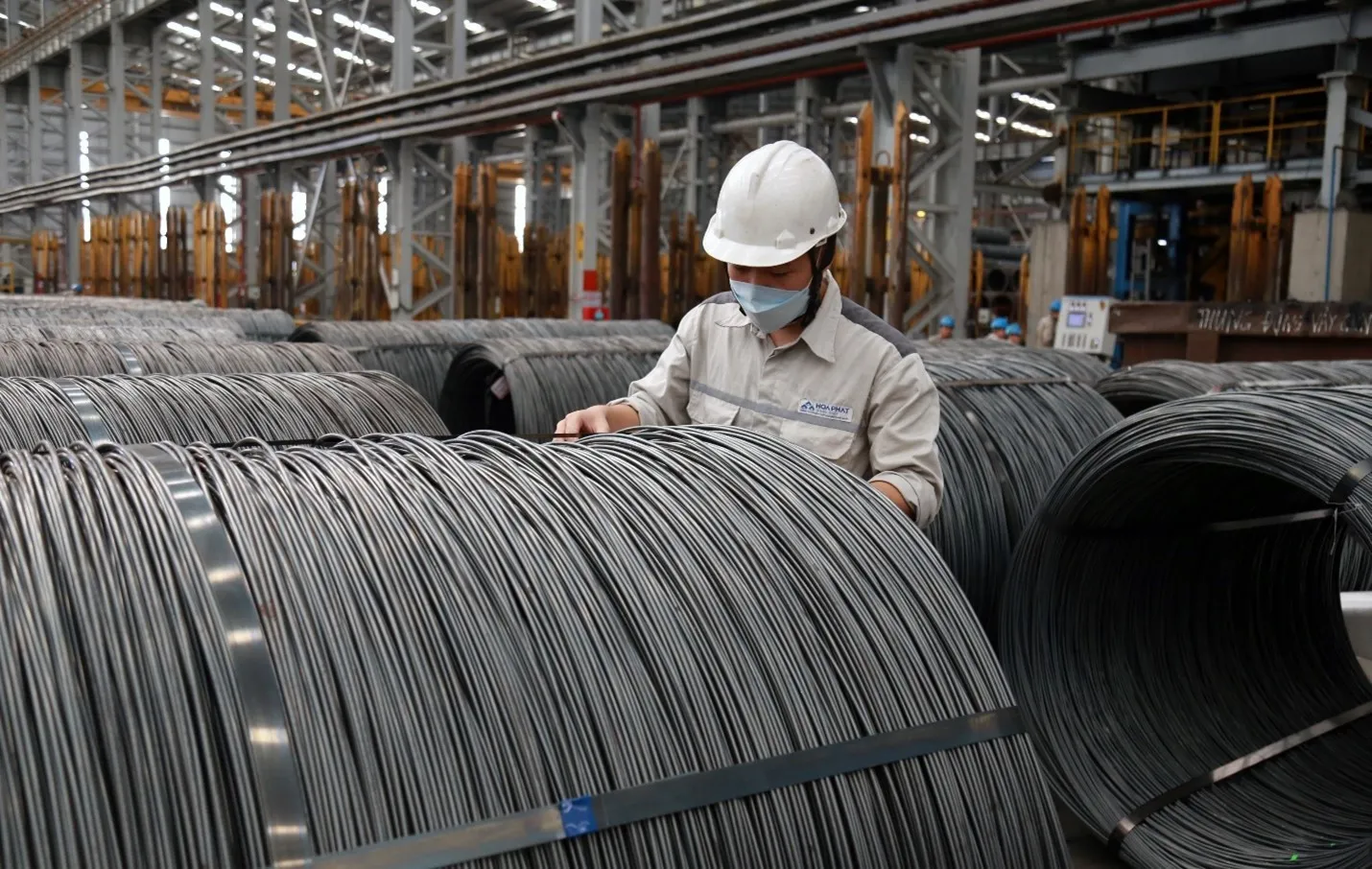
The requrements have been for six samples imported to the EU namely cement, electricity, fertilizer, iron and steel, aluminum, and hydrogen. The full application will be for products imported to the bloc from January 1, 2026.
Although the official implementation of the CBAM is fast approaching, there has yet to be a comprehensive impact assessment or unified official guidance for businesses.
Recently, various sources and organizations have guided companies about CBAM. However, unofficial and inaccurate sources have caused businesses to misunderstand CBAM, leading to inappropriate adjustments in production practices and wasted resources.
On August 24, the Government Office announced the tasks related to CBAM. The Ministry of Industry and Trade has been designated as the lead agency to coordinate with other ministries and agencies to develop and implement effective measures to respond to CBAM. This includes creating a national plan to adapt to CBAM, ensuring that Vietnam can maximize benefits from the EVFTA and EU market access.
At a seminar organized by Tap Chi Cong Thuong or Industry and Trade Magazine on September 16, government representatives, experts, and business associations discussed the impact of CBAM and the current level of awareness among Vietnamese businesses, as well as the preparation of various industries to deal with CBAM.
Speakers included Ngo Chung Khanh, Deputy Director of the Multilateral Trade Policy Department (Ministry of Industry and Trade); Nguyen Hong Loan expert from the Technical Support Project for CBAM Impact Assessment; Hoang Van Tam from the Department of Energy Efficiency and Sustainable Development (Ministry of Industry and Trade); and Dinh Quoc Thai, Secretary General of the Vietnam Steel Association (VSA).
| Speakers at the seminar held in Hanoi on September 16 talk about CBAM and Vietnamese businesses' preparations. Photo: Tapchicongthuong |

According to Nguyen Hong Loan, surveys show that the awareness of businesses about CBAM has not significantly improved over the past time. While some companies directly affected by CBAM are seriously preparing, the majority of businesses still do not fully understand the mechanism, leading to ineffective preparations.
“Many businesses think CBAM only applies if their exports exceed the emission threshold set by Europe, but in reality, CBAM covers emissions across the entire product lifecycle,” Loan explained.
On the other hand, some companies are overreacting, worrying that CBAM will force them to pay the same carbon price as in Europe. Even sectors not yet covered by CBAM, such as rice, are concerned.
Ngo Chung Khanh said that in addition to domestic efforts to raise awareness and support businesses, the Ministry of Industry and Trade is also engaged in multilateral negotiations to ensure flexible policies for Vietnamese businesses. Concerns about carbon taxes on exports have been raised not only within the World Trade Organization (WTO) but also in other multilateral forums, as many WTO members, including major economies like China, South Africa, India, and Indonesia, share concerns about CBAM.
Vietnam has already issued guidelines for businesses on conducting greenhouse gas inventories, measurements, and reporting, providing a foundation for reducing emissions and complying with international regulations.
Meanwhile, Hoang Van Tam emphasized that Vietnam’s regulations on emissions control align well with international standards. However, CBAM imposes broader regulations and calculation methods, requiring specialized agencies to coordinate with the EU to agree on methodologies.
Dinh Quoc Thai, however, highlighted that steel is one of the six sectors initially impacted by CBAM. The EU, a major market for Vietnamese steel, is in the top three largest export markets. The Vietnam Steel Association (VSA) has included CBAM updates in its monthly newsletters to inform businesses about the future impacts on production and export revenues to the EU.
The VSA has also worked with companies to optimize energy efficiency, reduce carbon emissions, and transition to greener steel production. VSA has nearly completed a draft roadmap for carbon neutrality by 2050, in line with Vietnam’s national climate change strategy, to guide businesses in the industry on green transition strategies and CBAM readiness.
However, Thai stressed that businesses will need initial support in terms of consulting, technology, and financing from green credit funds to make the transition. The association also hopes that government agencies will guide businesses on accessing these green funds, along with appropriate technologies.
He emphasized the need for collaboration between industries and government to create a supply chain for green steel production. This would involve accessing green materials and energy, as well as finding customers willing to pay a premium for green steel since the cost of green production will likely be higher.
| A forest in Quang Binh Province in carbon credit program. Photo: Ta Chuyen/VNA |

To implement these strategies, the Ministry of Industry and Trade has proposed several solutions, including setting carbon pricing regulations and enhancing public education to ensure businesses fully understand CBAM. The Ministry also proposed increasing direct training activities to help businesses comply with and prepare for CBAM.
Regarding solutions to support businesses, Khanh emphasized that the priority is to provide specific assistance in reducing carbon emissions and boosting access to green financing, enabling companies to transition to greener production models with lower carbon outputs.
In addition, the Ministry of Industry and Trade is enhancing its cooperation with the EU by requesting the publication of accredited consulting organizations and negotiating an extension for the transition period for Vietnamese industries until after 2026.
The Ministry is also advocating in multilateral forums for flexible commitments and regulations to support Vietnamese businesses.
![[Longform] How do Vietnamese farmers tap bioenergy for circular agriculture?](https://cdn-media.hanoitimes.vn/2023/12/20/Cover.jpg?w=480&h=320&q=100)