Vietnam’s labor market remains grey area of reform effort
The progress of reform in the labor market remains slow, in some cases, new laws are causing difficulties for enterprises, instead of simplifying business conditions, said an expert.
Efforts to simplify business conditions in Vietnam’s labor market remains insubstantial, causing great difficulties for the business community, said Nguyen Minh Thao, head of the Business Environment and Competitiveness Department under the Central Institute for Economic Management (CIEM).
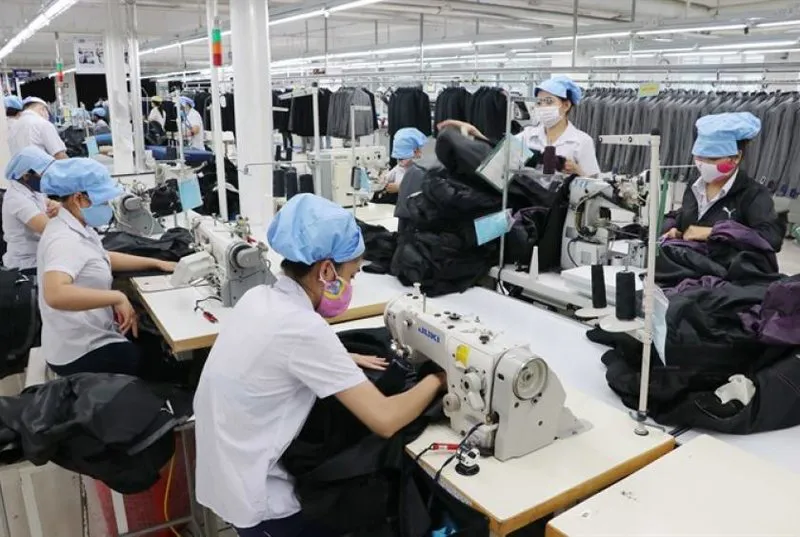
| Illustrative photo. |
“Reforms in this field are still limited to numerical reduction of employees in certain industries, or smaller space of facilities, but not on the business conditions,” Thao said at a conference under the program “Australia supports Vietnam’s economic reform” (Aus4Reform) on December 4, discussing the necessity to reform Vietnam’s labor market.
Thao pointed to the fact that in the past, enterprises operating in field of occupational safety were only required to seek license from the Ministry of Labor – Invalids and Social Affairs (MoLISA), but now they have to apply for approvals from ten ministries for the same issue under Decree 44 in 2016, which stipulates occupational safety and sanitation, technical inspection of occupational safety, training on occupational safety and sanitation and monitoring of occupational environment.
For requirements related to training organizations on occupational safety and sanitation, the decree requirea each organization to have “at least five regular trainers who teach the specialized contents and practice, three trainers providing the specialized training in line with the specialty registered for training and one trainer of first aid and emergency of occupational accident.”
Thao stated after having simplified, the decree now requires four regular trainers, in which at least one providing specialized training in line with the specialty registered for training and one for first aid and emergency of occupational accident.
Similarly, Decree 140 in 2018 on business conditions and administrative procedures under the MoLISA now stipulates theoretical classroom space, rooms, workshop, internship for training, teaching must be at least 5.5 meter square per placement, while previous regulation was from 5.5 – 7.5 meter square.
“In many cases, legal procedures, standards and inspection processes for occupational safety from different ministries are the same, but they do not recognize results from each other. Applicants, therefore, are required to take part in different training courses to get licenses, which is time consuming and waste of resources,” Thao added.
Regarding Decree 44, Dau Anh Tuan, director of the Legal Department at the Vietnam Chamber of Commerce and Industry (VCCI), said there are overlapping functions among ministries where a certain product with risk of occupational safety is subject to the management of multiple ministries.
Nguyen Dinh Cung, CIEM’s former director, commented that the progress of reform in the labor market remains slow, in some cases, new laws are causing difficulties for enterprises, instead of simplifying business conditions.
“Regulations regarding safety of occupational training and sanitation prove to be just formality, placing extra financial burden on enterprises,” added Cung.
Cung stressed the necessity to have substantial reform in the labor market, in which ministries should agree upon a single focal point to manage occupational safety, at the same time reducing the list of products subject to inspection in accordance with the instruction of Prime Minister Nguyen Xuan Phuc.