The 90-year-old CPV crafts a steady foreign strategy for Vietnam: Expert
"Overriding theme is progress but not without sacrifice and struggle along the way".
On the occasion of 90th founding aniversary of Communist Party of Vietnam (CPV), British expert Nicholas Chapman shared with Hanoitimes his view over the nine-decade-path of the Party.
| Today (Feb. 3, 2020) marks the 90th anniversary of founding of the Communist Party of Vietnam. |
How do you comment on the development path of the CPV during the past nine decades?
If I were to describe the CPV trajectory in a single phrase, it would be “two steps forward, onestep back.” It’s important to note, however, that the step back has, the majority of the time, been a result of external factors, something the Party has had little-to-no control over. I will list five examples:
- Hopes were high when the communist party was formed in 1930. Party membership began to increase to about 1,500, with the large peasant population showing strong sympathies towards the organization. However, as the French colonial authorities began to view the CPV (then know as the ICP) increasingly as a threat to their rule, repression began. This led to a significant weakening of the Party until WWII.
- During the course of WWII, Vietnam was a de facto Japanese colony. As France’s grip on the country continually weakened, and the Japanese took greater administrative responsibilities as well as began to lose the war in general, it became inevitable that the CPV was the government in waiting. This culminated in the famous 1945 August Revolution and Ho Chi Minh’s Declaration of Independence on September 2. It was a time of great achievement for the CPV but it also marked the beginning of the first war for independence against the French as they attempted to reclaim their former colonial.
- Vietnam achieved what many viewed as impossible, expelling the Americans and re-unifying the country. Despite this massive achievement, however, the economic realities would soon hit home. A post-war economy is difficult to recover in the best of times, and the CPV struggled to reinvigorate the economy with its first 5-year plan being somewhat of a disaster. Furthermore, international sympathies for Vietnam during the war failed to translate into support after it had ended. There was little to no support forthcoming from outside the Soviet bloc.
- Doi Moi sought to end the disastrous economic model implemented after the war and it was welcomed internally and externally. The ending of the war with Cambodia and rapprochement with China provided a stimulus for the country but the Party faced a crisis when its long term ally, the Soviet Union, abruptly collapsed. This led to a questioning surrounding the sustainability of communist governments across the globe. However, Doi Moi allowed Vietnam to weather the storm.
- One of the most recent successes of the Party has been its relentless economic growth. Vietnam is predicted to overtake Singapore in ten years as the largest economy in Southeast Asia. There is no doubt that this is an unprecedented achievement. This has been thanks in part to the stable guidance and planning of the Party.
So the overriding theme is progress but not without sacrifice and struggle along the way.
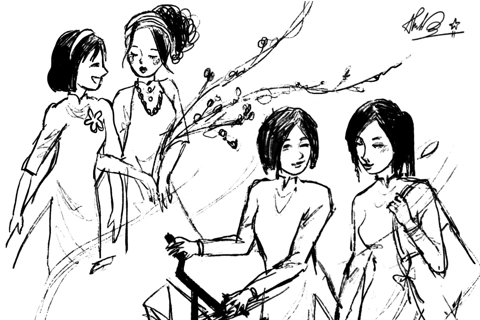
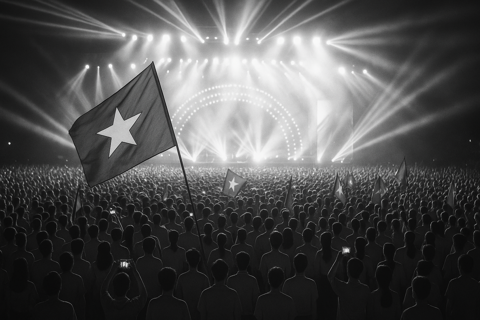
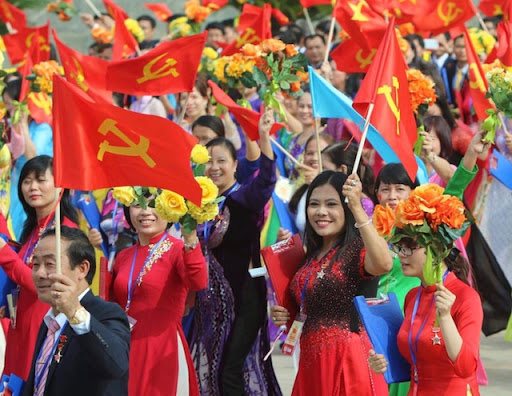
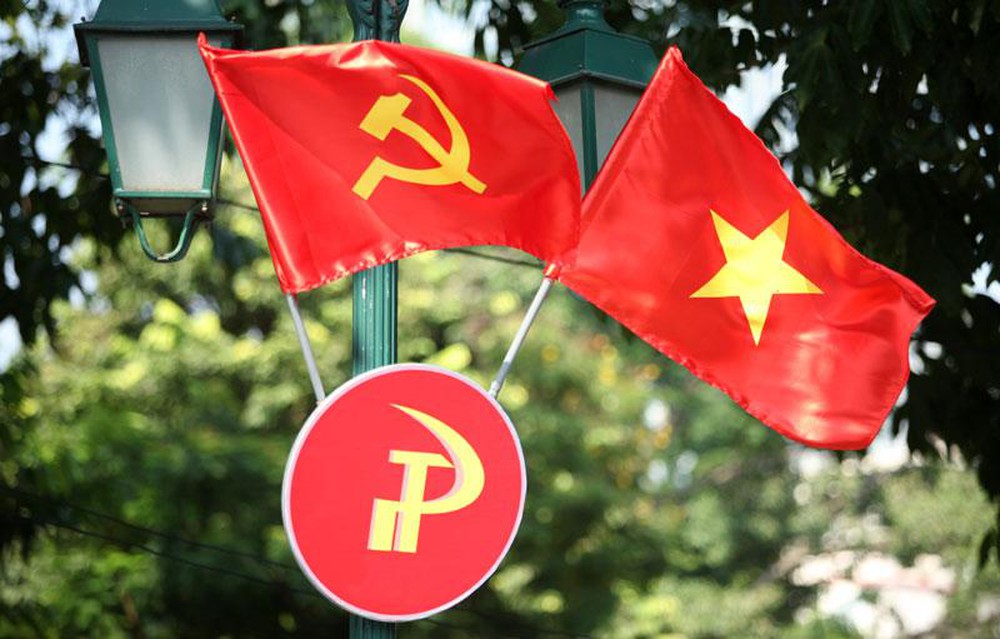
| Illustrative photo |
What are the CPV’s outstanding achievements?
Below would be the CPV’s top achievements: Achieving Vietnam’s Independence, Winning the American War and achieving reunification, Re-inventing itself after the fall of the Soviet Union, Leading Vietnam from its war-torn state in the late 70s, early 80s to become one of the fastest-growing economies in Asia.
What is the role of the CPV in forming the country’s foreign affairs strategy?
The CPV has been instrumental in formulating the country’s foreign affairs strategy. In recent years, with the elevation of Pham Binh Minh to the Politburo and position of vice-prime minister, the CPV has chartered the course of Vietnam’s foreign policy. This has allowed Vietnam to up its role as a “friendly nation to all countries,” regardless of political ideology or economic model. The fact that Vietnam was chosen to host the second summit between Kim Jong Un and Donald Trump is a testament to this.
Furthermore, the CPV has shown its adaptability and pragmatic approach to dealing with security threats, particularly in the East Sea.
Therefore, it is safe to say the CPV’s role in the foreign strategy has been to craft a steady foreign strategy that places pragmatism at the heart of the country’s foreign policy decisions.
Nicholas Chapman is a British expert working in Japan at Tohoku University. His research focuses on international security of Asia-Pacific countries, including Vietnam, China and Japan.