AI to help Hanoi accelerate smart city development
In government administration, AI technology can enhance security monitoring, streamline information and document processing, and facilitate the work of civil servants.
Experts said that while the integration of AI has the potential to address numerous issues in smart city development, its implementation remains challenging, ranging from financial costs to the availability of skilled human resources and the establishment of effective mechanisms for data synchronization.
| Director of the AI Academy Vietnam Nguyen Xuan Hoai. Photo: Thanh Hai/The Hanoi Times |
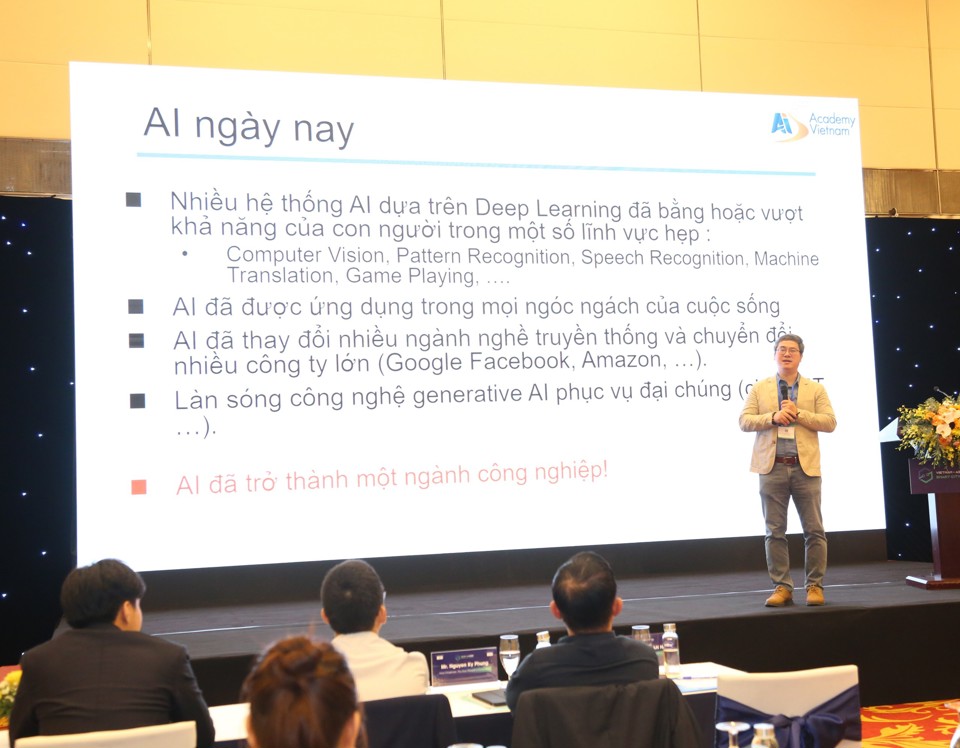
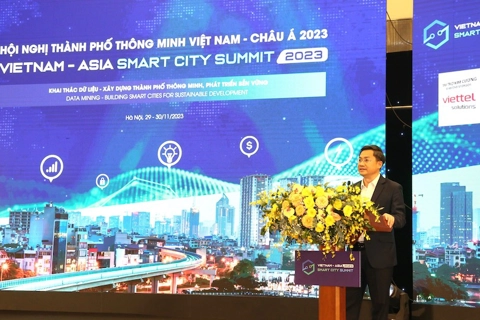
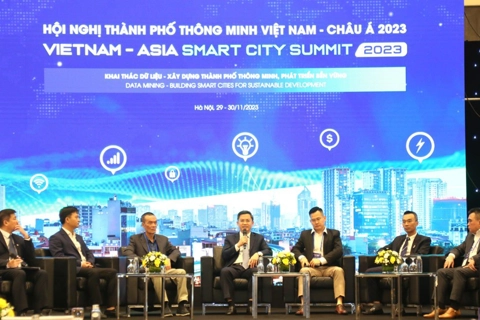
Sharing his views at the seminar themed “AI in promoting smart and sustainable cities” under the Vietnam-Asia Smart City Summit 2023 in Hanoi on November 30, Director of the AI Academy Vietnam Nguyen Xuan Hoai emphasized that smart cities represent sustainable urban developments that cater to the requirements of government, individuals, and businesses across all economic, operational, social, and environmental aspects.
He noted that smart city development relies on an IT foundation, digitalization, and the application of digital technologies.
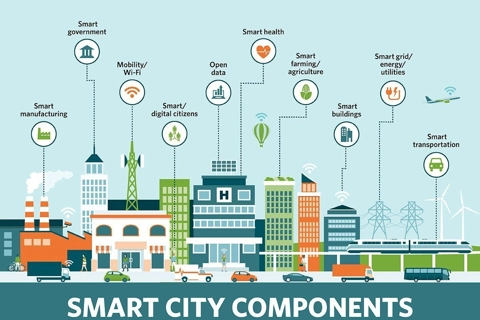
Hoai highlighted that AI technology can be incorporated into various aspects of smart cities, such as building a smart traffic system for monitoring and notifications, optimizing waste management, and supporting the creation of a shared database.
“Creating a shared, integrated data repository is a pressing need for each local province and city that strives for green, clean, and sustainable urbanization,” Hoai said.
He also emphasized the role of AI in collecting, synthesizing, and analyzing critical data for effective urban management. In government administration, AI technology can enhance security monitoring, streamline information and document processing, and facilitate the work of civil servants.
“Some localities have already automated public administrative services using AI, particularly in cities with large populations such as Hanoi, where AI can aid in collecting feedback and handling requests from residents,” Hoai said.
Despite these advances, the Director acknowledged challenges in the AI application process, including insufficiently synchronized and expansive databases, the complexity of integrating AI into information systems, a shortage of skilled human resources, and elevated operational costs.
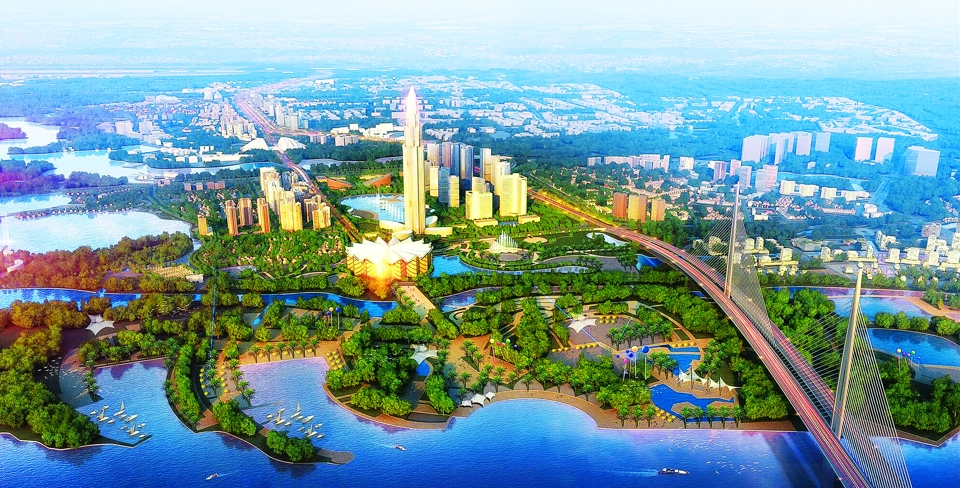
| The design of the smart city project in Dong Anh District, Hanoi. |
Addressing people’s needs
Nguyen Ky Phung, Vice Chairman of the Thu Duc City People's Committee, expressed the city's ambition to transform into a highly interactive creative urban area, envisioning Thu Duc as Ho Chi Minh City's future economic hub. The city aims to leverage and exploit its existing strengths and potential.
“Given its strategic location and complex management due to its border with various areas, Thu Duc is actively exploring the implementation of AI as an effective solution for governance,” said Phung.
He noted that the initial steps toward building a smart city in Thu Duc have made progress, including using chatbot GPT for interactive communication, deploying an AI-based security camera system, and establishing IT infrastructure for digital transformation.
“Looking ahead to 2027, Thu Duc plans to integrate at least 780 AI-equipped cameras with functions like license plate recognition, crowd recognition, and traffic flow statistics,” said Phung.
However, the vice chairman also acknowledged existing challenges in smart urban construction, such as insufficient communication efforts for public participation and a noticeable gap between policies and people's needs. The development of technical regulations, guidelines, and circulars for implementation, as well as the associated costs of high-tech AI applications, has also seen obstacles.
To address these issues, Thu Duc is taking steps to establish its own ISO set of standards for smart cities, he noted.
During the seminar, Do Ba Dan, Chairman of the Board of Directors of Tri Nam Group, proposed a novel approach by combining the green movement with data collection through a fee-based public bicycle service in Hanoi. This innovative model involves equipping these bicycles with sensors to collect environmental data, such as air toxicity levels, or utilizing AI cameras to gather information on road infrastructure, people, and vehicle flow.
Dan sees this as a promising model that seamlessly integrates smart mobility services with data collection for future AI applications.