Log in
Social Affairs

Associations propose postponing minimum wage rise

Increasing the minimum wage is expected to help workers offset the impacts of the Covid-19 pandemic.

Eight domestic and foreign associations have called on the Vietnamese Government to postpone the regional minimum wage increase until January 1, 2023, instead of July 1, 2022, as stipulated in the latest decision of the National Wage Council.         

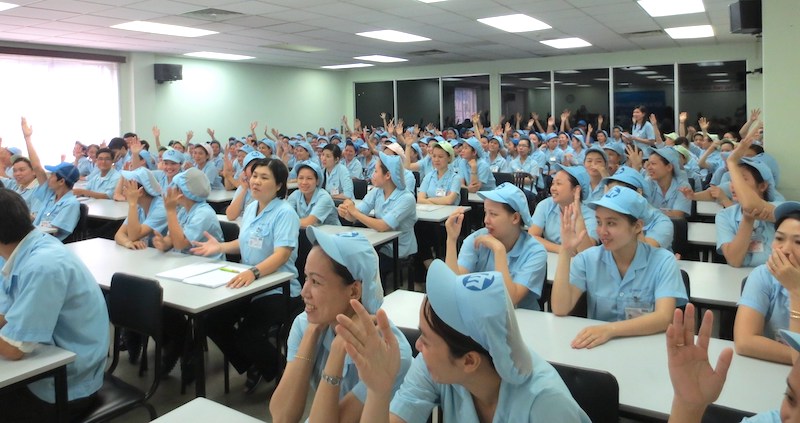
 Laborers expect to increase the regional minimum wage soon. Photo: ILO

The associations included the Japan Business Association in Vietnam, the Vietnam Association of Seafood Exporters and Producers, the Vietnam Textile and Apparel Association, the Vietnam Electronic Industries Association, the Food and Foodstuff Association of Ho Chi Minh City, the Vietnam Timber and Forest Products Association, Vietnam Plastics Association, and the Vietnam Association of Motorcycle Manufacturers.

In a request sent to Prime Minister Pham Minh Chinh, these associations said that the pandemic outbreak during the 2020-2021 period had seriously affected businesses, draining their resources. The delay will give them time to better prepare for the wage raise.

The associations also believed that the pandemic has not been over yet, workers acquiring the coronavirus are detected every day and their production is still at risk of being affected by the new virus strains.   

If the wage increase becomes effective right in July, it would alter their production, financial, and order plans built late last year while it is almost impossible for them to increase selling prices to offset the rising wage costs. In addition, some have already increased salary in early 2021 and 2022.

“Many businesses will have to cancel contracts because of uncertain costs, cutting payroll, suspending production, or narrowing scale,” the request noted.

Previously, at the second meeting on April 12, the National Wage Council proposed that the minimum wage increase by 6% from July 1, or VND180,000-260,000 (US$7.8-11.3), which varies between regions. If approved by the Government, monthly minimum wages in Region 1 will be VND4.68 million ($202.9), VND4.16 million ($180.3) in Region 2, those in Region 3 would receive VND3.64 million ($157.8), and VND3.25 million ($141.2) in Region 4.

According to the Technical Department of the National Wage Council, with such an increase level, production costs of enterprises are expected to increase by 0.5-0.6% on average. Expenses of textiles, garments, and footwear businesses will increase by 1.1-1.2%.

In this meeting, the Vietnam Chamber of Commerce and Industry (VCCI), representing employers, agreed with the pay rise but said it should be implemented in early 2023. 

The minimum wage in Vietnam has been raised 18 times since 2009.

Reactions:
Share:
Trending
Most Viewed
Related news
Covid-19 hits 5 million laborers in Vietnam

Covid-19 hits 5 million laborers in Vietnam

25 Apr, 13:23

The rate of laborers joining the workforce in the first quarter recorded a 10-year low with 75.4% of the working-age population, down 1.3 percentage points year-on-year.

Border soldiers walk alongside children on Lai Chau’s hardships to school

Border soldiers walk alongside children on Lai Chau’s hardships to school

In Vietnam’s northern border highlands, many children begin their school day hours before sunrise, walking dangerous mountain paths to reach class. Behind their perseverance stands quiet, long-term support from border soldiers, teachers and local authorities.

PM requests emergency in house rebuilding for flood-hit residents 

PM requests emergency in house rebuilding for flood-hit residents 

The Government leader has called the mission a mandate from the heart, urging all authorities to act as a moral commitment to the people.

Two-tier local government model strengthens Hanoi’s efforts to end urban flooding

Two-tier local government model strengthens Hanoi’s efforts to end urban flooding

Associate Professor Nguyen Hong Tien analyzes why Hanoi still faces chronic flooding, explains weaknesses in drainage planning and implementation and outlines how the two-tier local government model can support long-term solutions.

PetroVietnam advances nationwide STEM classrooms to drive innovation and future talent

PetroVietnam advances nationwide STEM classrooms to drive innovation and future talent

PetroVietnam expands its STEM Innovation program to develop high-quality classrooms and strengthen Vietnam’s future workforce in science, technology and innovation.

Vietnam Happy Fest 2025 spreads joy through simple things

Vietnam Happy Fest 2025 spreads joy through simple things

The Vietnam Happy Fest 2025 honors the idea that joy comes from everyday moments and Vietnamese smiles, sharing a spirit of happiness with the world.

Flood-hit people to have houses by Lunar New Year as committed by Vietnamese Government

Flood-hit people to have houses by Lunar New Year as committed by Vietnamese Government

Rebuilding houses for disaster-affected residents must be linked with rural and regional plans to ensure immediate recovery and long-term safety.

Investments in infrastructures, teaching staff to drive English to become second language

Investments in infrastructures, teaching staff to drive English to become second language

Vietnam’s ambition to make English a second language in all schools has gained strong support, yet teachers, experts and lawmakers warn that the plan requires major upgrades in infrastructure, staffing and policy to succeed nationwide.

Four American scientists win 2025 VinFuture Grand Prize for HPV vaccine breakthroughs

Four American scientists win 2025 VinFuture Grand Prize for HPV vaccine breakthroughs

Four American scientists received the 2025 VinFuture Grand Prize in Hanoi for pioneering discoveries that led to the HPV vaccine, recognized as a major breakthrough in preventing HPV-related tumors and advancing global public health.