Blue economy – indispensable path for Vietnam to tap potential
The well-studied report with the combined efforts of domestic and foreign experts will enable Vietnam to have a long-term roadmap for the marine economy in the sustainable development strategy by 2030.
Blue economy is defined as essential for Vietnam, the country that has more than 3,000 km of coastline and more than one million square km of the sea surface as the marine sector is expected to contribute up to 70% to its gross domestic product (GDP) by 2030.
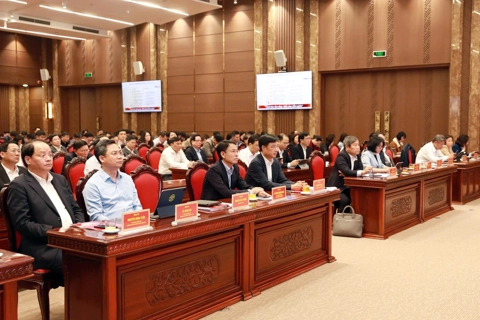
| Domestic and foreign experts at the consultation workshop on blue economy held in Hanoi on Nov 5. Photos: UNDP |
.JPG)
However, the development of the blue economy or marine economic sector must cover and base on the balanced growth of six sectors: fisheries and aquaculture; oil and gas; marine renewable energy; coastal and marine tourism; the maritime sector; and environment and ecosystems.
The information was highlighted at the consultation workshop on the report “Moving toward a blue economy in Vietnam” developed by the Vietnam Administration of Sea and Islands (VASI) under the Ministry of Natural Resources and Environment (MoNRE) and the United Nations Development Program (UNDP).
Speaking at the virtual conference that marked the participants from World Bank, ADB, WB, UNEP, KOICA, IUCN and WWF on November 5, Dao Xuan Lai, UNDP Climate Change and Environment Unit in Vietnam said “Blue economy is a combination of industries different economic sectors closely linked with the marine environment without clear boundaries. The development of one industry can have positive or negative impacts on others.”
For that reason, in addition to assessing a single industry, the report aims to evaluate the interaction between industries sectors to have an integrated view, thereby providing analysis and synthesis assessment, to propose and make recommendations.
He stressed that “Ensuring that marine economic growth is not traded-off for environment quality is fundamental to securing a robust blue economy in Vietnam.”
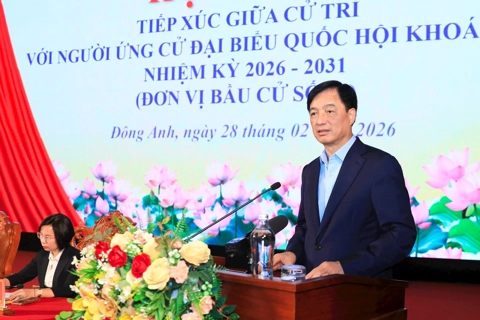
| Dao Xuan Lai, UNDP Climate Change and Environment Unit in Vietnam at the event. |
.JPG)
International supports
As highlighted in Resolution No.36 released in 2018 by the Central Party Committee, the environment is one of the three pillars of sustainable development. As such, the marine economy is the central point to enable Vietnam to achieve Sustainable Development Goals (SDGs) by 2030 and vision to 2045.
The report is one of the first studies on blue sea economic development in Vietnam with a new approach, helping visualize the scale and role of each sector in the direction of the marine economy.
The report assesses envisions the potential of the blue sea economy in Vietnam and assesses the contribution of economic sectors into Vietnam’s marine ocean economy towards sustainable development.
This report will be launched at the International Conference on “Sustainable Ocean Economy and Climate Change Adaption” organized by Vietnam, UNDP, and Norway on December 13-14, 2021 in Hanoi.
The experts presented a summary of thematic research on marine economic sectors of renewable energy, oil and gas, aquaculture, maritime transport, tourism, and the environment, including the current situation, challenges and opportunities, SDG linkages, and development scenarios.
Several future scenarios up to 2030 were developed for each of these sectors based on sector-based reforms and interventions. Scenarios included a “business-as-usual” and “sustainable” — or “blue” — scenario closely aligned to the blue economy concept.
The “blue” scenario developed for ecosystems demonstrated that the ecosystem value, and in some cases the total area, of crucial habitats such as mangroves, seagrass, coral reefs, and lagoons could be increased. Thus, the marine economic expansion should be accompanied by a focus on maintaining or enhancing environmental quality.
The sea and coastal areas of Vietnam account for approximately 47-48% of the country’s GDP, while the GDP of the pure marine economy accounts for about 20-22% of its total GDP.
With sector-based analysis, the experts have pointed out the need for a long-term program with continuous efforts on ensuring good management of marine resources and strengthening human resources training for marine economic activities.