Cashless parking in Hanoi: Good model fuels smart transport
Hanoi’s leaders believe that all that's left to do is act with the ultimate goal of serving people from smart transportation, armed with the mindset and solutions of a new global vision and thinking.
“Cashless parking or “One-touch” payment has reduced traffic, pollution, and waiting times for vehicle owners while helping prevent incorrect.”
| At a cashless parking lot in Ly Thuong Kiet Street, Hanoi. Photo: Chu Duc |
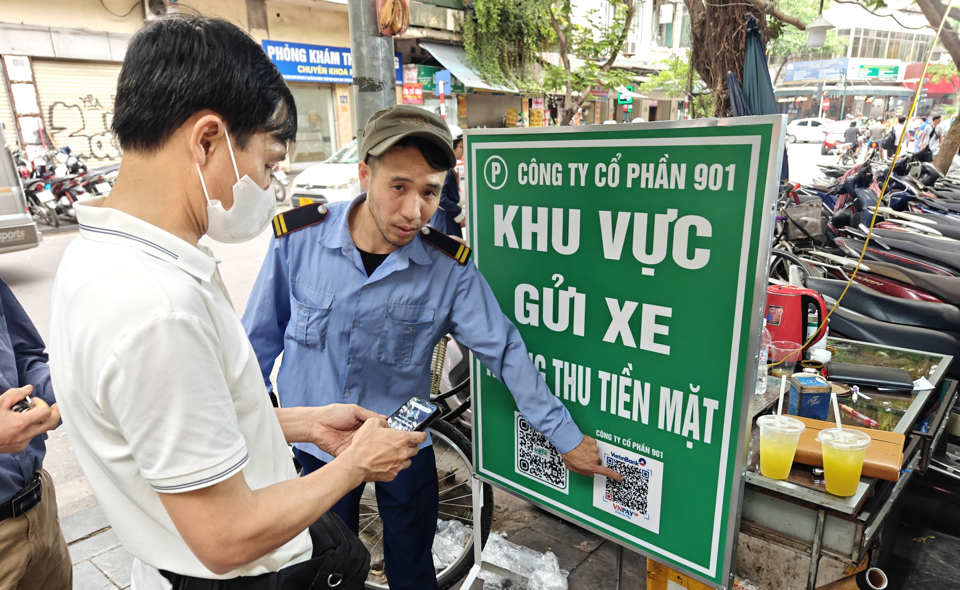
Le Anh Phu from Bac Tu Liem District, Hanoi made the remarks on the cashless parking that has been piloted in urban areas of the city over the past few months.
Hanoi has started a pilot program using technology to better manage vehicle parking in urban areas. This is a step toward putting into practice Resolution No.18 of the Hanoi Party Committee on digital transformation to create a smart city and Project 06 on National Digital Transformation of the Government.
There is a high demand for car parking in urban areas because there are currently 9.2 million personal vehicles in Hanoi, according to the Department of Transport.
Parking lots utilize radio-frequency identification (RFID) technology to identify license plates and the time of entry and exit of the lot. As a result, fixed readers are installed in closed parking lots, or handheld devices are used in the open ones.
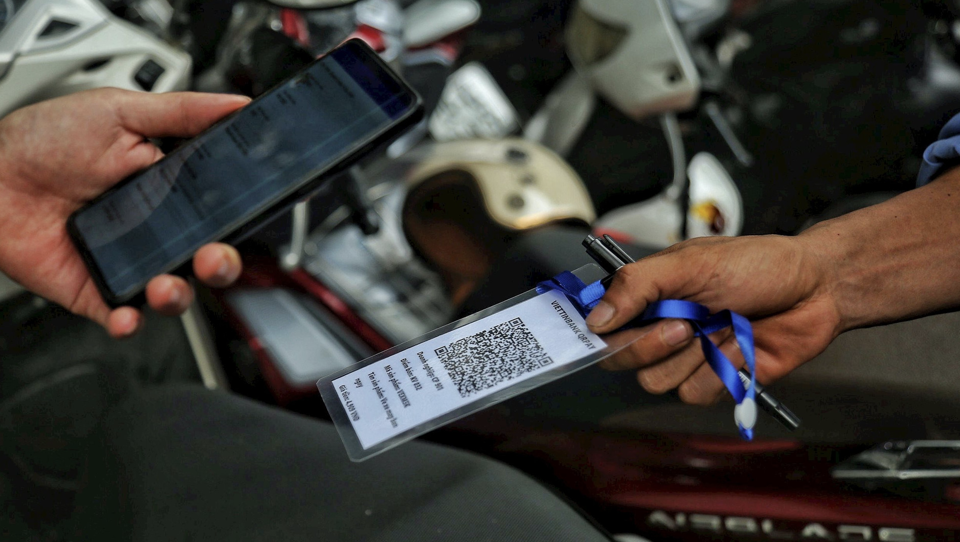
Before picking up their cars, users can pay whenever they choose using their transport accounts (Vietnam Electronic Toll Collection Company (VETC), ePass) or by scanning QR codes with banking apps or e-wallets. They don't even need to wait to pay. All transactions are conducted via a technological system that satisfies the following requirements: 1 yes (with electronic invoices linked to cash registers, tax authorities, and receipts), 2 no (no cash, no stopping).
Cashless parking is a highly appreciated method that is fast, convenient, and transparent. As of August 15, the city has 99 cashless parking locations spread across 8/30 districts, including Hoan Kiem (49 points), Cau Giay (11 points), Nam Tu Liem (10 points), Dong Da (9 points), Tay Ho (8 points), Hai Ba Trung (6 points), Bac Tu Liem (4 points), and Ba Dinh (2 points), up from the initial 7 points in Hoan Kiem.
Nguyen Duc Vinh, Deputy General Director of Hanoi Car Park Exploitation Company (the pilot implementation unit), shared that parking lots have made it easier to count and monitor vehicles entering and exiting the lot; parking fees are correctly and fully collected, preventing illegal toll collection and limiting the use of cash. Overall, parking lots have been more efficiently run thanks to the use of technology.
“Technology will inevitably be used in traffic. This is necessary for us to adapt to the modern era, where a smart digital map of parking lots throughout the city is built on the foundation of a cashless parking fee collection service,” expert Do Cao Phan said, adding that it helps to solve many other traffic problems of the city.
| QR Code used to pay for parking. Photo: The Hanoi Times |
Future trends
Statistics show that parking lots and points have been operating steadily since the cashless parking fee collection service was implemented, according to Deputy Director of the Hanoi Department of Transport Tran Huu Bao. Most people support the model because it is transparent and offers better service quality while collecting the appropriate amount.
The payment model has also gradually made it common for people to stop using cash, which has helped to create a more refined and sophisticated Hanoian culture, in line with the digital economy. It has also strengthened state management at parking lots and parking points, ensured order, traffic safety, urban beauty, and reduced traffic congestion.
The Hanoi Department of Transport, the leading entity in the pilot application of cashless parking, has actively gathered varied viewpoints and counseled the city to issue uniform regulations for the operation of vehicle parking lots, particularly solutions to eliminate challenges in policies and technological connections.
The Hanoi Department of Transport will develop a common identity for cashless parking lots as requested by the City People's Committee; and coordinate with technology providers (VETC, ePass) to summarize the strengths of this type of service to have a basis for developing a plan to expand the model throughout the city in the coming time.
“It's just a matter of acting with the end goal of helping the people in mind now that we have the solutions and the mindset. Hanoi, with its fresh perspective and global outlook, has been enlisting the synchronous participation of the whole political system as well as the agreement and backing of the populace and corporate sector. Without a doubt, technology will be used in car parking to get past its early challenges, catch up with the rest of the industry, and eventually become one of the mainstays supporting Hanoi's smart traffic system,” according to Vice Chairman of the Hanoi People’s Committee, Ha Minh Hai.