China pledges to support ASEAN comprehensive recovery framework
The cooperation covers a wide range of issues, including public health, social security, economic integration, digital transformation, and sustainable development.
China announced its cooperation in support of the ASEAN Comprehensive Recovery Framework (ACRF), welcoming efforts to enhance cooperation between both sides, including through the ASEAN-China Free Trade Area (ACFTA).
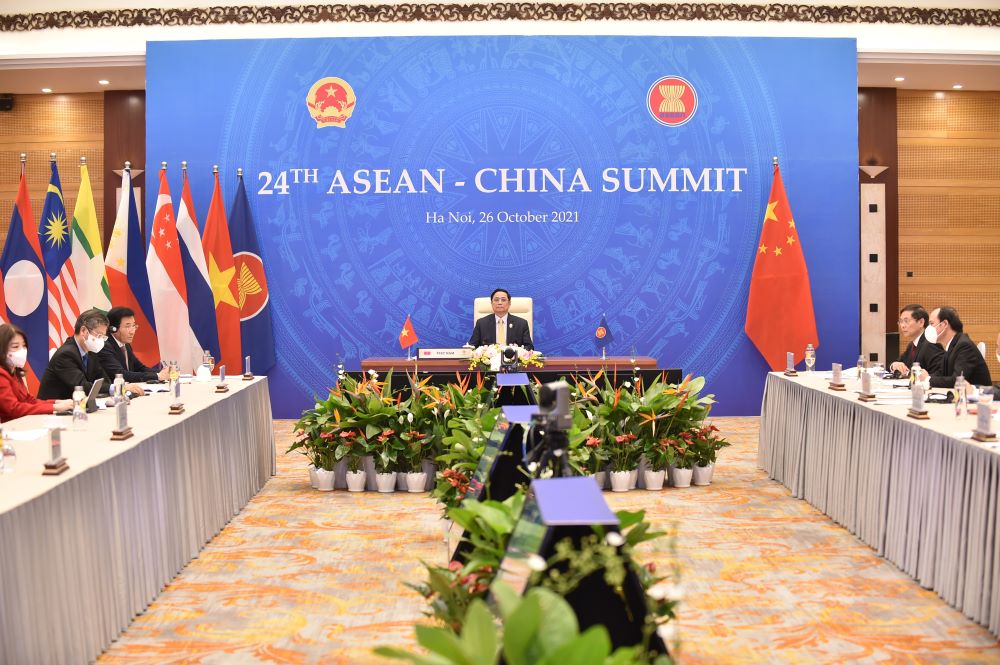
The news was released at the 24th ASEAN-China Summit held virtually on October 26, in which the two sides agreed to facilitate socio-economic recovery and long-term, balanced and resilient development.
China supports ACRF and ASEAN Implementation Plan, which will guide both sides in deepening their cooperation in all fields, cooperating in the broad strategies and key priorities identified in the framework through implementing practical cooperation initiatives.
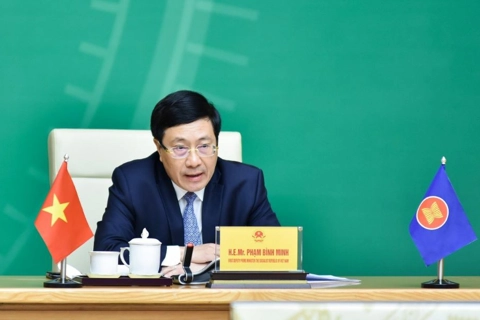
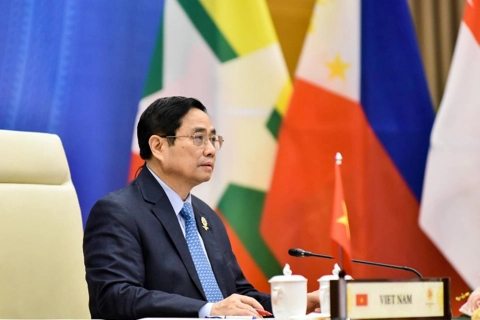
| Vietnam's Prime Minister Pham Minh Chinh attends the 24th ASEAN-China Summit on Oct 26. Photos: VGP |
The two sides will strengthen cooperation in public health through policy dialogue and exchanges through the ASEAN-China Health Ministers’ Meeting, ASEAN-China Senior Officials’ Meeting on Health Development, China-ASEAN Health Cooperation Forum, and other relevant mechanisms.
Their cooperation will cover the training of health executives and professionals, such as in the fields of communicable and non-communicable disease control, public health emergency response, safe, effective, and quality traditional and complementary medicine (T&CM), and healthcare delivery.
China encourages communication between ASEAN contact points for public health emergencies with their Chinese counterparts to facilitate practical and tangible cooperation through mechanisms.
The country will support the ASEAN Covid-19 Response Fund and strengthen cooperation on
Covid-19 vaccines through various means, jointly engaging in vaccine research and development (R&D) and helping build regional vaccine production centers.
ASEAN and China will implement the ASEAN-China Public Health Cooperation Initiative: Program on Public Health Emergency Preparedness Capacity (PROMPT) to support cooperation in vaccine R&D, public health capacity-building, and the improvement of information and data exchange platforms on health-related matters.
The cooperation also covers medical schools, institutions, and universities to maximize the ASEAN-China University Consortium on Medicine and Health as a platform for regional health cooperation and educational exchange.
In this regard, the Chinese Government scholarship program and internship will be provided to outstanding students from ASEAN member states to support their study of medical and related fields of sciences in China.
Cooperation on social security
ASEAN and China pledged to make good use of the mechanism of ASEAN Plus Three Emergency Rice Reserve (APTERR) and strengthen coordination and mutual assistance among related countries to ensure food supply and food security in the region.
In addition, they strengthen cooperation on elementary/primary education, vocational education, higher education and promote human resource development, including through the ASEAN-China Education Cooperation Week, the ASEAN-China Consortium on Technical and Vocational Education and Training (TVET) Cooperation, the ASEAN-China Network for Cooperation and Exchange among Engineering and Technology Universities and other platforms.
They will explore the use of the ASEAN-China Cooperation Fund (ACCF) to further strengthen practical cooperation in youth exchanges, culture, and education and further enhance the flagship program of the ASEAN-China Young Leaders’ Scholarship (ACYLS).
China will strengthen cooperation with the ASEAN Center for Active Aging and Innovation (ACAI) and other related institutions, promote gender equality and women empowerment, and social welfare.
The two sides will continue the implementation of the ASEAN-China Social Development and Poverty Reduction Forum and related initiatives, and support poverty reduction and capacity building in rural areas of ASEAN member states through experience sharing, personnel exchange, policy consultation, and demonstration programs.
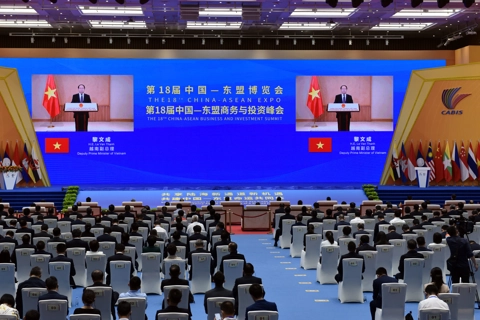
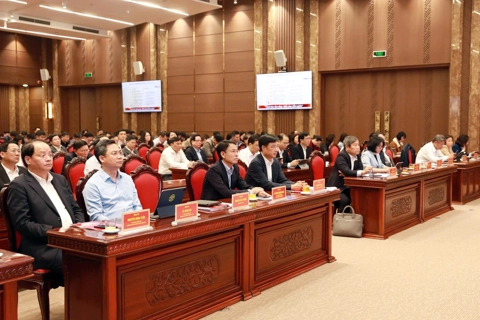
| Participants at the event. |
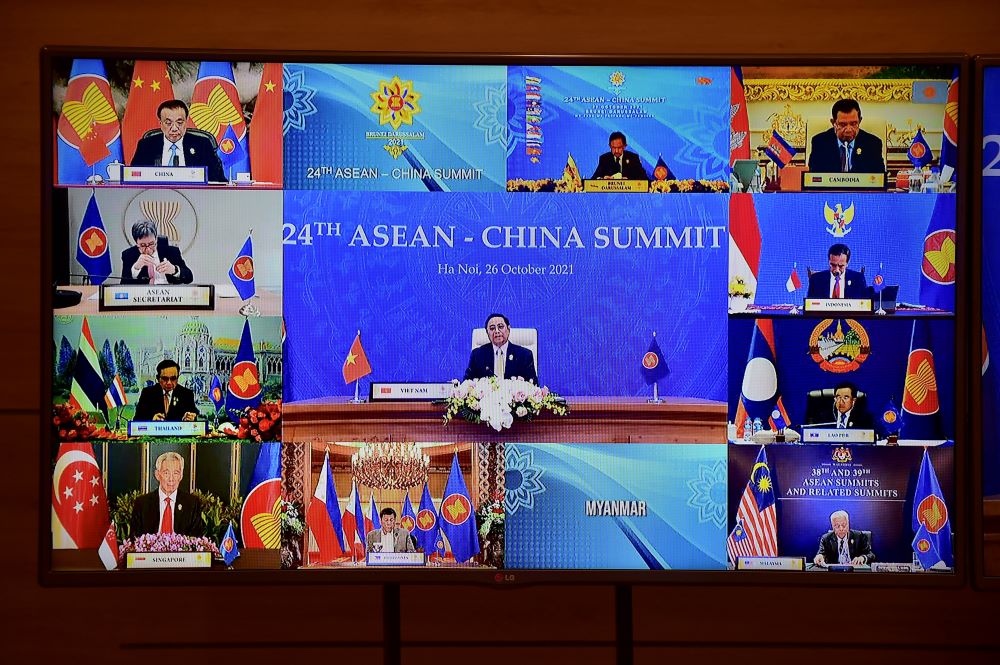
Economic integration
The two sides agreed to maintain trade and investment market openness, work together to reduce the trade barrier effects of Non-Tariff Measures, and enhance cooperation in customs procedures and trade facilitation with priority given to the facilitation of customs clearance of food, agricultural products, medical products, and other essential goods.
At the same time, they will explore the possible exchange of electronic trade-related documents through the ASEAN Single Window while jointly implementing the ASEAN Rules of Origin Implementation Capacity Project.
They accelerate the implementation of the ASEAN-China Joint Statement on Synergizing the Master Plan on ASEAN Connectivity (MPAC) 2025 and the Belt and Road Initiative (BRI) and explore cooperation on projects in the Initial Rolling Priority Pipeline of Potential ASEAN Infrastructure Projects. Enhance Public-Private Partnerships (PPP).
They committed to working together for the early entry into force and implementation of the Regional Comprehensive Economic Partnership (RCEP) Agreement, to deliver benefits to businesses and people in the region as soon as possible.
Efforts will be made to effectively implement the ASEAN-China Free Trade Agreement (ACFTA) and explore broader mutual opening-up in other areas under the ACFTA.
Their cooperation aims to enhance the connectivity and resilience of supply chains in the region.
They will continue to discuss the establishment of an ASEAN-China Tourism Ministers’ Meeting mechanism in due course and promote tourism cooperation within multilateral frameworks.
China supports the implementation of the ASEAN Post-Pandemic Tourism Recovery Plan, and the ASEAN Tourism Marketing Strategy, accelerating the implementation of the “Enhance ASEAN Tourism Digital Platform” project and promoting the safe resumption of air connectivity between ASEAN and China.
Digital transformation and sustainable development are part of the cooperation.
Accordingly, they work together to formulate the Action Plan on Implementing the ASEAN-China Partnership on Digital Economy Cooperation (2021-2025) and strengthen cooperation under the ASEAN Digital Masterplan 2025; enhance the development of digital skills and networks of micro, small and medium enterprises (MSMEs).
They agreed to boost digital governance and cyber security and continue to support the ASEAN-China Cyber Dialogue while supporting China’s active engagement of the ASEAN Smart Cities Network (ASCN).
The last but not least, China and ASEAN will strengthen the implementation of the 2030 Agenda and early realization of the Sustainable Development Goals (SDGs).