Climate adaptation eats up 70% of Vietnam climate budget in 2016-2020
Vietnam poured approximately US$6.5 billion into activities adjusting to actual or expected future climate during 2016-2020
As many as 70% of the climate budget spent in Vietnam in 2016-2020 went to climate adaptation, according to a report on Climate Public Expenditure and Investment Review of Vietnam (CPEIR).
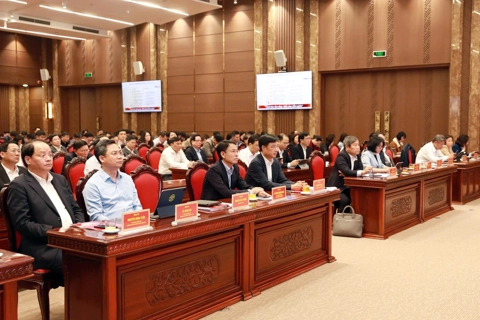
| Representatives at the launch workshop on Mar 11. Photo: UNDP |
.JPG)
In detail, over 70% of ministries' climate budget and more than 90% of localities climate budget were poured into the process of adjusting to current or expected climate change and its effects, which is aligned with government policy priorities for public expenditure during 2016-2020.
The Ministry of Agriculture and Rural Development and the Ministry of Transportation accounts for 80% of the total climate change budget with spending on large infrastructure projects such as irrigation and roads.
The CPEIR provides a review of climate change expenditures and budgets of six ministries including the Ministry of Agriculture and Rural Development; Natural Resources and Environment; Transport; Industry and Trade; Construction; and Science and Technology, 28 provinces, and Can Tho city.
The report shows that Vietnam has increasingly allocated its financial resources for climate change response. The total budget and expenditure of the six ministries and 29 provinces and cities were almost US$6.5 billion, or an average of $1.3 billion per year between 2016 and 2020.
The document also covers investment and recurrent expenditure with domestic resources and official development assistance (ODA) for the five-year period.
While the domestic budget allocation was stable, ODA tended to increase. The provinces’ climate expenditure was focused on concrete interventions, such as food and water security, response actions to sea level rise, and forest development.
The report also assessed the linkages between the climate-related investment budgets and key climate change-related policies, namely, the National Climate Change Strategy 2011-2020 (NCCS), Green Growth Strategy 2012-2020 (GGS) and Plan for Implementation of the Paris Agreement (PIPA), as well as related provincial action plans.
The report can be served as an instrument for ministries and provinces to assess their recurrent expenditure and investment baseline against key climate change and green growth priorities in order to improve policies and allocations for climate change.
Addressing the launch workshop on Mar 11, Nguyen Thi Bich Ngoc, Deputy Minister of the Ministry of Planning and Investment, said: “The results of this report will be very useful in enhancing the climate change responsiveness of the public financial management system, promoting the transition from input-based budgets to output-based budgets, and facilitating climate-related interventions by ministries and provinces.”
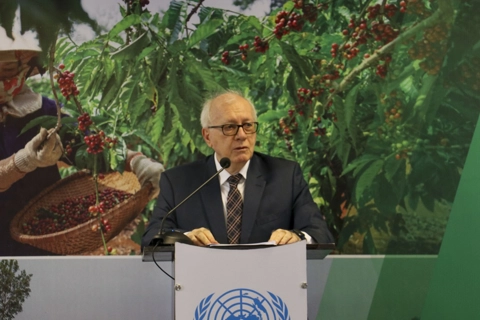
| UNDP Resident Representative in Vietn Caitlin Wiesen at the event. Photo: UNDP |
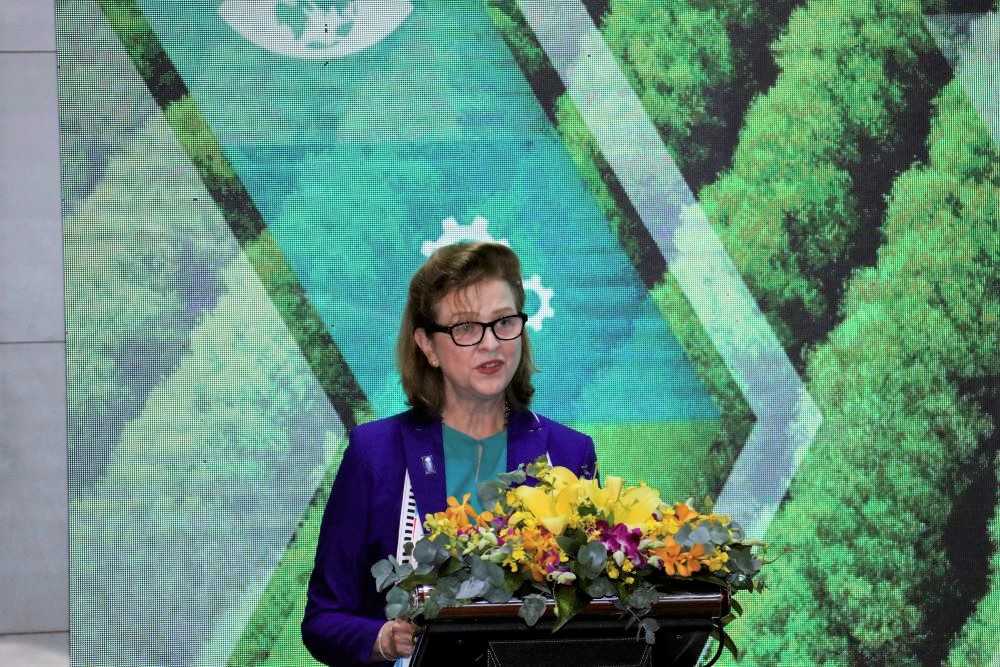
UNDP Resident Representative in Vietnam Caitlin Wiesen highlighted that the analysis contained in the CPEIR could be used to inform policy formulation and adjustment to raise finance from different sources and promote climate-related interventions.
“We appreciate that Vietnam has already and continues to increase their own budget for climate change adaptation and mitigation. However, the climate change adaptation budget has not yet been sufficient to address Vietnam’s needs and climate risks. Greater efforts and support are required to scale up investment in adaption, especially from international sources and the private sector,” she stated.
At the launch, the participants also discussed challenges and opportunities to mobilize new financial resources, solutions for effective budget allocation and expenditure, monitor the results of budget allocation, and improve investment efficiency for climate change response.
On this occasion, the UNDP shared two recommendations, in which climate change and green growth strategies should be reflected policies and plans of sectors and provinces as well as the overall Socio-Economic Development Plan (SEDP). In effect, the 5-year SEDPs will reflect climate change priorities with estimated financial resources and direction for allocation of climate change budget to ministries and cities/provinces.
In addition, there is a need to systematically integrate climate budget coding and tracking into the planning and budgeting process. This will enable consistent, systematic and transparent tracking and reporting of the financial and technical delivery of climate change commitments as required by the enhanced transparency framework in reporting to UNFCCC. In addition to the investment and recurrent expenditure at the central and provincial levels, off-budget public expenditure, and possibly private investment in climate change should also be integrated into the system.