Communication: A key challenge in Hanoi's metro line projects
There is still a public that has doubts about the feasibility of public transportation projects, so there needs to be more communication.
In its first week of operation (August 8-14), the Nhon - Hanoi Station metro line made 1,370 trips and carried some 400,000 passengers. On its busiest day, the metro's ridership is 100,000.
| People waiting to board the metro line Nhon - Hanoi Station. Photo: The Hanoi Times |
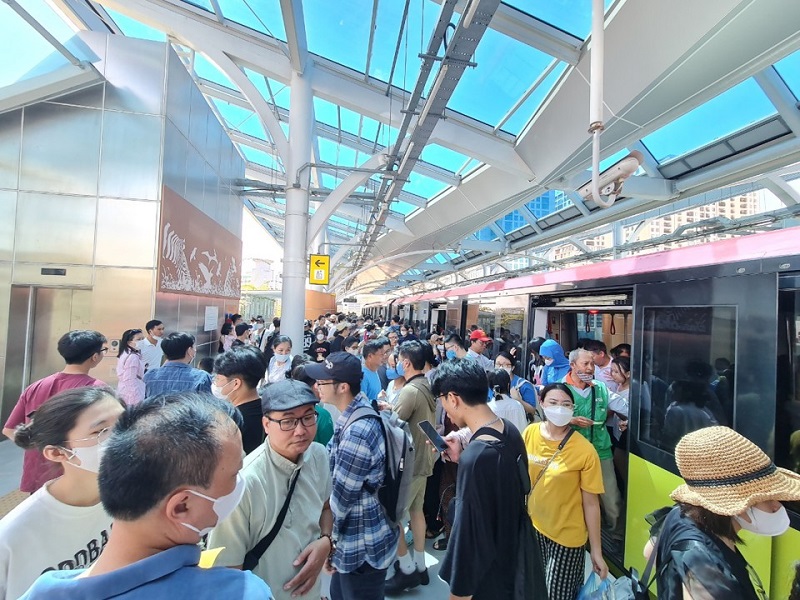
It is the capital's second operational metro line after the Cat Linh - Ha Dong line, which entered service at the end of 2021. Hanoi's first metro line has been instrumental in reducing the number of private vehicles in the city, with 20% of car-owners choosing to commute by train.
These statistics underscore the fervent desire of Hanoi's residents to have access to public transportation. When given the opportunity, they willingly take it.
However, a significant number of voices argue that investing in public transportation systems, particularly metro lines, is fruitless, time-consuming, and inefficient in terms of resource allocation.
This shows that despite intensive communication efforts, the majority of the population remains unconvinced of the merits of public transport development initiatives.
It is undeniable that the Cat Linh - Ha Dong and Nhon - Hanoi Station projects required substantial investments and long implementation periods, which undermined public confidence.
It's undeniable that the operation of metro lines, electric buses and electric taxis is the right solution to reduce air pollution in Hanoi.
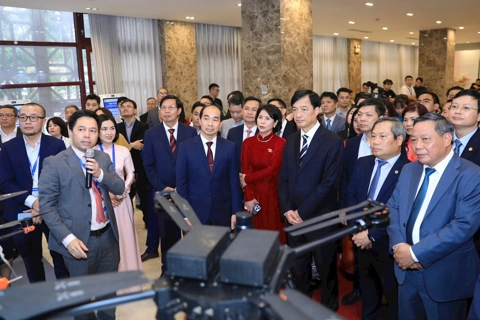
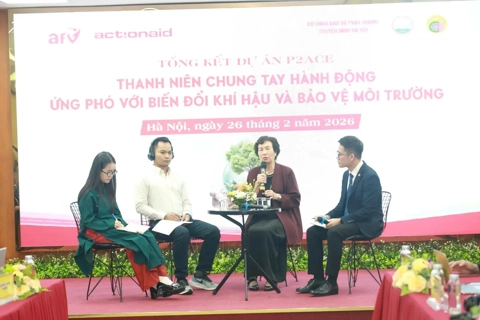
According to experts at the conference titled "Reducing Emissions through Green Transport: It's Not a Matter of Ease or Difficulty," hosted by Kinh te & Do thi (Economic & Urban) Newspaper today (August 15), effective communication serves as a cornerstone in fostering public understanding and support for government agencies in advancing public transport systems in Hanoi.
| Nguyen Thanh Loi, Editor-in-Chief of Kinh te & Do thi Newspaper, speaks at the conference. Photo: The Hanoi Times |
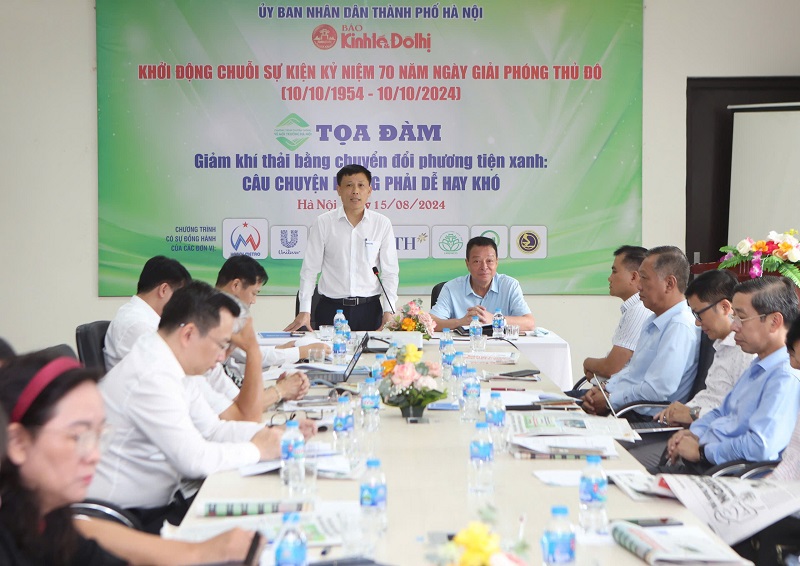
Hoang Duong Tung, Chairman of Clean Air Network Vietnam and former Deputy Director General of the General Department of Environment, shared his experience of riding the Hanoi metro, emphasizing its environmental benefits and the need for expanded electric vehicle infrastructure.
"I feel excited when I ride the metropolitan train in the capital. Some people could even take a nap on their way to work, and I enjoy the view when I look out of the train window. The most important thing is that each train trip significantly reduces emissions. If we have more lines, we will definitely cut emissions even more if we have more lines," he said at the forum.
He said the integration of electric vehicles such as trains, buses, garbage trucks and taxis in the capital reflects an inevitable trend towards sustainable transportation solutions.
Tung stressed the urgency for the city government to accelerate the transition to electric transportation, aiming for a 100% electric bus fleet by 2030 to curb emissions, increase productivity and protect public health.
He applauded a recent amendment to the Capital Law to introduce low-emission zones and underscored the importance of increased promotion and public engagement in sustainable urban development.
Nguyen Cao Minh, Head of the Hanoi Urban Railway Management Board, emphasized the critical role of communication in gaining public input to improve the metro system and urged swift action to address mobility issues, financial constraints, and implementation plans for future metro projects.
Minh underscored the daunting task of securing US$55 billion for 13 metro projects by 2035, amid competing priorities in education, culture, and waste management.
He stressed the need for innovative solutions to overcome long-standing obstacles that have hindered the timely completion of Hanoi's metro projects.
In conclusion, Minh underlined the indispensable role of rail systems in resolving mobility issues in large cities such as Hanoi and highlighted the transformative potential of public transport in shaping a sustainable urban future.
According to Bui Thi An, Director of the Institute of Natural Resources, Environment, and Community Development, the global and local shift towards green transportation is inevitable.
"Effective communication is key. The transition to green transport requires the active participation of citizens and society beyond the involvement of transport authorities alone," she said.
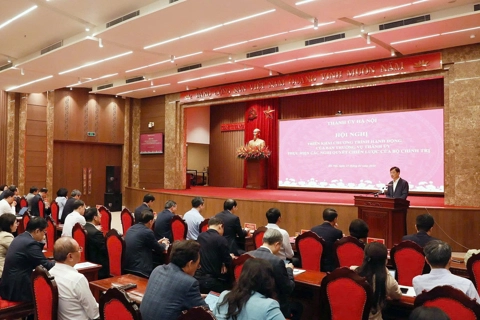
| Deputy Chairman of the Hanoi People's Committee Ha Minh Hai delivers his speech at the conference. Photo: The Hanoi Times |
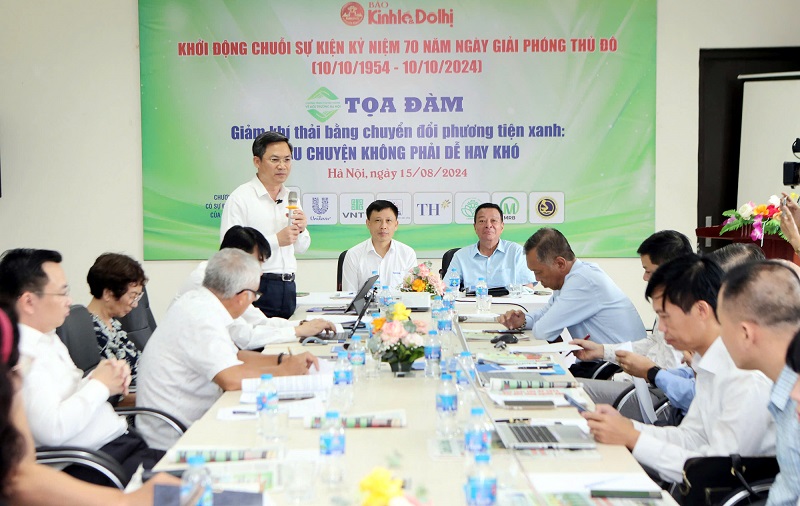
She added that government agencies and educational institutions must step in and disseminate information through various media platforms on the merits and urgency of adopting green practices and green vehicles.
"I am in favor of a social approach that encourages corporate participation in green transportation, with a focus on providing credit for infrastructure investment," An said.
According to Hanoi People's Committee Vice Chairman Ha Minh Hai, the city is finalizing an overall development plan for submission to the Prime Minister, underscoring the urgent need to address traffic congestion and environmental degradation.
Hanoi has incorporated these concerns into its capital planning proposal to ensure a cohesive and interconnected transportation network, the vice chairman said.
"We need to find a way to connect all modes of public transport, and that's essential for citizen engagement. In addition, a supportive framework and incentives are critical to encourage seamless and active public participation," he said.
Hai said the relevant departments must take action immediately without just talking theoretically, and communication must be supported by real data and global experience to turn the city's plan.
He recommended that agencies and organizations conduct extensive outreach campaigns: The public knows, understands, agrees, voluntarily participates, and spreads the message to increase awareness of the benefits associated with green transportation.