Hanoi urban development needs innovation and conservation
Many experts shared opinions at a seminar reviewing some issues faced in urban planning towards cross-sector integration organized by Hanoi Association of Architects (HAA) on December 2.
Hanoi needs to revamp its planning, appraisal and approval of urban development projects to ensure they are in line with the capital city’s sustainable development and cultural preservation policies, avoiding inadequacies in the overheating development in the past period.
The innovation should be done towards cross-sector integration under the new Law on Planning.
Many experts shared opinions at a seminar reviewing some issues faced in urban planning towards cross-sector integration organized by Hanoi Association of Architects (HAA) on December 2.
Shortcomings
HAA’s chairman Nguyen Van Hai said in the past 20 years, Hanoi has been developing rapidly with many new urban areas being erected, new roads being opened, transforming urban appearance and people's life. The planning and architecture have contributed significantly to those achievements.
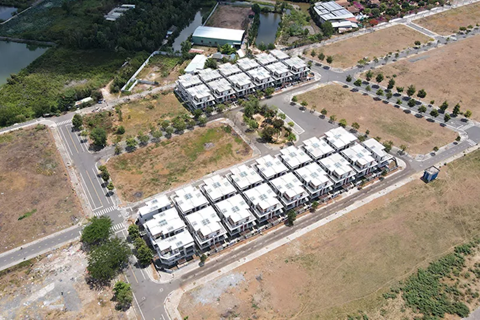
However, Hai also pointed out some shortcomings and limitations in the urban planning which has led to abandonment of many construction projects, construction in progress, traffic congestion and flooding.
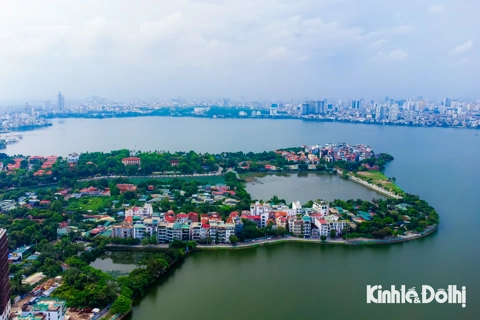
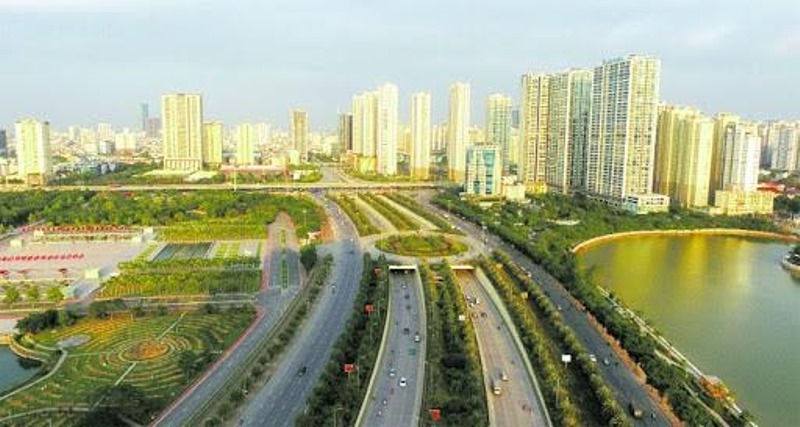
A corner of Hanoi seen from the West. Photo Pham Hung |
Sharing his view, architect Le Anh Tuan, Director of CDCC Construction and Investment Consultant Joint Stock Company said besides the beautiful images in the development process, planning in general and Hanoi architecture in particular still have dark spots.
Inadequacies happened in the slow-moving and inaccurate forecasting and planning which did not catch up with the development demand of the society while poor and short-term planning for population, land and green space, public works and urban traffic has made them out of date after 5-10 years.
In addition, there is still a lack of mainstreaming organization in urban architecture. Almost all managers, planners and architects have to compromise to please investors, overlooking science and aesthetics in architecture. This has made the city appear messy with skewed houses, higher-than-permitted buildings.
Many constructions have been built but very few can impress and become symbols of the capital city and even fewer projects are awarded the international “green” certificate.
More attention to characteristics of Hanoi
According to architect Vu Hoai Duc from the Hanoi Urban Planning Institute, revamping urban planning is necessary and crucial from the world’s successful experience. In Vietnam and Hanoi, the planning work has not really been established in an integrated manner even though it has gradually involved in many fields other than architecture-construction.
Renovating the planning towards increasing collaboration of experts in many fields will make urban planning interdisciplinary.
“However, this method needs a conductor and teamwork experts with the mind of science and commitment,” Duc said.
Vice Chairman of Hanoi Association of Architects Le Van Lan admitted the planning work needs renovating to meet development demand in the new period. However, he said no matter how innovative it will be, the planners need to pay attention to the unique features of Hanoi – a city with rich history of more than one thousand years, to make Hanoi be appraised for not only high-rise buildings, modern urban areas, but also its distinct heritage system.
Planners must create space for Hanoi heritage to endure forever, Lan said.
To date, important factors such as urban green growth, response to climate change, rising population and disaster mitigation have yet to be adequately included in detailed planning and formation of Hanoi development strategy.