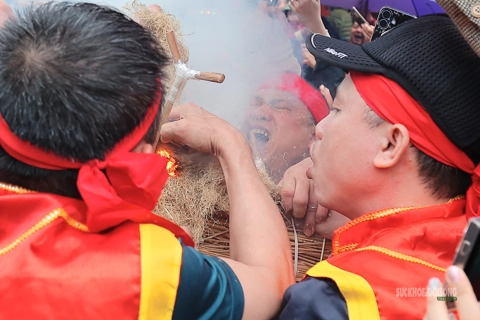
Dragon symbol in Vietnamese history
Studies have shown that Vietnamese dragons have many differences from those of other Asian countries.
In Vietnam, the dragon is a sacred symbol associated with the legend that the Vietnamese people are descended from dragons and fairies. Although dragons are not real, they are powerful, close and attached to the Vietnamese people throughout history.
In each historical period, Vietnamese dragons transformed and exhibited unique features that reflected the rich imagination of talented and skillful craftsmen.
Unique features of Vietnamese dragons
According to researcher Nguyen Quoc Huu, Deputy Director of the Exhibition Department at the National Museum of History, the dragon can be seen on artifacts from the founding of the Van Lang-Au Lac state (the 7th century BC). The ancient inhabitants of Vietnam began to create myths about their origins and to believe in totem worship. They chose the crocodile, stylized as a dragon with a pointed head, elongated body, curved tail, two or four legs and sometimes horns or manes on the head.
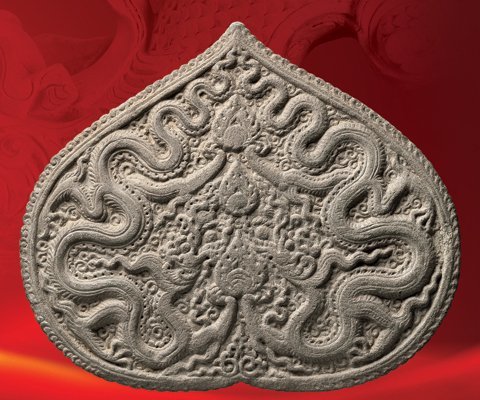
From 1010, the dragon became a symbol of kingship. Dragons of the Ly Dynasty are characterized by a flaming crest on the head, a smooth, round, slender body resembling a snake, and a soft, meandering, gently winding shape.
| Dragon symbol during Ly Dynasty. Photo courtesy of National Museum of History |
During the Tran Dynasty (13th-14th centuries), the martial spirit forged by many wars of resistance against foreign invaders influenced the stylization of the Tran Dynasty dragons. They became stronger, fatter, and less curved. They now had horns or a serrated dorsal fin.
In the restored Le dynasty (15th century), the five-clawed dragon became more majestic and ferocious.
During the Nguyen dynasty (19th century), dragons had swirling or fan-shaped tails. The five-clawed dragon was ubiquitous in both royal art and royal utensils.
"Throughout thousands of years, dragons in Vietnamese art have changed, but they always bear unique characteristics imbued with Vietnamese identity," Huu said.
Incorporating ancient dragons into contemporary art
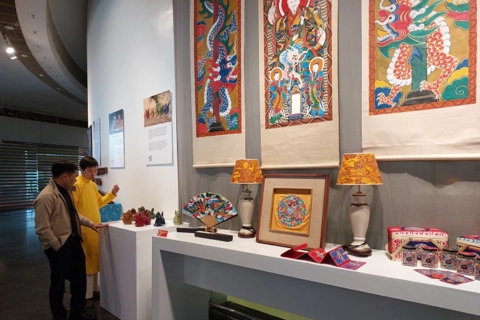
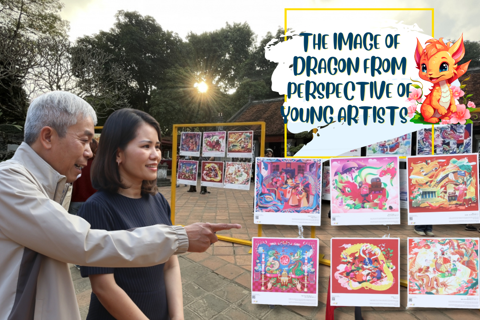
With such meanings and expressions, the dragon image has always inspired many contemporary artists. However, representing the dragon image in the work to express the message, artistic ideology, and personal impression is always a tough task for artists.
| A painting by artist Nguyen Minh applied the dragon symbol of Ly Dynasty. |
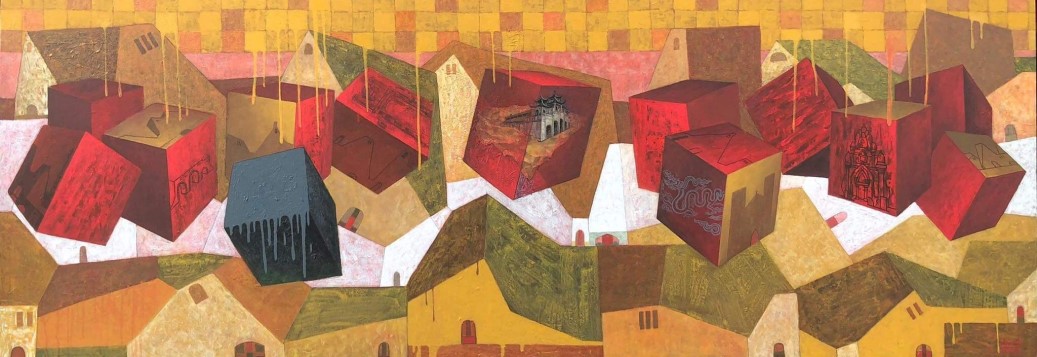
Artist Nguyen Minh believes that using dragon patterns and motifs in contemporary paintings requires careful research by artists to respect both the aesthetic and cultural values of dragons in different periods in contemporary work. He found this challenging but extremely interesting.
To welcome the New Year of the Dragon, Son Tay Town lacquer artisan Nguyen Tan Phat unveiled a collection of 1,000 dragon and fairy-themed works in wood, lacquer, ceramics, and metal combined with lacquer art. Among them, the most unique is the lacquer box with pictures of dragons through feudal dynasties and the dragon chair inlaid with 2,500 gold leaves, equivalent to 500g of 24-carat gold.
| Artisan Nguyen Tan Phat presents the Dragon Chair to foreign visitors. Photo: Ngo Minh/The Hanoi Times |
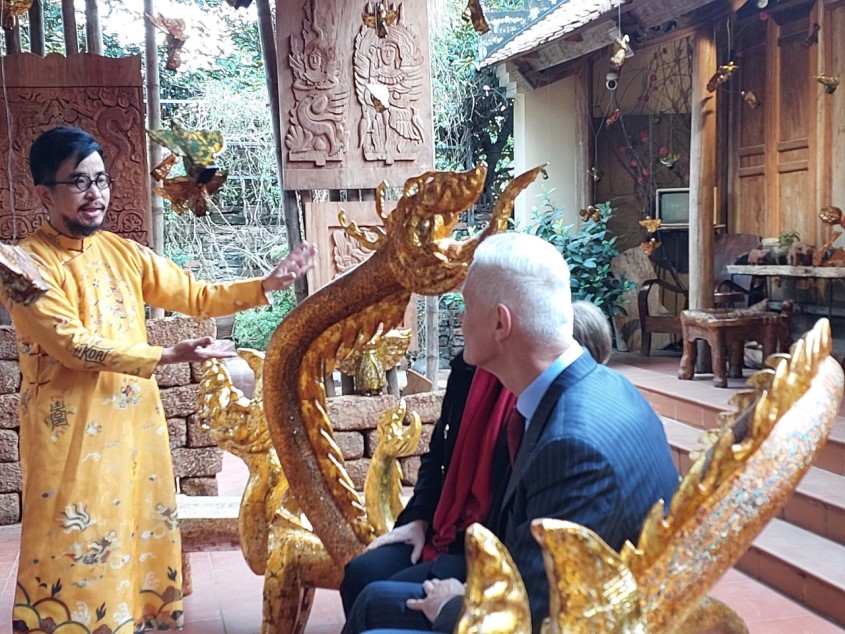
"It took me two years to come up with ideas and research documents to make the decision to incorporate the Ly Dynasty dragon image, combined with the sturdy and strong 5-clawed legs and dragon tail like bodhi leaves in Buddhism, a predominant region during the Ly Dynasty," said craftsman Phat.
Cultural researcher Tran Hau Yen The said the application of the dragon image in modern art requires not only careful historical research, but also interdisciplinary knowledge, including visual arts, graphic design, heritage studies, science and technology...
According to Yen The, a Vietnamese beer brand uses a dragon image in its brand identity, but the dragon has only three legs, which is wrong and inconsistent with ancient beliefs.
"Ancient fine arts have a golden rule that every artist respects. Whether hidden in the clouds or flying over the waves, the dragon always has four legs and the dragon on the king's utensils always has five claws. It's wrong to paint a dragon with three legs," he said.
So he suggested that designers must master the characteristics of dragons of each era and fully respect the traditional characteristics of dragons. In addition, artists must bring personal creativity to their work, because only knowledge and creativity can make the work unique and not be confused with a product created by artificial intelligence, Yen The said.